We use cookies to enhance your browsing experience, serve personalized content, and analyze our traffic. By clicking "Accept All" you accept this and consent that we share this information with third parties and that your data may be processed in the USA. For more information, please read our .
You can adjust your preferences at any time. If you deny, we will use only the essential cookies and unfortunately, you will not receive any personalized content.

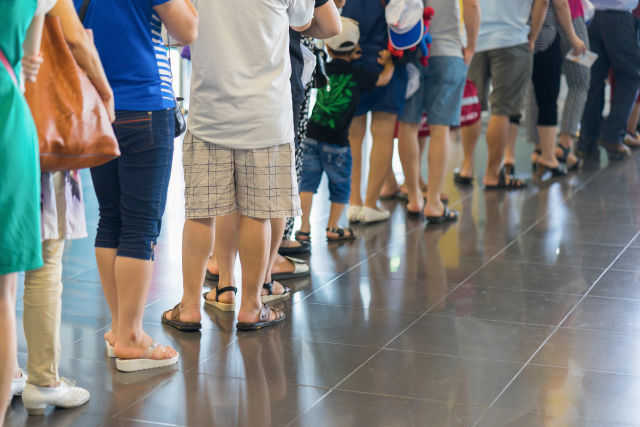
TSA lines have been making headlines, and if you have a flight coming up, you're probably wondering how bad it actually is. The short answer is: it depends on where you're flying from, and when. The longer answer is that some airports are seeing wait times of four to five hours, others are moving normally, and the difference between the two can shift within the same day. Here's what you need to know before you head to the airport.
The delays mostly come down to a staffing problem tied to the government funding lapse. TSA employees have been working without pay, and more and more of them are calling out or leaving altogether. Before all of this, callout rates were around 4% nationwide. At some airports now, it’s closer to 40%. At least 480 agents have already resigned, and if things continue like this, TSA workers will miss out on an estimated $1 billion in pay.
You can feel the impact of that almost immediately as a traveler. Fewer staff means fewer security lanes open, and that pushes the same number of passengers into a much smaller space. That’s how a routine 20-minute line turns into a multi-hour wait, with some people missing their flights entirely.
Not every airport is in full meltdown mode, and that’s important to keep in mind. The situation really depends on where you’re flying from.
At George Bush Intercontinental Airport, things have been especially rough, with wait times topping four hours and lines stretching into underground tunnels. At Baltimore/Washington International Airport, nearly 38% of TSA officers called out on one day, leading to hours-long delays. And at Hartsfield-Jackson Atlanta International Airport, lines have hit up to five hours at peak times, shifting noticeably depending on the time of day.
On the other hand, airports in the D.C. area, like Ronald Reagan Washington National Airport and Washington Dulles International Airport, have been moving more or less normally. But even there, officials warn that conditions can change quickly.
That’s really the theme right now. An airport that feels manageable in the morning can turn chaotic by the afternoon if staffing gaps start to stack up. More than anything, it’s the unpredictability that’s catching people off guard.
Source: Screenshot from Baltimore/Washington International Airport
The MyTSA app is still the easiest place to start. It shows real-time wait estimates, gives you a sense of typical delays at your airport, and includes basic guidance on getting through security. There’s a note in the app saying some systems may not be fully maintained right now because of the funding lapse, but the wait times are still updating and worth checking before you head out.
It also helps to check a few other places. Your airline’s app may have alerts, and most airports post updates on their official social media accounts. A quick search of your airport name plus “TSA wait times” the morning of your flight can also give you a clearer picture. When official updates lag, other travelers tend to fill in the gaps, and that real-time information can be surprisingly useful.
Under normal circumstances, two hours for domestic flights and three for international is the standard advice. Right now that baseline needs to go up. Most airport officials are recommending arriving at least three hours early for domestic travel, and building in extra buffer if you're flying out of a major hub or during peak morning and afternoon windows.
If you have TSA PreCheck, use it. PreCheck lanes are staffed separately and have been significantly less affected by the current shortages. If you've been meaning to sign up and haven't, this is a good reminder that it pays for itself quickly. Global Entry includes PreCheck and is worth the extra investment if you travel internationally.
This is the part no one really wants to think about, but it’s worth being prepared for. If you miss a flight because of TSA delays, airlines aren’t required to rebook you for free since the delay isn’t considered their responsibility. That said, many will still try to help, especially if the airport has issued official warnings about long wait times.
It helps to have everything documented. Take screenshots of any airport alerts, keep track of when you arrived and when you made it through security, and be polite but persistent when speaking with gate agents or customer service. If you have travel insurance that covers missed connections, this is also the time to check exactly what’s included and what isn’t.
The honest answer is that it depends on when the funding situation gets resolved. Once TSA employees are back on regular pay, callout rates should normalize and staffing should stabilize. Until then, conditions will remain unpredictable and airport-specific. Keep checking the MyTSA app, arrive early, and treat any timeline you've built around a tight connection as optimistic at best.
Whether you're heading out next week or planning a trip for later this year, it's worth keeping an eye on how this develops. The situation is fluid, but being informed is half the battle.
At some airports, yes. Wait times have reached four to five hours at major hubs like Houston, Atlanta, and Baltimore. Other airports are moving relatively normally, but conditions can change quickly.
A government funding lapse has left TSA employees working without pay, leading to a surge in callouts and resignations. Reduced staffing means fewer screening lanes open, which pushes wait times up significantly.
Houston's George Bush Intercontinental, Atlanta's Hartsfield-Jackson, and Baltimore/Washington International have seen some of the worst delays. Washington D.C.-area airports have been less affected so far.
Download the MyTSA app for real-time estimates and historical data. Your airport's official website and social media accounts are also good sources on the day of travel.
At least three hours before a domestic flight. More if you're flying from a major hub or during peak travel times.
Yes. PreCheck lanes have been significantly less affected by the current staffing shortages and are worth using if you have it.
Airlines aren't required to rebook you for free if the delay wasn't their fault, but many will work with you. Document the official airport warnings and your arrival time, and contact your airline as soon as possible.
They should normalize once the funding situation is resolved and TSA employees return to regular pay. Until then, conditions remain unpredictable.