We use cookies to enhance your browsing experience, serve personalized content, and analyze our traffic. By clicking "Accept All" you accept this and consent that we share this information with third parties and that your data may be processed in the USA. For more information, please read our .
You can adjust your preferences at any time. If you deny, we will use only the essential cookies and unfortunately, you will not receive any personalized content.

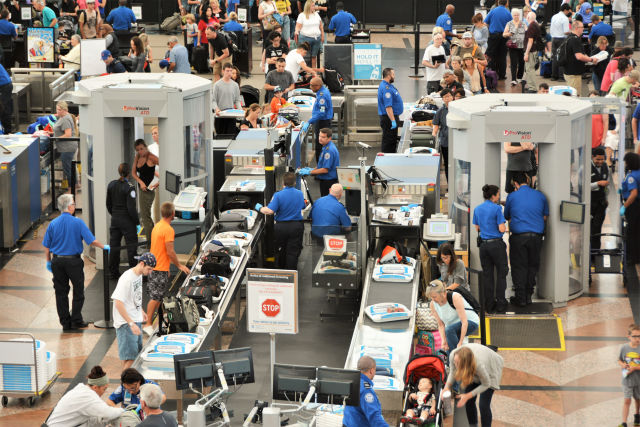
Nobody wants to spend their vacation standing in a security line. Right now, thanks to a partial government shutdown that's been dragging on for over a month, that's exactly what's happening at airports across the country. TSA agents are working without pay, at least 360 have quit, and around 10% called out sick on a single Sunday in March. Atlanta passengers reported waiting over two hours at security checkpoints this week. If you have a trip coming up, this is worth reading before you leave the house.
TSA agents are still showing up to work, but the staffing strain is real and getting worse. And the numbers tell the story pretty clearly. Fort Lauderdale Hollywood International saw lines stretching out the door and around the building over the weekend, with travelers waiting over two hours just to reach a security checkpoint. Miami International logged over 500 flight delays in a single day. Atlanta's Hartsfield-Jackson, the world's busiest airport, had waits of up to two hours on Sunday, and even on Tuesday morning lines were still hitting 100 minutes at some domestic checkpoints. One traveler at Austin-Bergstrom arrived four hours early for a 2:30 a.m. flight and still missed it.
Chicago O'Hare, Dallas-Fort Worth, Orlando, and Philadelphia are all in similar shape. Philadelphia has now closed three terminal checkpoints entirely due to staffing shortages, rerouting passengers to whichever checkpoints are still open. Dallas-Fort Worth is telling travelers to budget at least two hours for domestic flights. Orlando is expecting 7.4 million passengers through its doors in a single week and advising people to show up more than three hours early. These aren't worst-case scenarios, they're the current baseline.
If you've been on the fence about TSA PreCheck, now is the time to stop sitting on it. PreCheck gets you into a dedicated expedited lane where you keep your shoes on, leave your laptop in your bag, and skip the liquids juggling act. It moves faster than standard security even on a normal day, and right now it's one of the most reliable ways to avoid the worst of the lines.
Enrollment costs between $77 and $85, and membership lasts five years, which works out to less than $20 a year. Most applicants get approved within three to five days, though it can take up to 60 days in some cases, so don't wait until the week before your trip to apply.
One extra perk worth knowing about: PreCheck holders can sign up for Touchless ID at most major airports, which lets you use your face as ID instead of digging out your wallet. You sign up through your airline's app before your travel day, not at the airport. A physical ID is still required as backup, and these lanes are occasionally closed, so treat it as a bonus rather than your whole plan.
CLEAR is a separate program that uses your fingerprints or iris scan to verify your identity before you even reach the TSA checkpoint, skipping you to the front of the document check line. It works alongside TSA PreCheck rather than replacing it, so if you have both, you're moving through the airport at a completely different speed than everyone else in the standard queue
CLEAR runs around $189 a year, which sounds steep until you realize it's included with several travel credit cards and Delta SkyMiles memberships. Worth checking what you already have in your wallet before paying out of pocket.
No PreCheck, no CLEAR? No problem, but you'll need to be strategic. Travel experts are strongly recommending adding at least one to two extra hours at major airports right now. That's not a suggestion, it's genuinely necessary given current staffing levels.
Timing matters a lot too. Friday afternoons and Sunday mornings are consistently the worst windows to be at an airport, especially during spring break. If your schedule has any flexibility at all, midweek and midday flights are a much calmer experience.
One thing to skip right now is the MyTSA app for live wait times. The app isn't reliably updated during the shutdown, so you're better off checking your specific airport's website directly and following the airport's social media accounts for real-time updates.
If you're coming back into the country, Global Entry and the Mobile Passport Control app are both up and running. Travelers using Mobile Passport this week reported clearing customs in around 10 minutes, which is pretty hard to argue with.
And one last thing worth mentioning: TSA officers are working through a genuinely tough situation right now, showing up to do their jobs without knowing when their next paycheck is coming. A little patience and kindness at the checkpoint goes a long way, for everyone involved.
Spring break is peak season even in a normal year, and this year the shutdown is adding pressure on top of an already busy travel window. If you're heading out in the next few weeks, here's a quick checklist to keep things smooth. Apply for TSA PreCheck now if you don't have it, since the three to five day approval window means you could have it before your trip.
Check your credit card benefits to see if CLEAR is included at no extra cost. Book midweek or midday flights where possible, and build more buffer time into your airport arrival than you think you need. Check your airport's website and social accounts the morning of your flight, not the night before. Things can change overnight.
The partial government shutdown has left TSA agents working without pay for over a month. At least 360 agents have quit and around 10% are calling out, leaving airports understaffed during one of the busiest travel seasons of the year.
Yes. TSA PreCheck lanes remain open during the shutdown, as they have during previous funding lapses. Wait times in PreCheck lanes are still significantly shorter than standard security, though some temporary lane closures have occurred at busier airports.
Enrollment costs between $77 and $85 and membership lasts five years. Most applicants are approved within three to five days.
CLEAR uses biometric verification to move you to the front of the document check line before TSA screening. It costs around $189 a year but is included with some travel credit cards and Delta SkyMiles memberships. It works best when combined with TSA PreCheck.
Sunday mornings and Friday afternoons are the busiest windows, especially during spring break. Midweek and midday travel is noticeably calmer right now.
Not for real-time data. The app currently lacks reliable live information during the shutdown. Check your airport's website directly and follow their social media accounts for the most current updates.
The Department of Homeland Security has warned that if the shutdown continues, smaller airports could face closures, which would push more passengers into major hubs.