We use cookies to enhance your browsing experience, serve personalized content, and analyze our traffic. By clicking "Accept All" you accept this and consent that we share this information with third parties and that your data may be processed in the USA. For more information, please read our .
You can adjust your preferences at any time. If you deny, we will use only the essential cookies and unfortunately, you will not receive any personalized content.

Pirates, I've loved anime since I was a little kid, which means this guide is one I genuinely wanted to write. These aren't just pretty backdrops somebody photoshopped into a show. They're real streets, real shrines, real skylines that animators studied frame by frame before drawing them into worlds we grew up obsessing over. And for fans who spent entire childhoods inside those worlds, visiting them hits differently than any regular sightseeing.
The Japanese call it seichi junrei, holy land pilgrimage. Anime creators often base their background art on actual places, meticulously recreating streets, buildings, and landscapes with stunning accuracy. Once you know that, Japan becomes a scavenger hunt you've been training for your whole life.
Odaiba in Tokyo Bay is the primary real-world setting for Digimon Adventure, featuring the Fuji TV building, Rainbow Bridge, and Odaiba Beach.
The Suga Shrine stairs in Shinjuku are the confirmed real-world ending location from Your Name, and are free to visit any time.
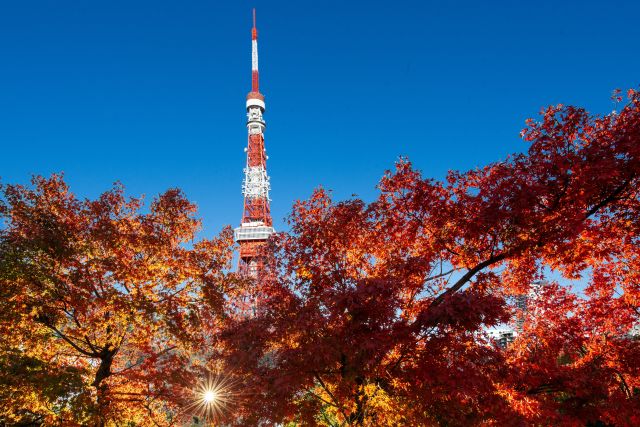
Tokyo Tower is a pivotal location in Cardcaptor Sakura, Magic Knight Rayearth, Sailor Moon, and dozens of other classic anime series.
Asakusa in Tokyo is where Demon Slayer's Taisho-era scenes are set, with Sensoji Temple as the best starting point.
Dogo Onsen Honkan in Ehime Prefecture is the primary real-life inspiration for the bathhouse in Spirited Away.
The Butai Meguri app provides English-language maps and AR features built specifically for anime pilgrimage visitors across Japan.
Odaiba isn't just a neighborhood in Tokyo. For anyone who grew up with Digimon Adventure, it's basically sacred ground. Odaiba is a large artificial island in Tokyo Bay, redeveloped in the 1990s as a futuristic living space, still known today for its spacious layout and modern buildings. The Fuji TV building is where Yamato and Takeru's father works in the show, and it's also where Myotismon staged his fog attack over the city. You can visit the observatory inside the building's iconic globe section.
The Rainbow Bridge connecting Odaiba to mainland Tokyo is where everyone gathered to watch the battle against Armagemon in Tokyo Bay in Diablomon Strikes Back. Odaiba Beach and the surrounding waterfront are featured across Tri and Last Evolution Kizuna. For Cyber Sleuth fans, Nakano Broadway in central Tokyo is the main real-world setting of the Cyber Sleuth game series and one of the best spots in the city for vintage anime merchandise.
Your Name made Tokyo look more beautiful than Tokyo already is. Shinkai didn't just use the city as a backdrop, he painted it with the kind of accuracy that makes pilgrimages genuinely satisfying. The most famous spot is the stairway leading to Suga Shrine in Yotsuya, Shinjuku. These 26 steps are where Taki and Mitsuha finally meet at the film's end, and the real location matches the movie almost perfectly. It's free, it's public, and it's about an 8-minute walk from Yotsuya-Sanchome Station. Go early morning for the best photos.
For the film's rural scenes, Lake Suwa in Nagano Prefecture is the real-world inspiration for Itomori Lake, the fictional lake at the heart of the story. The best views are from Tateishi Park, about 40 minutes on foot from Kami-Suwa Station, and the panorama over the lake looks straight out of the film. It's about two and a half hours from Shinjuku on the Chuo Line, a beautiful ride in its own right.
If there's one location that shows up more than any other across anime history, it's Tokyo Tower. Not Akihabara. Not Shibuya Crossing. The tower. In Cardcaptor Sakura, it's where Sakura faces Yue in the Final Judgement and captures both the Dream Card and the Earthy Card. In Magic Knight Rayearth, it's where Hikaru, Umi, and Fuu meet on a school field trip before being transported to the magical world of Cephiro.
Sailor Moon's home district of Azabu-Juban sits nearby, where the Sailor Scouts battle Kaorinite and her Daimon enemies. The tower also shows up in Neon Genesis Evangelion, Bleach, multiple Gundam series, and more CLAMP properties than this article has room for.
Asakusa feels genuinely old in a way most big-city neighborhoods don't. Not performed-old. Actually, texturally old, which is exactly why it works as Demon Slayer's anchor. It's where Tanjiro encounters Muzan for the first time, and while the townscape has changed since the Taisho era, Asakusa still retains a traditional atmosphere that makes the setting feel completely real.
Start at Sensoji Temple and walk Nakamise Street. Get off at Asakusa Station on the Tokyo Metro Ginza Line and go from there. For the Swordsmith Village arc, Ginzan Onsen in Yamagata Prefecture is widely noted for its striking resemblance to the village's wooden architecture and grey rooftops. It's a beautiful onsen town on its own terms too, which makes this one a win either way.
Miyazaki built Spirited Away's world from many places at once, but one stands out above the rest. Dogo Onsen Honkan in Matsuyama, Ehime Prefecture, is the most famous real-life inspiration. Its multi-storied wooden architecture and maze-like hallways closely resemble the bathhouse in the film. At night, fully lit up, the resemblance tips from striking into genuinely uncanny. It also happens to be one of Japan's oldest hot springs, so you can actually bathe there.
The Ghibli Museum in Mitaka, Tokyo, requires tickets bought months in advance through a lottery system. Book early or it won't happen. Ghibli Park in Aichi Prefecture opened in 2022 and is easier to access as a day trip from Nagoya if the lottery feels like too much.
The Anime Tourism Association publishes an official list of 88 Anime Pilgrimage Spots each year, a nod to Japan's famous 88-temple Shikoku pilgrimage. It's a great starting point for building an itinerary. The Butai Meguri app provides maps and AR character features in English specifically built for pilgrimage visitors. Most outdoor spots like Suga Shrine and the Slam Dunk crossing are free to visit.
The Slam Dunk railroad crossing at Kamakurakōkōmae Station is about 60 to 90 minutes from Tokyo depending on your starting point. Take JR to Kamakura or Fujisawa, then transfer to the Enoden Line. It works best as part of a wider Kamakura day trip. When visiting shrines, dress modestly and note that group cosplay shoots require prior permission at most sites. These are real, active places. Respect goes a long way.
Anime pilgrimage, known as seichi junrei, is the practice of visiting real-world locations that appeared in or inspired your favorite anime. Japan's Anime Tourism Association officially recognizes and promotes these sites, publishing a list of 88 locations annually. Most major sites in Tokyo are free to visit and accessible by public transit.
The main Digimon Adventure locations are in Odaiba, Tokyo Bay. Key spots include the Fuji TV building, Odaiba Beach, and the Rainbow Bridge, which is where the battle against Armagemon takes place in Diablomon Strikes Back. Nakano Broadway in central Tokyo is the setting for Digimon Cyber Sleuth.
Yes. The stairs are at Suga Shrine in the Yotsuya neighborhood of Shinjuku, about an 8-minute walk from Yotsuya-Sanchome Station. Entry is free at any time. The location matches the film closely and is one of the most visited anime pilgrimage sites in Tokyo.
Tokyo Tower is central to Cardcaptor Sakura (the Final Judgement battle), Magic Knight Rayearth (where the three girls meet and are transported to Cephiro), and Sailor Moon (near the home district of Azabu-Juban). It also appears in Neon Genesis Evangelion, Bleach, and numerous CLAMP series. It's arguably the most-used dramatic location in anime history.
The most widely cited inspiration is Dogo Onsen Honkan in Matsuyama, Ehime Prefecture. Its multi-story wooden architecture closely resembles Yubaba's bathhouse in the film. Director Miyazaki has said the design came from multiple Japanese sources rather than a single location.
Asakusa in Tokyo is the setting for Demon Slayer's Taisho-era scenes, particularly where Tanjiro first encounters Muzan. Start at Sensoji Temple and walk Nakamise Street. For the Swordsmith Village arc, Ginzan Onsen in Yamagata Prefecture is the most cited real-world architectural inspiration.
Take JR Shonan-Shinjuku Line or JR Yokosuka Line to Kamakura Station or Fujisawa Station, then transfer to the Enoden Line to Kamakurakōkōmae Station. Total travel time from Tokyo is about 60 to 90 minutes. The crossing is a 1-minute walk from the station exit and pairs well with a full Kamakura day trip.
No. Most major sites have multilingual signage, the Butai Meguri app works in English, and Japan's train system is extensively signposted in multiple languages. Google Maps handles navigation reliably throughout the country.