We use cookies to enhance your browsing experience, serve personalized content, and analyze our traffic. By clicking "Accept All" you accept this and consent that we share this information with third parties and that your data may be processed in the USA. For more information, please read our .
You can adjust your preferences at any time. If you deny, we will use only the essential cookies and unfortunately, you will not receive any personalized content.

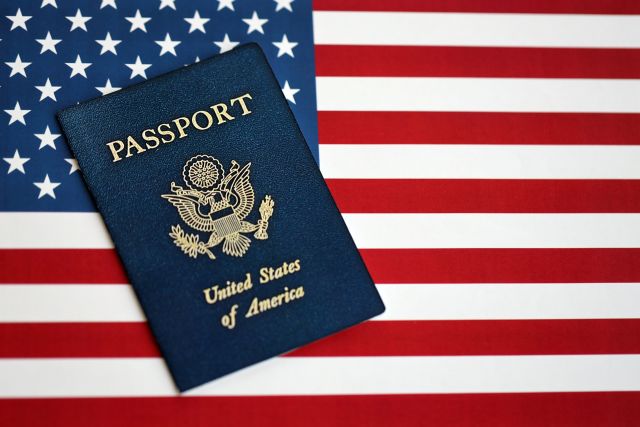
Starting today, the U.S. State Department is pulling passports from American travelers who owe unpaid child support. The program launches with those owing $100,000 or more, but it's set to expand to anyone with a balance over $2,500. If you travel internationally and have outstanding child support debt, here's what you actually need to know before your next trip.
The State Department and the Department of Health and Human Services (HHS) are ramping up enforcement against unpaid child support in a way that could stop some Americans from traveling internationally. Passport revocations officially began today, May 8, initially targeting around 2,700 people who owe $100,000 or more in unpaid support. That number is so specific because federal officials already have those cases fully documented and ready to act on.
But this is only the beginning. Officials say enforcement will soon expand to anyone owing more than $2,500 once state-level data is fully processed, a move expected to affect “many more thousands” of passport holders.
What’s surprising is that this authority has technically existed since 1996. A federal law has long allowed the government to deny or revoke passports over seriously delinquent child support, but enforcement was relatively limited for years. What’s changed now is the scale and urgency behind it. According to the State Department, even the announcement of the expanded crackdown earlier this year already pushed hundreds of parents to begin paying overdue support. Since the program began operating in 1998, states have collected more than $657 million in back child support tied to passport enforcement efforts, including over $156 million in lump-sum payments within the last five years alone.
Image source: Screenshot from @TravelGov on X
Until recently, the passport-child support rule only kicked in when someone applied to renew. Now, if you have an active valid passport and HHS has certified that you owe more than $2,500, your passport can be revoked without any renewal request triggering it.
The system behind this is HHS’s Office of Child Support Enforcement (OCSE) Passport Denial Program, which has quietly existed since 1998. Under the program, states report parents who exceed the federal arrears threshold, and OCSE shares those records with the State Department. The big change now is enforcement. Instead of simply blocking renewals or new applications, the State Department is proactively acting on existing passport holders already flagged in the system.
If your passport is revoked, the State Department will notify you directly by email or by mail to the address on your most recent passport application. The notice will inform you that your document is no longer valid for travel. A revoked passport cannot be used even if you've already paid off the debt and are waiting on paperwork to clear.
This is the scenario that should get your attention if you travel frequently for work or pleasure. If your passport is revoked while you're outside the United States, you cannot simply use the old document to fly home. You'll need to visit the nearest U.S. embassy or consulate, where you can apply for a limited-validity emergency passport that covers direct return to the U.S. only.
And that emergency passport is exactly that: temporary and restrictive. It’s not a full replacement passport, and it won’t allow additional international travel. According to federal policy, you won’t be eligible for a standard passport again until HHS confirms that the child support debt has been resolved.
Getting your passport privileges restored is possible, but it’s not instant, and the process involves multiple agencies communicating with each other behind the scenes.
First, you’ll need to pay off the outstanding child support owed to the relevant state child support enforcement agency. If you owe money in more than one state, all outstanding balances need to be resolved before anything moves forward.
Once payment is confirmed, the state reports that update to HHS, which then removes your name from the certified delinquency list and notifies the State Department. That administrative handoff alone typically takes at least two to three weeks, and the State Department cannot process a new passport application until HHS officially clears you.
Only after that decertification happens can you apply for a new passport through the normal application process. One important detail many people miss: your old passport does not come back to life, even if it technically hasn’t expired yet. Once revoked, it stays revoked permanently.
And if you have an international trip coming up soon, timing matters. Officials say that two-to-three-week waiting period is effectively a hard minimum, even if you pay immediately. There’s currently no expedited workaround while the agencies process the clearance.
Most of the early headlines have focused on the $100,000 cases because that’s where enforcement officially began today. But the part of this policy that could ultimately affect far more people is the much lower $2,500 threshold written into the original 1996 law.
That number dramatically expands the pool of potentially affected travelers. HHS is still gathering data from state agencies to determine exactly how many passport holders fall into that category, but officials have already indicated it involves “many more thousands” of Americans.
If you currently have any unpaid child support balance, even one far below six figures, it may be worth checking your status before booking international travel. The State Department’s child support information page includes links to every state child support enforcement office, and travelers can also contact the passport information center directly at 1-877-487-2778 for guidance.
What makes this policy notable is how little discretion exists once the process begins. The reporting system is largely automated, enforcement is actively expanding, and if a passport is revoked, there’s no quick workaround to restore international travel access.
Getting caught abroad without a valid passport is one of the more avoidable travel disasters out there, and this one in particular has a clear solution. If you have child support debt, sort it out with your state agency before it sorts out your travel plans for you.
Yes. The State Department, working with HHS, can revoke the passport of any American who owes more than $2,500 in unpaid child support. The program launched today starting with those owing $100,000 or more and will expand to the lower threshold as state data is compiled.
The State Department will notify you by email or by mail to the address on your most recent passport application. You won't receive in-person notice, so it's important your contact information is current.
No. A revoked passport cannot be used for travel regardless of payment status. You must apply for a new passport after HHS confirms your debt has been cleared.
You'll need to contact the nearest U.S. embassy or consulate. You'll be eligible for a limited-validity emergency travel document that allows direct return to the United States only.
After you pay, your state notifies HHS, which then removes your name from its certified list. That process takes a minimum of two to three weeks. The State Department can't issue a new passport until HHS confirms the decertification.
No. If you owe child support in multiple states, you'll need to pay all of them. Each state reports to HHS independently.
The current expansion will cover anyone owing more than $2,500, which is the threshold established by federal law in 1996. There's no grace period or de minimis exception below that number.
Contact the child support enforcement agency in the state where you owe the debt. The State Department's website at travel.state.gov/childsupport has links to each state agency and a passport information line at 1-877-487-2778.