We use cookies to enhance your browsing experience, serve personalized content, and analyze our traffic. By clicking "Accept All" you accept this and consent that we share this information with third parties and that your data may be processed in the USA. For more information, please read our .
You can adjust your preferences at any time. If you deny, we will use only the essential cookies and unfortunately, you will not receive any personalized content.

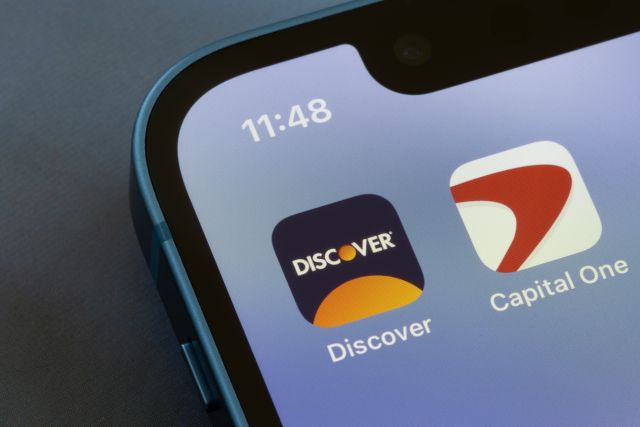
If you have a Capital One Venture, Savor, or Quicksilver card, something is quietly changing that you probably haven't been told about yet. Capital One is moving new versions of these cards onto the Discover payment network following its $35.3 billion acquisition of Discover, which closed in May 2025. This doesn't sound like a big deal until you're standing at a checkout counter in Portugal and your card gets declined.
Here's what's actually happening and what it means for your wallet when you travel.
⬇️
Capital One now owns the Discover payment network outright. Instead of paying Visa or Mastercard to process transactions, Capital One can route those charges through its own network and keep more of the money. Makes sense for them. The question is what it means for you.
Right now, new Venture, Savor, Quicksilver, VentureOne, SavorOne, and QuicksilverOne accounts are being issued on the Discover network instead of Mastercard. If you're an existing cardholder, you likely won't see a change until your card expires and gets replaced. But that day is coming for most Capital One customers.
A few things staying put for now: the Venture X consumer card is remaining on Visa, business cards like the Spark are staying on Mastercard, and co-branded partner cards (Kohl's, REI, T-Mobile, Bass Pro and others) aren't changing yet. So if you have a Venture X specifically, you're fine for international travel in the near term.
One thing worth knowing: Savor cardholders are quietly losing World Elite Mastercard perks in the switch. That tier came with some useful travel and purchase protections. Discover's network doesn't have an equivalent tiered structure, so some benefits are changing even if Capital One is rolling out replacements.
Capital One already switched over 25 million debit cards to the Discover network starting in mid-2025, and that rollout gave us a preview of what the credit card transition might look like. Some customers ran into real friction: rejected transactions at small businesses, broken subscription payments, and issues using cards internationally.
One frequently cited example is Costco, which does not accept Discover cards at all. If your debit card stopped working at Costco after the switch, it's a sign of the kind of acceptance gaps that can show up in everyday spending, not just overseas travel.
This is the part that matters most if you travel internationally. Discover works fine across most of the US. Internationally, it's a different story in some places.
Discover is accepted in 190+ countries and territories, which sounds great on paper. But acceptance varies a lot depending on where you're going. Countries like Japan, India, Germany, Spain, and much of the Caribbean are generally solid. France, Canada, Australia, and most of Africa are more hit or miss. Some countries have very low Discover acceptance regardless of what the network's own map says, which is why real traveler experience in destinations like France often tells a different story than the official numbers.
The gap compared to Visa and Mastercard is real, especially outside tourist zones. At a major hotel or a chain restaurant in a big city, you're probably fine. At a local market, a rural guesthouse, a transit kiosk, or a smaller town anywhere in Europe or Southeast Asia, you're more likely to have a problem.
Not panic, but pay attention. If you're the type of traveler who relies on one card and nothing else, this is the moment to rethink that habit. A Discover-backed card as your only card in certain parts of the world is a risk that wasn't there before when it was running on Mastercard.
The practical fix is simple and something seasoned travelers already do: carry two cards on different networks. Keep one in your wallet, one somewhere separate. If you have a Venture X, that's your international backup sorted. If you don't, it's worth having a no-fee Visa or Mastercard in your travel kit.
New accounts for Venture, VentureOne, Savor, SavorOne, Quicksilver, and QuicksilverOne are now being issued on the Discover network. Existing cardholders will likely see the change when their current card expires.
Not right now. The Venture X consumer card is remaining on the Visa network for the foreseeable future.
Discover is accepted in 190+ countries, but acceptance varies more than Visa or Mastercard, especially outside tourist areas. Destinations like France, Canada, Australia, and most of Africa have limited or uneven Discover acceptance.
No. Discover cards have no foreign transaction fees, which is one genuine upside of the network.
Capital One hasn't announced a specific timeline for switching existing accounts. Most analysts expect the change to happen gradually as cards expire and get reissued, with full transition targeted by around 2027.
No. Costco does not accept Discover cards, which is one of the more notable gaps in Discover's domestic acceptance.