We use cookies to enhance your browsing experience, serve personalized content, and analyze our traffic. By clicking "Accept All" you accept this and consent that we share this information with third parties and that your data may be processed in the USA. For more information, please read our .
You can adjust your preferences at any time. If you deny, we will use only the essential cookies and unfortunately, you will not receive any personalized content.

Pirates, April is one of the most underrated months to look up. Most people are chasing cherry blossoms or planning summer trips, and the night sky is right there doing something genuinely spectacular. This month runs the full range — a Pink Moon that peaked just last night, shooting stars from one of the oldest meteor showers in recorded history, a brand new comet that could show up bright or burn out entirely, and a tight cluster of planets low on the morning horizon that you'll need to be up early to catch.
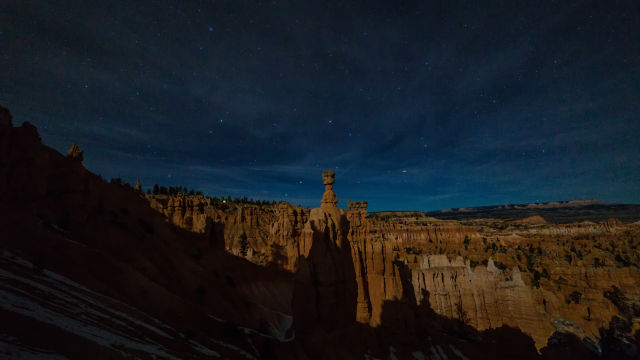
The best part? You don't need a telescope for most of it. You need dark skies, a clear night, and ideally a reason to travel somewhere away from the glow of a city
If you stepped outside last night or tonight expecting a rosy-hued moon, you didn't get one. The Pink Moon peaked at 10:12 p.m. ET on April 1, and it looks like every other full moon, bright, white, and impossible to ignore. The name has nothing to do with color. It comes from the creeping phlox wildflower, a pink-blooming ground cover that spreads across eastern North America every spring right around this time. Early Native American tribes named the full moons of each month after seasonal markers, and this one stuck.
What makes it worth going outside for is the sheer brightness and the atmosphere. A full moon rising over open water, a mountain ridgeline, or the desert floor is a different experience than watching it from a parking lot. It also carries some extra meaning this year; the Pink Moon is the Paschal Moon, meaning it's the first full moon after the spring equinox. That's what determined Easter's date of April 5. And Passover began on April 1, directly tied to the same lunar cycle. So there's a lot of history packed into that bright white disc.
If you missed it last night, the moon stays impressively full for a couple of nights on either side of peak. Tonight, April 2, it's still almost full. An east-facing coastline, a rooftop in a city you've been meaning to visit, or simply a clear hillside anywhere in the country will do the job.
Here's a date to put in your calendar right now: April 17. That's when the New Moon arrives, and it creates the darkest skies of the entire month. No lunar glow to wash out faint objects. This is your window for the Milky Way's core, galaxies you can barely make out with the naked eye, and the comets that are hanging around this month.
The best viewing actually extends a few days in either direction. April 14 through April 20 is the prime dark-sky period for April 2026. If you're planning a trip to a national park or dark-sky destination, this is the week to do it.
One phenomenon worth knowing about: Earthshine. During the crescent moon phases around the New Moon, roughly April 13 to 14 before, and April 20 to 21 after, you can see the soft glow of sunlight reflected off Earth illuminating the dark part of the moon's surface. It's subtle and beautiful, and it photographs well.
From roughly April 16 to 23, Mercury, Mars, and Saturn will appear clustered low on the eastern horizon in the hour before sunrise. On April 20, they form an almost straight line with Mercury at the bottom, Saturn in the middle, and Mars above. It's a rare tight grouping, and binoculars will help since all three sit close to the horizon where atmospheric haze can muddy the view.
Neptune is also technically in the mix during this window, though you'll need a telescope or at minimum very good binoculars to spot it. The more accessible show is the Mercury-Mars-Saturn triangle with the naked eye, best around 45 minutes before local sunrise. Mercury also hits its greatest elongation from the sun on April 3, meaning this is one of the best opportunities of the year to spot the innermost planet, which is usually hidden in the sun's glare.
For this one, location matters more than usual. You need a clear, flat eastern horizon with no hills, buildings, or tree lines in the way. Open plains, desert floors, and coastal flats are ideal. The Great Plains states, Kansas, Nebraska, and eastern Colorado, are genuinely excellent for this. So is the Mojave Desert in Southern California.
The Lyrids are April's main event. This shower has been observed for over 2,700 years, Chinese astronomers recorded it in 687 BC, and it runs every year from April 15 to 29. The peak this year falls on the night of April 21 into the early morning of April 22, with the predicted maximum at around 3:15 p.m. ET on April 22, which means the best viewing window in the US is the pre-dawn hours of April 22.
Under good dark-sky conditions, expect 15 to 20 meteors per hour. That's not the Perseids, but Lyrids have a specific thing going for them: fireballs. The shower is known for producing exceptionally bright meteors that leave glowing dust trains behind them for several seconds after they pass. One fireball can make the whole night feel worth it. The shower also carries a tiny but real chance of an outburst — in rare years, rates can spike to 100 per hour without warning. The last major outburst was in 1982. Nobody can predict when the next one will come.
Big Bend National Park, TX
Cherry Springs State Park, PA
Joshua Tree National Park, CA
Grand Canyon National Park, AZ
Florida Keys (Big Pine Key area)
Craters of the Moon National Monument, ID
April 2026 has two comets worth knowing about, and they couldn't be more different in personality.
Comet C/2026 A1 (MAPS) is the dramatic one. It passed within about 850,000 miles of the sun on April 4, an extremely close approach that could either produce a brilliant naked-eye display or destroy the comet entirely. If it survived and brightened as some astronomers hoped, look for it low in the western sky 20 to 30 minutes after sunset from about April 6 to 10. It'll hug the horizon, so a clear western view is essential. Nobody knows for certain how this one played out until observers start reporting in — comets are notoriously unpredictable. Check NASA's solar system exploration page or EarthSky for updates on whether MAPS is actually visible.
Comet C/2025 R3 (PanSTARRS) is more reliable. NASA estimates it will reach around magnitude 8, which means binoculars or a small telescope are needed — but it should hold up consistently through late April. It makes its closest approach to Earth on April 27, coming within 44 million miles, and sits in the northeastern sky after midnight near the constellations Pegasus and Pisces. The dark skies around the New Moon window make mid-April the best time to start hunting it. The April 17 new moon and the nights surrounding it are ideal.
April 1-2: Full Pink Moon peaks. Rises at sunset, visible all night.
April 3: Mercury at greatest elongation, best morning visibility of 2026.
April 4: Comet MAPS reaches perihelion. Look west after sunset April 6-10.
April 13-14: Earthshine visible on the waning crescent moon before sunrise.
April 14-20: Best dark-sky window of the month. Ideal for galaxies and comets.
April 17: New Moon, darkest night of April. Prime conditions all night.
April 18-19: Crescent Moon, Venus, and Pleiades cluster low in the western sky after sunset.
April 20-21: Earthshine on waxing crescent. Mercury, Mars, and Saturn line up before dawn.
April 21-22: Lyrid meteor shower peaks. Best after midnight, dark skies essential.
April 27: Comet PanSTARRS closest approach to Earth, 44 million miles. Best pre-dawn.
April 30: Nearly full moon near Spica in Virgo, easy naked-eye pairing.
The April 2026 Pink Moon peaked at 10:12 p.m. ET on April 1 and remains nearly full on April 2. Despite the name, the moon won't actually appear pink — the name comes from the blooming of pink phlox wildflowers across eastern North America in early spring. It's also the Paschal Moon, which determined Easter's April 5 date this year.
The Lyrids peak on the night of April 21 into the early morning of April 22, 2026. The predicted maximum is around 3:15 p.m. ET on April 22, making the best US viewing window the hours between midnight and dawn on April 22. The shower runs from April 15 to 29. Expect 15 to 20 meteors per hour under dark skies, with occasional bright fireballs.
Big Bend National Park in Texas and Cherry Springs State Park in Pennsylvania are the two most recommended destinations. Big Bend has some of the darkest skies in the lower 48, with mild April temperatures and multiple campgrounds. Cherry Springs holds Gold Tier International Dark Sky Park status, the best classification possible, with a dedicated astronomy observation field east of the Mississippi. Joshua Tree in California and the Grand Canyon in Arizona are also excellent options.
No, not significantly. The New Moon was April 17, so by the Lyrid peak on April 21 to 22, the moon is a waxing crescent that sets not long after midnight. The pre-dawn hours, which are the best for Lyrid viewing anyway, will be dark. This is actually a good year for the Lyrids compared to years when a bright moon washes out fainter meteors.
MAPS is a sun-grazing comet that reached its closest approach to the sun on April 4. Whether it's visible depends entirely on whether it survived that close pass without breaking apart. If it did and brightened as hoped, look low in the western sky about 20 to 30 minutes after sunset from April 6 to 10. Check EarthSky or NASA's solar system site for current reports on its visibility before going outside.
From about April 16 to 23, Mercury, Mars, and Saturn cluster close together low on the eastern horizon in the pre-dawn sky. On April 20, they form a near-perfect straight line. You'll need to be up about 45 minutes before local sunrise with a clear, unobstructed view to the east. Binoculars help. This is one of the better opportunities of the year to spot Mercury, which is usually hidden by the sun's glare.
An International Dark Sky Park is an area that has been certified by DarkSky International for having minimal light pollution and for maintaining responsible lighting policies. Gold Tier — which Cherry Springs State Park in Pennsylvania holds — means the sky is essentially as dark as it gets in the eastern US. There are 88 designated dark-sky parks in the US. For a meteor shower or comet hunt, visiting one of these is the single biggest upgrade you can make to your viewing experience.
Not for most of them. The Pink Moon, Lyrid meteor shower, planet parade, and the Moon-Venus-Pleiades grouping on April 18 to 19 are all naked-eye events. Binoculars open up the comets, galaxies, and the details of the planet cluster. A telescope is the next step up for things like Jupiter's moons or the Whirlpool Galaxy — but you can have a genuinely memorable April under the stars without one.