We use cookies to enhance your browsing experience, serve personalized content, and analyze our traffic. By clicking "Accept All" you accept this and consent that we share this information with third parties and that your data may be processed in the USA. For more information, please read our .
You can adjust your preferences at any time. If you deny, we will use only the essential cookies and unfortunately, you will not receive any personalized content.

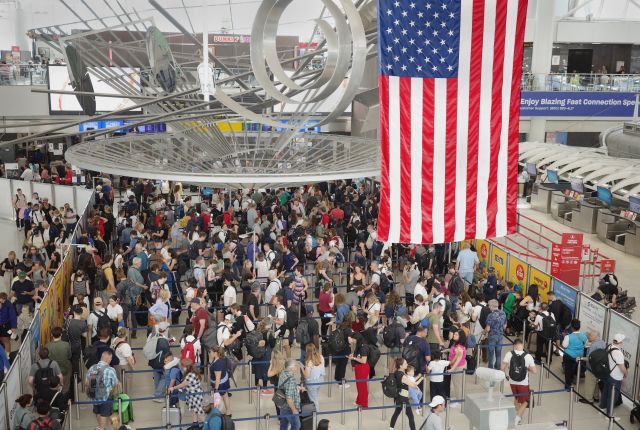
If you're flying anywhere this spring break, give yourself more time than you think you need. The CEOs of every major US airline sent an open letter to Congress on Sunday demanding an end to the shutdown and paychecks for the 50,000 TSA officers who have been working without pay for 29 days. Lines at some airports have already stretched past three hours, more than 300 TSA officers have quit since the shutdown began, and the busy spring break travel season is already underway. Here's what you need to know before you leave the house.
The Department of Homeland Security, which oversees the TSA, has been without funding since February 13 after Congress failed to reach a deal. That means thousands of TSA officers have now been working without pay for weeks. This is also the third shutdown in less than a year to leave TSA workers in that position, and the strain adds up the longer it continues.
More than 300 TSA officers have already quit since the shutdown began. Unscheduled absences have climbed to about 6% nationwide, and some airports are starting to feel the impact. A few have had to close security checkpoints because there simply aren’t enough staff to run them.
In some places, the situation has gotten personal. Airports and local groups have organized fundraisers to help TSA workers cover basic expenses like groceries while they continue showing up to work without a paycheck.
The last prolonged shutdown offers a useful point of comparison. During the 43-day shutdown in 2019, disruptions eventually spread across the aviation system and the FAA ordered a 10% reduction in flights at major airports. The current situation hasn’t reached that point yet. But the direction things are moving is something travelers should keep an eye on.
The disruptions aren’t hitting every airport the same way, but they’re starting to spread. In Austin on Friday morning, security lines stretched out the door, with some passengers waiting hours just to get through screening and reach their gates.
Houston Hobby and New Orleans both reported lines topping two hours last week. Newark also flagged higher-than-normal delays on Saturday. Travel experts say the real problem is that many passengers didn’t expect waits this long. Some travelers are already missing flights simply because they didn’t leave enough extra time to get through security.
On Sunday, the CEOs of American Airlines, United Airlines, Delta, Southwest, JetBlue, Alaska Air, and cargo carriers including FedEx and UPS sent a joint open letter to Congress. The message was direct.
"Too many travelers are having to wait in extraordinarily long and painfully slow lines at checkpoints," the letter read. "Americans who live in your districts and home states are tired of long lines at airports, travel delays and flight cancellations caused by shutdown after shutdown."
The group called for two things: an immediate deal to fund the Department of Homeland Security, and legislation ensuring that critical aviation workers are paid during any future shutdowns, regardless of political standoffs in Washington.
Airlines are expecting a record-breaking spring travel period, with 171 million passengers expected to fly over the next two months, up 4% from last year. The timing couldn't be worse.
A few practical steps that will make your trip significantly less stressful right now:
Arrive earlier than usual. Two hours is the standard recommendation for domestic flights. Right now three hours is smarter if you're flying from a major hub.
Book the earliest flight you can. Morning flights are less likely to be affected by cascading delays that build throughout the day.
Use TSA PreCheck or Global Entry if you have it. Global Entry processing, which had been paused earlier in the shutdown, resumed last Wednesday, and PreCheck lanes are generally moving faster than standard security right now.
Pack essentials in your carry-on. If your checked bag gets delayed, you'll want your medications, chargers, and a change of clothes within reach.
Know your rights if things go wrong. If your flight is canceled or significantly delayed, you're entitled to reject the new schedule and receive a full cash refund. For baggage issues on domestic flights, airlines must reimburse reasonable expenses up to $3,800 per passenger under federal regulations.
Check your travel insurance and credit card benefits. Many travel cards and insurance policies cover delays, missed connections, and lost luggage. Now is a good time to know what yours covers before you need it.
The shutdown shows no sign of ending quickly, and spring break travel doesn't wait for Washington to get its act together. Give yourself extra time, know your rights, and check your flight status before you leave the house. The lines are long but the flights are still moving.
A partial government shutdown has left 50,000 TSA officers working without pay since February 13. More than 300 have quit since the shutdown began, unscheduled absences have risen to roughly 6% nationwide, and some airports have closed security checkpoints due to staffing shortages.
Houston Hobby, New Orleans, Austin, and Newark have all reported significant delays in recent days, with some lines exceeding two to three hours. Conditions are changing daily, so check your specific airport before you travel.
Contact your airline immediately. If the delay causes you to miss a connection or significantly disrupts your itinerary, you may be entitled to rebooking or in some cases a refund. Document your wait time if possible, as this may support a claim through your travel insurance or credit card benefits.
Yes. If your airline cancels your flight or significantly changes your schedule, you're entitled to reject the new schedule and receive a full cash refund, regardless of the reason for the disruption.
Yes. PreCheck lanes are generally moving faster than standard security lanes right now. If you have PreCheck or Global Entry, use it. Global Entry processing resumed last Wednesday after being paused earlier in the shutdown.
The Department of Homeland Security's funding lapsed on February 13, 2026, making the current shutdown 29 days old as of March 15. It is the third shutdown in less than a year to leave TSA workers without pay.
Last fall's shutdown lasted 43 days and led to widespread flight disruptions, including an FAA-ordered 10% flight cut at major airports. The current shutdown is approaching that length if a deal is not reached soon.
Yes. Nearly two dozen US airports, including San Francisco International, use private contractors under TSA oversight rather than federal employees. Because their pay comes from pre-allocated federal contracts, it continues uninterrupted during government shutdowns.