We use cookies to enhance your browsing experience, serve personalized content, and analyze our traffic. By clicking "Accept All" you accept this and consent that we share this information with third parties and that your data may be processed in the USA. For more information, please read our .
You can adjust your preferences at any time. If you deny, we will use only the essential cookies and unfortunately, you will not receive any personalized content.

Magma levels beneath Southwest Iceland are rising again, and scientists say the most likely scenario in the coming weeks is another eruption along the Sundhnukagigar Craters near Grindavík. If you are planning a trip to Iceland in 2026, here is what you need to know, what the risks actually are, and how to experience volcanoes safely.
According to the Icelandic Meteorological Office, magma accumulation under the Svartsengi volcanic system is slow but steady. Roughly 22 million cubic meters of magma have gathered beneath the surface since the last eruption in July. That volume is nearing the highest levels measured since this eruption cycle began in late 2023.
The most likely scenario over the coming weeks is a magma intrusion from Svartsengi toward the Sundhnukagigar crater row. If pressure continues to build, it could end in another fissure eruption similar to those seen since 2023.
In other words, the underground pressure is rising. Iceland is watching closely.
Sundhnukagigar is a row of craters just outside the fishing town of Grindavík on the Reykjanes Peninsula in Southwest Iceland.
It is part of the same broader volcanic awakening that began in 2021, but it is not the same site as Fagradalsfjall, which erupted in 2021 and 2022 and became the hike-to-the-lava moment seen around the world.
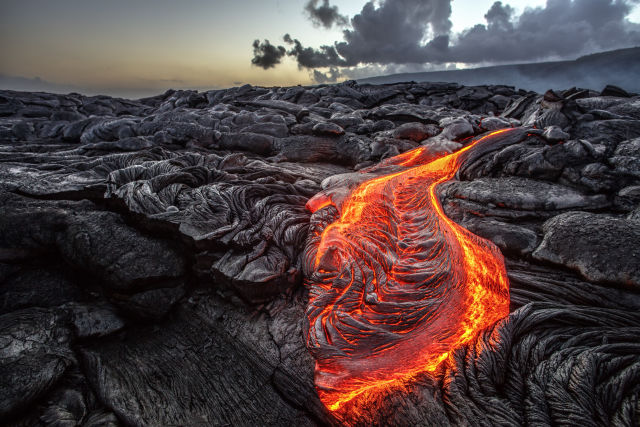
Since late 2023, the Sundhnukagigar system has erupted repeatedly. Lava fountains have reached over 150 feet high during recent events, most recently in July 2025. These are fissure eruptions, meaning lava flows from cracks in the earth rather than explosive ash clouds.
That distinction matters. These events are dramatic, but typically localized.
For most travelers, very likely not.
Even during recent eruptions:
Keflavík International Airport remained open
Daily life in Reykjavík continued normally
Major tourist routes stayed accessible
Closures were limited to specific hazard zones
Iceland erupting does not automatically mean chaos. It means geology doing what geology does, and a country that is very good at watching it happen.
Iceland has some of the most advanced volcanic monitoring systems in the world. Seismometers, GPS stations, satellites, and gas sensors provide early warnings. Evacuations near Grindavík have been proactive and orderly.
This is not guesswork. It is preparation.
I visited the Fagradalsfjall eruption in 2021, and it remains one of the most extraordinary natural experiences I’ve ever had. You could feel the heat radiating through the ground beneath your boots, and the air carried that faint metallic scent that only fresh lava seems to have. Standing there watching molten rock slowly reshape the landscape is something that stays with you.
What made that experience possible, though, wasn’t luck. It was structure.
Every trail was clearly marked. Access points were controlled. When authorities adjusted routes or closed sections, people followed the guidance. That is why thousands of visitors were able to witness something incredible without it turning into a disaster.
The same principle applies in 2026. If Iceland closes a path, it is closed. If barriers are up, they are there for a reason. New lava can appear solid while remaining dangerously hot beneath the surface, and volcanic gases can collect in low areas even when nothing looks dramatic.
The beauty is real, but so is the risk. Iceland manages both carefully, and travelers should too.
If an eruption occurs and safe viewing areas are opened, here is the checklist:
Check official updates before you leave
Never enter restricted zones
Stay on marked trails
Watch wind direction and air quality
Wear proper hiking boots and layers
Do not hike alone
Use official sources for real-time updates:
Visit Reykjanes eruption hub:
Monitor the Sundhnukagigar crater guide:
Remember: Conditions can change quickly. Yesterday’s access does not guarantee today’s.
The Reykjanes Peninsula appears to have entered a new volcanic cycle after centuries of quiet. Scientists believe eruptive phases here can last years or even decades.
That does not mean Iceland is unstable. It means Iceland is alive. Monitoring continues. Hazard assessments are updated. Infrastructure is reinforced. Access is managed carefully.
If another eruption happens at Sundhnukagigar in 2026, it will likely be dramatic and visually stunning. It will also likely remain localized, monitored, and managed.
Your job as a traveler is simple: stay informed, respect the closures, and let Iceland lead.
And if you do see lava glowing against a dark Icelandic sky, consider yourself very lucky.
Is Sundhnukagigar erupting right now?
As of the latest update from the Icelandic Meteorological Office, magma is accumulating beneath Svartsengi, but no active eruption has begun. Officials are closely monitoring pressure levels and seismic activity.
Is Iceland safe to visit during volcanic activity?
Yes. Iceland remains one of the safest destinations in the world, even during eruption cycles. Activity is typically localized, and authorities provide clear guidance and controlled access.
Will flights be canceled if Sundhnukagigar erupts?
Fissure eruptions like those at Sundhnukagigar Craters usually do not produce large ash clouds. During recent eruptions, Keflavík International Airport remained operational.
Can you hike to the eruption site?
Only if authorities officially open safe viewing paths. Access changes depending on gas levels, ground stability, and eruption intensity. Always check official sources before heading out.
What is the difference between Sundhnukagigar and Fagradalsfjall?
Fagradalsfjall erupted in 2021 and 2022 and became a major hiking attraction. Sundhnukagigar is part of a newer eruption cycle that began in late 2023 and has been more infrastructure-sensitive.