We use cookies to enhance your browsing experience, serve personalized content, and analyze our traffic. By clicking "Accept All" you accept this and consent that we share this information with third parties and that your data may be processed in the USA. For more information, please read our .
You can adjust your preferences at any time. If you deny, we will use only the essential cookies and unfortunately, you will not receive any personalized content.

On Friday, April 17, Iran declared the Strait of Hormuz completely open to commercial shipping, sending oil prices tumbling more than 10% within minutes of the announcement. The news followed a 10-day ceasefire between Israel and Lebanon that took effect Thursday night, and markets responded immediately. For travelers who've been watching flight prices climb steadily since the conflict began, this is the first genuinely good news in weeks. There's a catch, though: the opening is tied to the ceasefire window, a permanent deal is still being negotiated, and the full ripple effect on airfares won't happen overnight.
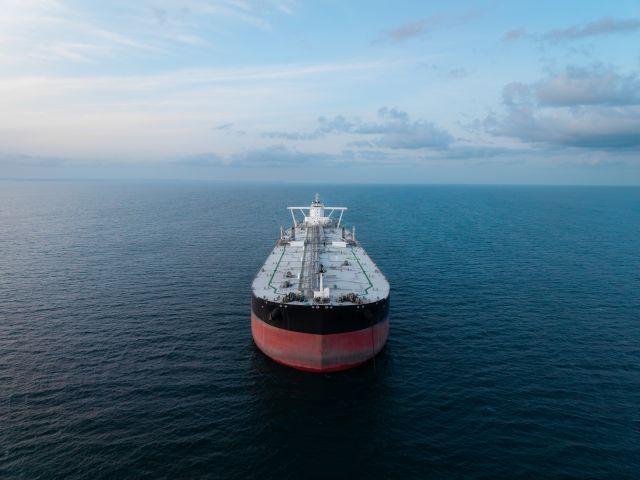
You might not think a narrow waterway in the Persian Gulf has much to do with your summer trip to Europe, but it does. The Strait of Hormuz connects the Persian Gulf to the Arabian Sea, and roughly 20% of the world’s oil and natural gas moves through it every day. That’s about 20 million barrels of oil daily, according to the U.S. Energy Information Administration.
When Iran largely closed the strait earlier this year in response to U.S. and Israeli military action, the impact showed up almost immediately. Oil prices climbed past $100 a barrel in early March and peaked above $119 later in the month. Airlines, which are especially sensitive to fuel costs, started reacting quickly. Routes were cut, surcharges were introduced, and ticket prices began to rise.
KLM alone announced 160 flight cancellations in May. Across the board, fares have been moving up.
On Friday morning, Iranian Foreign Minister Abbas Araghchi said on social media that the Strait of Hormuz is now “completely open” to commercial vessels for the duration of the ceasefire. Ships are being directed through a coordinated route managed by Iran’s maritime authorities, but traffic is moving again.
Markets reacted almost immediately. Brent crude dropped to around $88 a barrel, down from above $98 earlier in the day. European natural gas prices fell roughly 8 to 9 percent, and U.S. crude slid more than 10 percent.
President Trump posted “THANK YOU!” on Truth Social after making the announcement.
Source: Screenshot from Truth Social (@realDonaldTrump)
The President then clarified that the U.S. naval blockade of Iranian ports will remain in place until a longer-term agreement is reached. The strait itself, though, is open to commercial shipping for now.
Source: Screenshot from Truth Social (@realDonaldTrump)
The short answer: relief is coming, but not overnight.
Jet fuel is one of the biggest costs airlines deal with, so when oil prices drop this sharply, it matters. Lower fuel costs usually mean fares stabilize, surcharges ease, and some routes that were cut start to come back.
But this won’t reset everything right away. The International Energy Agency has already warned that supply chain disruptions will take time to unwind. Europe is still sitting on roughly six weeks of kerosene reserves, and there’s a backlog of tankers that have been waiting in the Gulf of Oman and Persian Gulf for weeks. Even under ideal conditions, clearing that backlog could take a couple of weeks, with full normalization taking longer.
In practical terms, flights for late May and June may still reflect the higher, disruption-driven pricing. But if you’re booking for late summer or fall, the outlook is already starting to look a bit better than it did even a few days ago.
This reopening is tied to the current ceasefire, which is set to run about 10 days, through roughly April 22. U.S. and Iranian negotiators are expected to meet again this weekend in Pakistan for another round of talks aimed at a longer-term agreement.
If those talks move forward, energy markets should continue to stabilize, and airline pricing will likely follow. If they stall, the strait could close again and the cycle starts over. It’s something both market watchers and security analysts are tracking closely.
There are other moving parts too. The ceasefire in Lebanon is still being described as fragile, with Hezbollah signaling it isn’t stepping back and Israel maintaining its presence in the south. Until more of those pieces fall into place, this isn’t fully settled yet.
If you’ve been holding off on summer travel because of high fares, this is a good time to start checking prices again. Oil markets have moved quickly over the past 24 hours, and some of that may already be filtering into airline pricing.
Flexibility still matters. If you can book refundable fares or use a credit card with strong change protections, you’ll be in a better position if things shift again. And if your plans involve the Middle East, either as a destination or a connection, it’s worth keeping a close eye on airline advisories as the situation continues to evolve.
There is some real good news here, though. A key shipping lane is open again, fuel prices are easing, and the market is starting to respond. The next step is a more permanent agreement, and those conversations are already underway.
It's a narrow waterway connecting the Persian Gulf to the Arabian Sea, roughly 33 kilometers wide at its narrowest point. About 20% of the world's oil and natural gas passes through it every day, making it one of the most critical energy chokepoints on earth.
Iran largely shut the strait to vessels linked to the U.S., Israel, and their allies after a U.S.-Israeli attack on Iran in February 2026. The closure caused the biggest oil supply disruption in history and sent energy prices sharply higher.
Iran declared it open to all commercial vessels on April 17, 2026, for the duration of a 10-day ceasefire between Israel and Lebanon. Ships must follow a designated route. The U.S. naval blockade of Iranian ports specifically remains in place.
Likely yes, over time. Oil prices dropped sharply after the announcement, which should ease jet fuel costs for airlines. Expect gradual improvement rather than an immediate overnight drop in fares.
KLM announced 160 flight cancellations in May due to high fuel prices tied to the conflict. Other carriers have also adjusted routes and applied fuel surcharges.
Analysts estimate it could take at least two to three weeks to clear the tanker backlog that built up during the closure, with full supply chain normalization expected to take considerably longer.
Not yet. The opening is tied to a 10-day ceasefire that runs through approximately April 22. U.S. and Iranian negotiators are continuing talks toward a permanent deal, with another meeting expected this weekend.
If you're booking for late summer or fall, now may be a reasonable time to check prices as the market absorbs the news. For travel in the next few weeks, pricing may still reflect the disruption period. Flexible or refundable fares are a smart hedge given ongoing uncertainty.