We use cookies to enhance your browsing experience, serve personalized content, and analyze our traffic. By clicking "Accept All" you accept this and consent that we share this information with third parties and that your data may be processed in the USA. For more information, please read our .
You can adjust your preferences at any time. If you deny, we will use only the essential cookies and unfortunately, you will not receive any personalized content.

KLM, the Dutch national airline, is canceling 160 European flights in May because rising fuel costs have made them too expensive to operate. It's the first major airline to frame cuts this explicitly around financial viability, and it won't be the last. The Iran conflict has pushed European jet fuel prices to record highs, and the ripple effects are now showing up directly on flight schedules. Here's what it means if you have a Europe trip on the books.
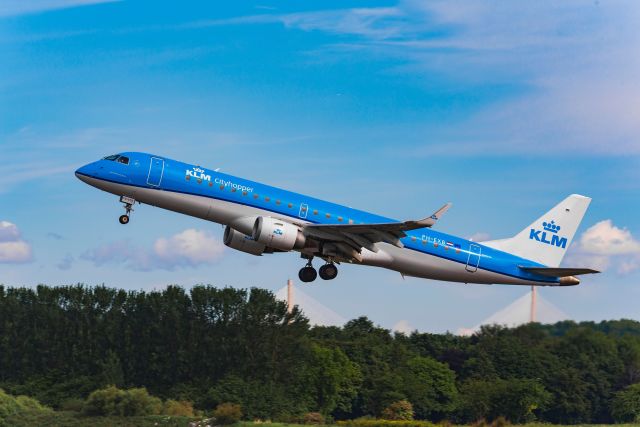
KLM Royal Dutch Airlines announced Thursday that it’s canceling 160 European flights next month, or about 80 round-trip routes to and from Amsterdam’s Schiphol Airport. That’s still less than 1% of its total European schedule for May, and the airline was quick to point out there’s no actual fuel shortage.
But the reason behind the cuts is the part that matters. KLM says these routes simply aren’t financially viable anymore because of rising kerosene costs. That’s essentially an airline saying it’s cheaper not to operate a flight than to run it at a loss. And that tells you a lot about where fuel prices are right now.
KLM says it’s working to rebook affected passengers and is still expecting a busy May travel period. If you’re booked on an intra-European KLM flight, it’s worth checking your itinerary ahead of time rather than waiting until you get to the airport.
This all traces back to the ongoing conflict involving Iran and the disruption in the Strait of Hormuz, a narrow but critical waterway that normally carries about 20% of the world’s oil supply. European airlines rely heavily on jet fuel imports from the Middle East, and that supply chain has been under sustained pressure for weeks.
The impact is already showing up in prices. European jet fuel costs have more than doubled since before the conflict escalated. The International Energy Agency has warned that if supply isn’t replaced in a meaningful way, some airports could start seeing physical shortages as early as June. The U.S. has increased exports to help, but even at full capacity, it would only cover about half of what Europe typically imports from the region.
Airlines are already feeling it. EasyJet said it absorbed an extra £25 million (about $31 million USD) in fuel costs in March alone, and that’s with more than three-quarters of its fuel locked in at pre-conflict prices. For carriers without that kind of protection, the pressure is even higher.
KLM is the first major airline to frame cancellations this clearly around cost, but the pressure isn’t unique to them. Across Europe, carriers have already been adjusting schedules and raising fares in response to rising fuel prices. Once one airline starts cutting unprofitable routes, others usually aren’t far behind.
So far, the cuts are focused on shorter intra-European flights, where already thin margins are getting squeezed by record fuel costs. Transatlantic routes between the U.S. and Europe aren’t part of this yet, which is reassuring if you’re flying over from the States. But if your trip includes a connection within Europe, that second leg is where things start to get less predictable.
You don’t need to cancel anything yet, but this is a good moment to get a step ahead of it.
Take a quick look at your itinerary, especially if you have a connection within Europe, and make sure nothing has quietly changed.
Check your airline’s current change policy too. A lot of carriers have issued travel waivers tied to the fuel situation, which can give you more flexibility than your original ticket suggests.
If you don’t already have travel insurance, it’s worth looking into sooner rather than later, particularly policies that cover trip interruptions linked to airline operations. As this gets more attention, coverage options may start to tighten.
It’s also a good idea to set up flight alerts for your specific routes. If disruptions start to spread, they tend to happen quickly, and rebooking options during peak summer travel can disappear just as fast.
Europe is still very much open for business, and this could shift quickly if supply routes stabilize. For now, it’s less about changing your plans and more about staying flexible.
At the same time, the fuel situation is real and moving quickly, and KLM’s announcement is the clearest sign yet that it’s starting to affect actual flight schedules. It’s worth knowing your options before your airline makes those decisions for you.
KLM cited rising kerosene costs as the reason certain intra-European routes are no longer financially viable. The airline is cutting 80 return routes to and from Amsterdam Schiphol, affecting 160 flights total.
Not yet, officially. KLM and the European Commission both say there's no physical shortage at this time. But the IEA has warned that shortages at certain airports could emerge as early as June if Middle East supply chains aren't restored.
Long-haul transatlantic routes are not currently at risk. The concern is focused on shorter intra-European connections, where thin margins are most exposed to the fuel price spike.
More than doubled. European jet fuel hit a record $1,838 per tonne at the start of April, up from around $831 before the conflict began.
KLM is the first to announce cancellations explicitly tied to cost viability, but all European carriers are under pressure. EasyJet absorbed around $31 million in extra fuel costs in March alone. Airlines with less hedging in place are likely in a tougher spot.
Not based on this alone. The situation is serious but still developing. Check your flexibility options, protect your booking, and keep an eye on updates as your trip gets closer.
It's a narrow waterway between Iran and Oman through which roughly 20% of the world's oil supply flows. Disruptions there directly affect jet fuel supply and pricing across Europe and Asia.
Check your itinerary now. KLM is working to rebook affected passengers, and any changes to your specific flights should be reflected in the airline's app or confirmation email.