We use cookies to enhance your browsing experience, serve personalized content, and analyze our traffic. By clicking "Accept All" you accept this and consent that we share this information with third parties and that your data may be processed in the USA. For more information, please read our .
You can adjust your preferences at any time. If you deny, we will use only the essential cookies and unfortunately, you will not receive any personalized content.

Spirit Airlines has a bold ask for the American taxpayer: save us from collapse, and we will give you a piece of the airline. The budget carrier, already deep in its second bankruptcy in under two years, has floated offering the U.S. government an equity stake in exchange for an emergency cash infusion. Whether Washington will take the deal is another question entirely.
This isn’t a routine turbulence story. Spirit’s restructuring plan was built on jet fuel costing around $2.24 per gallon. By mid-April, that number had climbed to $4.32, nearly double the assumption the airline based its recovery on.
The spike traces back to the ongoing Iran conflict. When the U.S. and Israel began military operations in late February 2026, Iran responded by closing the Strait of Hormuz, a narrow corridor that carries roughly 20% of the world’s traded oil. The ripple effect was immediate. Jet fuel, which makes up about 30% of an airline’s operating costs, surged to an average of $4.88 per gallon at major U.S. airports by early April.
At that level, the numbers stop adding up. J.P. Morgan estimated that if fuel holds around $4.60 per gallon through the year, Spirit’s projected operating margin for 2026 could fall to roughly negative 20%. That translates to about $360 million in additional expenses, a figure that exceeds the airline’s entire cash balance at the end of fiscal year 2025. At that point, it’s not a squeeze. It’s a structural problem the current plan wasn’t built to handle.
Facing a creditor payment it may not be able to meet, Spirit has reached for an unusual kind of lifeline. Spirit Aviation Holdings Inc. has reportedly floated the idea of offering the U.S. government an equity stake in the airline as a way to avoid potential liquidation, according to people familiar with the discussions. Those talks remain confidential, but the signal is clear. The situation has moved beyond short-term fixes.
There is at least some recent precedent to point to. A Bloomberg Law report compared the idea to the federal government taking a 9.9% stake in Intel last year through the Commerce Department’s semiconductor incentives program. That program was explicitly authorized by Congress, with up to $75 billion available. Even so, critics have been quick to note that Spirit is not Intel, and the policy rationale is far less straightforward.
At the same time, the broader low-cost airline sector is trying to buy time. The Association of Value Airlines, which represents carriers like Spirit and Frontier, sent a letter to congressional leaders last week requesting temporary relief from certain fees and taxes. Among the proposals is a suspension of the 7.5% federal excise tax on airline tickets. The group warned that without some form of relief, sustained fuel cost pressure will inevitably show up in ticket prices, pushing the burden directly onto travelers.
The legal path to any kind of bailout is murky at best. There’s no clear authority for the administration to take an ownership stake in an airline like Spirit, and the tools that do exist, whether it’s the Exchange Stabilization Fund or the Defense Production Act, weren’t designed for something like this. Each comes with constraints that make applying them here complicated, if not impractical.
Even if a path could be found, it raises uncomfortable questions about conflicts of interest. The Department of Transportation routinely makes decisions about slot allocations at congested airports. If the government had a financial stake in Spirit, would those decisions remain neutral? The same tension applies to the FAA. Enforcing safety rules or issuing fines against an airline partially owned by the government would mean regulating an asset it also has an interest in protecting.
And underneath all of this is a more basic question that’s harder to ignore: is Spirit actually worth saving? Airlines don’t vanish in a vacuum. The planes, crews, and airport access don’t disappear if a company fails. There would likely be short-term disruption, but capacity tends to rebalance. Spirit was only projected to be about 2% the size of the major carriers, American, Delta, United, and Southwest. The system would adjust. The question is how much disruption policymakers are willing to tolerate along the way.
It’s worth remembering that Spirit’s problems didn’t start with the Iran conflict. The airline had already filed for Chapter 11 bankruptcy protection in August 2025, its second filing in less than a year. Before that, regulators blocked its proposed merger with JetBlue, a deal that might have fundamentally reshaped the airline, after a federal judge rejected it in January 2024.
In the months since, there were signs of a path forward. Pilot and flight attendant unions agreed to concessions, and the airline outlined a plan to shrink its network and focus on high-demand routes, aiming to exit bankruptcy as early as this spring. The fuel spike hit at exactly the wrong moment, just as that plan was supposed to come together.
As analyst Henry Harteveldt put it, Spirit is “flying on financial fumes.” For travelers, that translates into real uncertainty. If creditor support falters, operations could be disrupted with very little warning. Anyone with upcoming bookings may want to start thinking through backup options now, rather than waiting to see how it plays out.
Don't wait for a cancellation email that may never come. Here's what to do today.
If you paid by credit card, check your card's "failure of service" protection. Most major cards cover you if an airline stops operating, but you'll typically need to initiate a chargeback within 60 days of the charge appearing on your statement. Gather your confirmation number, receipts, and documentation now.
If you have travel insurance, call your provider today. Coverage varies widely, so get clarity on your policy before you book any alternative flights.
Download your boarding pass and keep your confirmation number somewhere offline. Airline websites and apps are often taken down quickly during a shutdown, and you'll need documentation for any credit card dispute or bankruptcy court claim.
Start looking at backup routes. If Spirit is your only option at a given airport, like Latrobe, Pennsylvania, where it's been the sole commercial carrier for 15 years, check Pittsburgh International or other nearby alternatives now, before prices spike.
If you're already away from home, contact other airlines directly. Some carriers offer discounted fares or standby options for stranded passengers, though nothing is guaranteed.
As a last resort, passengers can file a claim in bankruptcy court, though that process typically puts travelers behind other creditors, and reimbursement may be limited.
If Spirit restructures, your bookings likely remain valid. If it liquidates, the picture is far messier. Liquidation would mean a very different playbook, with refunds, rebooking, and loyalty balances all facing far more uncertainty. If you are sitting on a meaningful Free Spirit miles balance, it may be worth redeeming sooner rather than later.
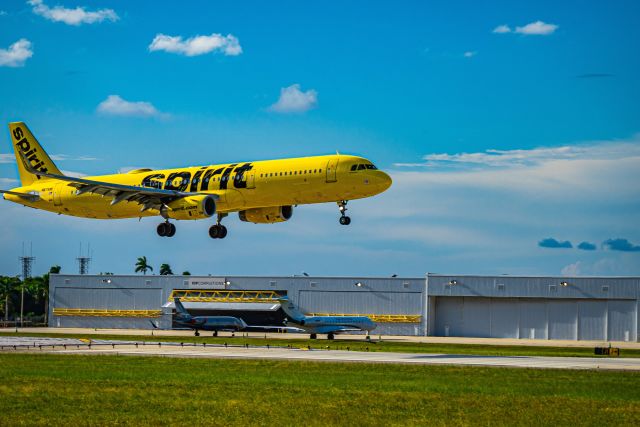
The yellow planes are still in the air. Whether taxpayers end up owning a piece of them is a decision Washington has not made yet.
Yes. As of April 21, Spirit says all flights are operating as scheduled and it’s still accepting new bookings. That said, the situation could change quickly.
Spirit entered Chapter 11 bankruptcy for the second time last year and had been working toward an early summer 2026 exit. The recent spike in jet fuel prices tied to the Iran conflict has made that plan harder to sustain, raising renewed concerns about a possible liquidation.
Unlikely. Spirit has very limited agreements with other carriers, so your ticket won’t automatically transfer. You’d need to rebook on your own and then pursue a refund through your credit card or travel insurance.
Check your credit card’s failure-of-service coverage, download your boarding pass, and save your confirmation details offline. It’s also worth looking at backup flight options and calling your travel insurance provider if you have a policy.
Start with your credit card and file a chargeback. If you have travel insurance, review your coverage. As a last resort, you can file a claim through bankruptcy court, though travelers are typically low on the priority list.
Airports where Spirit plays an outsized role would feel it most. That includes places like Latrobe, Pennsylvania, where it’s the only commercial carrier, along with larger hubs like Fort Lauderdale, Palm Beach, and Chicago O’Hare.
No. Spirit has gone through Chapter 11 twice in recent years and has navigated similar concerns before. But analysts say the current combination of high fuel costs and debt leaves the airline with fewer options this time around.
Spirit has proposed offering the U.S. government an equity stake in the airline in exchange for an emergency cash infusion to avoid liquidation.
Yes. Airlines received significant federal support after September 11 and again during the COVID pandemic. However, both of those interventions addressed industry-wide crises rather than the failure of a single carrier with pre-existing structural problems.
Legal experts say existing mechanisms like the Exchange Stabilization Fund and the Defense Production Act are difficult to apply here, and there is no clear statutory authority for this type of equity investment in a private airline.
Loyalty miles typically become worthless in a liquidation. If you have a meaningful balance, consider redeeming now.
The Association of Value Airlines, which includes Spirit and Frontier, has asked Congress for a temporary suspension of the 7.5% federal excise tax on airline tickets to help offset the surge in fuel costs.
A potential acquirer stepping in before liquidation is one scenario being discussed, though no deal has been reported as of publication.