We use cookies to enhance your browsing experience, serve personalized content, and analyze our traffic. By clicking "Accept All" you accept this and consent that we share this information with third parties and that your data may be processed in the USA. For more information, please read our .
You can adjust your preferences at any time. If you deny, we will use only the essential cookies and unfortunately, you will not receive any personalized content.

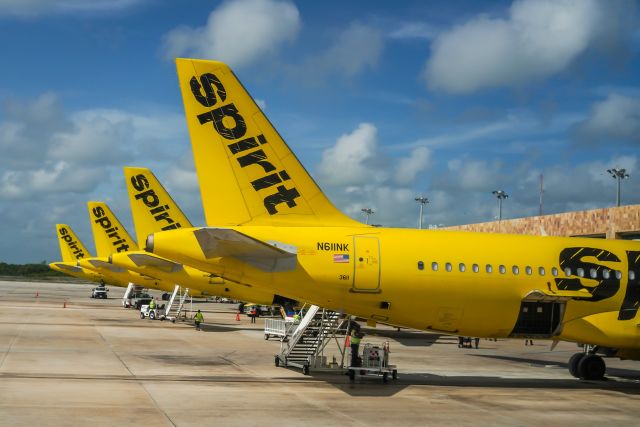
Spirit Airlines may be days away from shutting down entirely, and if you have a ticket booked on a yellow plane, you need to read this now. Multiple reports from Bloomberg, the Wall Street Journal, and CBS News surfaced Thursday indicating that Spirit Aviation Holdings is at risk of liquidation as rising jet fuel prices spurred by the Iran war are squeezing the bankrupt carrier's finances, and that a decision could come as soon as this week.
Spirit has been under pressure for a while now, and the past few years haven’t exactly helped. The airline has lost billions since the pandemic, watched its merger with JetBlue fall apart, and gone through Chapter 11 bankruptcy twice in quick succession. As recently as mid-March 2026, Spirit was still saying it expected to exit bankruptcy by early summer, with a plan to shrink its fleet, cut routes, and reduce its debt from about $7.4 billion to around $2 billion.
Then fuel costs changed the picture. The ongoing Iran conflict has pushed prices higher, and that hits low-cost carriers like Spirit especially hard. JPMorgan estimated that if fuel holds around $4.60 a gallon this year, Spirit’s operating margin could fall from an already weak negative 7% to closer to negative 20% in 2026. That’s not a small setback. It’s a major shift in how viable the recovery plan actually looks.
There are also signs of concern from inside the process. The U.S. bankruptcy trustee has asked for a delay in Spirit’s exit from Chapter 11, pointing to gaps in the airline’s recovery plan. Taken together, it suggests the path forward is getting less certain, not more.
Industry experts say it’s still relatively rare for an airline to fully shut down, but there’s a growing sense that Spirit may be running out of ways to fix things. At a certain point, there just aren’t many levers left to pull.
If it does come to that, the process is fairly straightforward. The airline’s planes are sold off, and the court looks to recover as much as possible for creditors. For passengers, though, it’s much less straightforward. Your ticket likely won’t transfer to another airline. Spirit has very limited agreements with major carriers, so there’s no built-in fallback to get you onto a Delta or United flight.
Don't wait for a cancellation email that may never come. Here's what to do today.
If you paid by credit card, check your card's "failure of service" protection. Most major cards cover you if an airline stops operating, but you'll typically need to initiate a chargeback within 60 days of the charge appearing on your statement. Gather your confirmation number, receipts, and documentation now.
If you have travel insurance, call your provider today. Coverage varies widely, so get clarity on your policy before you book any alternative flights.
Download your boarding pass and keep your confirmation number somewhere offline. Airline websites and apps are often taken down quickly during a shutdown, and you'll need documentation for any credit card dispute or bankruptcy court claim.
Start looking at backup routes. If Spirit is your only option at a given airport, like Latrobe, Pennsylvania, where it's been the sole commercial carrier for 15 years, check Pittsburgh International or other nearby alternatives now, before prices spike.
If you're already away from home, contact other airlines directly. Some carriers offer discounted fares or standby options for stranded passengers, though nothing is guaranteed.
As a last resort, passengers can file a claim in bankruptcy court, though that process typically puts travelers behind other creditors, and reimbursement may be limited.
Travel experts are already starting to flag some caution around future bookings. The general advice right now is to be careful with anything in the early or late summer window, especially if it’s nonrefundable.
Spirit says flights are still operating as scheduled and isn’t commenting on market speculation. But the situation is shifting quickly, and booking a nonrefundable fare with them right now comes with some real risk. For now, keep a close eye on your email, your airline’s app, and your credit card protections. We’ll keep updating this as things develop.
Yes. As of April 17, Spirit says all flights are operating as scheduled and it’s still accepting new bookings. That said, the situation could change quickly.
Spirit entered Chapter 11 bankruptcy for the second time last year and had been working toward an early summer 2026 exit. The recent spike in jet fuel prices tied to the Iran conflict has made that plan harder to sustain, raising renewed concerns about a possible liquidation.
Unlikely. Spirit has very limited agreements with other carriers, so your ticket won’t automatically transfer. You’d need to rebook on your own and then pursue a refund through your credit card or travel insurance.
Check your credit card’s failure-of-service coverage, download your boarding pass, and save your confirmation details offline. It’s also worth looking at backup flight options and calling your travel insurance provider if you have a policy.
Start with your credit card and file a chargeback. If you have travel insurance, review your coverage. As a last resort, you can file a claim through bankruptcy court, though travelers are typically low on the priority list.
Airports where Spirit plays an outsized role would feel it most. That includes places like Latrobe, Pennsylvania, where it’s the only commercial carrier, along with larger hubs like Fort Lauderdale, Palm Beach, and Chicago O’Hare.
No. Spirit has gone through Chapter 11 twice in recent years and has navigated similar concerns before. But analysts say the current combination of high fuel costs and debt leaves the airline with fewer options this time around.