
We use cookies to enhance your browsing experience, serve personalized content, and analyze our traffic. By clicking "Accept All" you accept this and consent that we share this information with third parties and that your data may be processed in the USA. For more information, please read our .
You can adjust your preferences at any time. If you deny, we will use only the essential cookies and unfortunately, you will not receive any personalized content.
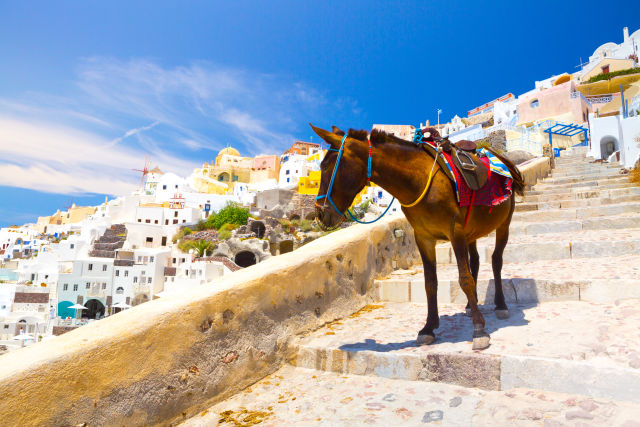
A law in Santorini bans tourists over a certain weight from riding donkeys, setting firm limits on how much the animals can safely carry. Introduced under Greece’s national animal welfare regulations, the rule followed mounting concerns about injuries, heat stress, and overwork in one of Europe’s busiest tourist destinations and continues to shape how visitors move around the island today.
The regulation at the center of today’s viral headlines went into effect in 2018, when Greece’s Ministry of Rural Development and Food formally issued updated guidance on the treatment of working equines.
The rules were circulated nationwide but drew particular attention in Santorini, where donkeys have long been used to transport tourists up the steep stone steps between the Old Port and Fira. While animal welfare protections already existed under Greek law, the 2018 update clarified weight limits and owner responsibilities, making the standards easier to enforce in tourism-heavy areas.
The move followed years of complaints from animal welfare organizations, local advocates, and veterinarians who warned that donkeys were being pushed beyond safe physical limits. In the summer of 2018, photos and videos circulated widely showing donkeys with visible wounds, signs of spinal strain, and exhaustion after repeated trips in extreme heat.
Petitions calling for intervention gathered tens of thousands of signatures, and international animal welfare groups met with Greek officials and local leaders to push for stronger protections. The government response was not a sudden ban, but a reinforcement of animal welfare standards designed to prevent chronic injury and overwork.
Under the regulation:
Donkeys may not carry more than 100 kilograms (220 pounds)
Loads must not exceed one fifth of the animal’s body weight
Animals must be healthy, rested, and properly hydrated
Injured, ill, pregnant, or physically unfit donkeys cannot be used
The law places legal responsibility on owners to ensure proper care, rest, and working conditions. It regulates animal workload, not tourist access.
Donkeys have historically been used to transport goods through Santorini’s narrow, vehicle-free pathways. As tourism increased, the practice shifted from necessity to attraction, with animals making multiple trips per day during peak season.
Critics argued that the combination of heavier loads, steep terrain, and intense summer heat created conditions that were no longer safe. The 2018 regulation aimed to draw a clear line between traditional use and harmful overuse.
Donkey rides are still allowed under regulation, but travelers now have widely promoted alternatives. Santorini’s cable car and walking routes reduce reliance on animals and are often recommended as faster and more humane options. The rule fits into a broader effort by Greek authorities to address overtourism and promote more sustainable travel practices on the island.
Is Santorini banning tourists over a certain weight?
No. The law limits how much weight a donkey can carry. It does not restrict who can visit the island.
When did the Santorini donkey law go into effect?
The regulation was introduced and enforced in 2018.
Why was the law created?
It followed widespread reporting and complaints about donkey injuries, heat stress, and overwork linked to heavy tourism.
Are donkey rides still allowed in Santorini?
Yes, but only under strict weight and animal welfare guidelines.
What is the best alternative to riding a donkey in Santorini?
The cable car or walking route are the most common animal-friendly options.