We use cookies to enhance your browsing experience, serve personalized content, and analyze our traffic. By clicking "Accept All" you accept this and consent that we share this information with third parties and that your data may be processed in the USA. For more information, please read our .
You can adjust your preferences at any time. If you deny, we will use only the essential cookies and unfortunately, you will not receive any personalized content.

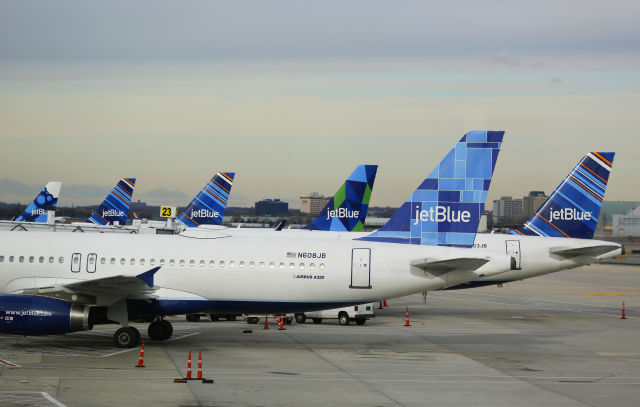
A nationwide ground stop for all JetBlue flights was canceled within an hour on Tuesday by the Federal Aviation Administration (FAA), after the airline said it had resolved a system outage. If you woke up to news that every JetBlue plane in America was grounded and immediately checked your booking, you weren't overreacting. It happened, it was real, and it's now over. Here's the full picture.
JetBlue asked the FAA to issue a nationwide ground stop early Tuesday, temporarily preventing any of the airline’s planes from taking off. Flights that were already in the air were allowed to continue to their destinations.
About 90 minutes later, the FAA lifted the advisory and flights began moving again. That is actually a fairly quick resolution for a disruption like this, but even a pause of that length can ripple through an airline’s network and lead to delays as aircraft and crews fall out of position.
JetBlue says the cause was a brief internal system outage that has since been fixed. “A brief system outage has been resolved and we have resumed operations,” a company spokesperson said in a statement. The airline did not specify which system failed or why the issue affected the network at the same time.
It can sound dramatic when you hear that a “system outage” stopped every flight in the country, but the explanation is actually pretty simple once you know how airline operations work.
Modern airlines run on a constant stream of real-time information shared between dispatch centers, gate agents, pilots, and air traffic controllers. Things like passenger lists, weather routing, crew assignments, fuel planning, and aircraft weight calculations all move through interconnected systems. When one of those core systems goes down, crews can suddenly lose access to the information they need to legally clear a flight for departure.
In that situation, the safest move isn’t to send planes out anyway and figure it out later. Airlines pause departures, fix the system, confirm everything is working again, and then restart operations in an organized way. That’s almost certainly what happened here. The fact that flights resumed after about 90 minutes suggests the outage was contained rather than something more serious.
Even so, things don’t instantly snap back to normal when the ground stop ends. Planes and crews can end up out of position across multiple airports, and it takes time for the schedule to settle back into place.
The ground stop is lifted and flights are moving, but a ripple effect is likely for at least part of Tuesday morning. Here's what to keep in mind:
Check your specific flight status before heading to the airport. The JetBlue app and jetblue.com are the fastest sources for real-time updates on your departure.
FlightAware showed two JetBlue canceled flights and 155 delays as of early Tuesday morning. That number will shift throughout the day as the network restabilizes.
If your flight was canceled, you're entitled to a full refund or free rebooking. Contact JetBlue at 1-800-538-2583 or through the app.
Transit passengers should check both legs of their itinerary, not just the first flight.
Airport departure boards may lag behind real-time conditions during a recovery period. The app is more accurate right now.
This is also worth keeping in mind: JetBlue serves over 110 destinations across the United States, the Caribbean and Latin America, Canada, and Europe. That's a large network, and even a short disruption at this scale takes several hours to fully unwind.
It’s also worth noting that Tuesday is not a normal travel day in the United States, even aside from the JetBlue disruption. The partial government shutdown has TSA lines stretching for hours at some major airports, Global Entry is paused nationwide, and the regional conflict affecting Middle East aviation continues to disrupt international routing for several airlines.
A JetBlue system outage on top of all that makes for a genuinely complicated morning at airports across the country. If you’re traveling today, it’s wise to give yourself extra time, check your flight status before leaving the house, and treat your departure time as a moving target until you’re through security.
The good news is that JetBlue’s outage was relatively brief. The fix came quickly, and the airline appears to be getting flights moving again, which is about the best outcome in a situation like this.
JetBlue experienced a brief system outage that prompted the airline to request a nationwide ground stop from the FAA. The airline said the outage was resolved and operations have resumed. The specific nature of the system failure hasn't been publicly disclosed.
Yes. The FAA canceled the ground stop approximately 90 minutes after it was first issued, and JetBlue confirmed it had resumed operations.
Possibly. FlightAware showed 155 JetBlue delays early Tuesday morning as the network began recovering. Check your specific flight status on the JetBlue app or at jetblue.com before heading to the airport.
Yes. If your flight was canceled due to this disruption, you're entitled to a full refund or free rebooking on a later flight. Contact JetBlue directly at 1-800-538-2583 or through the app to request your options.
No. JetBlue planes already airborne were allowed to continue to their destinations. Only departures were halted while the ground stop was in effect.
A ground stop is an FAA air traffic control measure that temporarily prevents aircraft from departing. It can be issued by the FAA due to weather, safety, or capacity issues, or requested by an airline when it's experiencing operational problems it needs time to resolve.
The fastest options are the JetBlue app, jetblue.com/travel-alerts, and FlightAware at flightaware.com. Airport departure boards may lag behind real-time conditions during a network recovery, so the app is more reliable right now.