We use cookies to enhance your browsing experience, serve personalized content, and analyze our traffic. By clicking "Accept All" you accept this and consent that we share this information with third parties and that your data may be processed in the USA. For more information, please read our .
You can adjust your preferences at any time. If you deny, we will use only the essential cookies and unfortunately, you will not receive any personalized content.
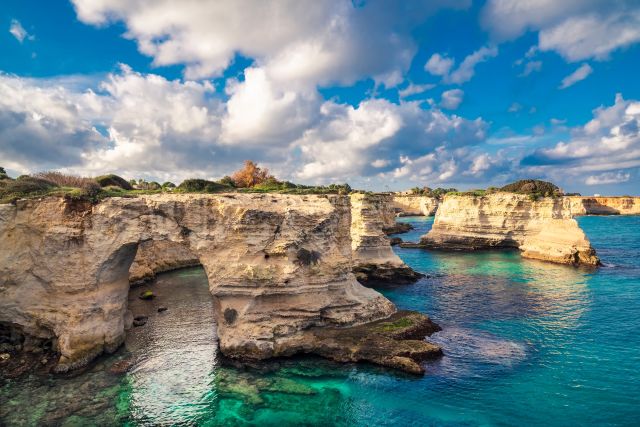
One of Italy’s most romantic coastal landmarks is gone. The natural rock formation known as the Lovers’ Arch collapsed on Valentine’s Day after days of severe weather along the Adriatic coast.
For centuries, couples kissed beneath the arch believing it promised eternal love. Now, the sea that shaped it has reclaimed it, raising urgent questions about coastal erosion, intensifying storms, and the future of fragile landmarks across southern Europe.
If you've ever scrolled past photos of Puglia’s beautiful coastline, you have likely seen it.
The Lovers’ Arch at Faraglioni di Sant’Andrea, carved from pale calcarenite stone on the Salento coast, framed the Adriatic like a natural window. For generations, couples proposed beneath it, celebrated anniversaries beside it, and believed that a kiss under its curve guaranteed lasting love.
On February 14, 2026, after days of heavy rain and violent waves fueled by a powerful Adriatic storm system, the arch gave way. By morning, the structure that had defined this stretch of coastline for centuries had collapsed into rubble. Local officials have described the loss as heartbreaking but inevitable.
The arch was not engineered. It was sculpted over centuries by wind, salt, and waves grinding against the cliffs of southern Italy. Coastal erosion created the hollowed span that would eventually become a symbol of romance and tourism in Puglia.
The same forces that shaped it ultimately destroyed it.
Meteorologists and regional officials pointed to unusually intense wave action and sustained rainfall that accelerated existing structural weaknesses. The formation had already been stressed by earlier winter storms, and the latest system appears to have been the breaking point.
Coastal erosion along parts of southern Italy has been steadily advancing for years. Warmer sea temperatures and more frequent severe weather events are increasing wave energy along vulnerable shorelines, reshaping cliffs, beaches, and marine rock formations. What stood for centuries can disappear in hours. Local leaders have already emphasized the need for stronger coastal protection and long-term erosion mitigation strategies.
Salento is one of Italy’s most visited coastal regions, particularly during spring and summer. The Lovers’ Arch was not only a geological feature but also a cultural landmark woven into local identity and tourism marketing.
Hotels, restaurants, and tour operators built itineraries around it. Social media amplified its reputation. Wedding photographers scheduled sunrise shoots beneath it. Its collapse is a reminder that many of the world’s most photographed natural attractions are not permanent.
This is not the first time a famous arch has fallen. Malta’s Azure Window collapsed in 2017 after severe storms. Natural formations are dynamic by definition. What feels timeless is often temporary.
Landmarks like the Lovers’ Arch often feel permanent because they anchor our travel memories. We assume they will be there when we return. Increasingly, that assumption is less certain.
Just earlier this month, Iceland’s Reynisfjara black sand beach was largely washed away after weeks of persistent winds swept vast quantities of sand into the sea. The wide volcanic shoreline of black sand where visitors once walked is now mostly under water. Authorities warned that the altered coastline, combined with Reynisfjara’s already dangerous sneaker waves, has significantly increased risks for visitors.
Travelers visiting coastal destinations can support conservation and resilience efforts by choosing accommodations and operators that invest in sustainable coastal management. Respecting restricted access areas, avoiding cliff erosion zones, and supporting local preservation initiatives also matter more than we realize.
Some natural wonders are disappearing faster than expected. Visiting responsibly means recognizing both their beauty and their vulnerability.
Where was the Lovers’ Arch located?
The Lovers’ Arch stood at Faraglioni di Sant’Andrea on the Salento coast in Puglia, southern Italy.
When did the Lovers’ Arch collapse?
The arch collapsed on February 14, 2026, following days of heavy rain and strong Adriatic storm activity.
What caused the collapse?
Severe weather, intensified wave action, and ongoing coastal erosion appear to have weakened the rock formation until it gave way.
Is coastal erosion increasing in southern Italy?
Many parts of southern Italy have experienced increased erosion linked to stronger storms, rising sea temperatures, and shifting coastal dynamics.
Can visitors still access the site?
Access policies may change following the collapse. Travelers should check local advisories before visiting the Faraglioni di Sant’Andrea area.