We use cookies to enhance your browsing experience, serve personalized content, and analyze our traffic. By clicking "Accept All" you accept this and consent that we share this information with third parties and that your data may be processed in the USA. For more information, please read our .
You can adjust your preferences at any time. If you deny, we will use only the essential cookies and unfortunately, you will not receive any personalized content.
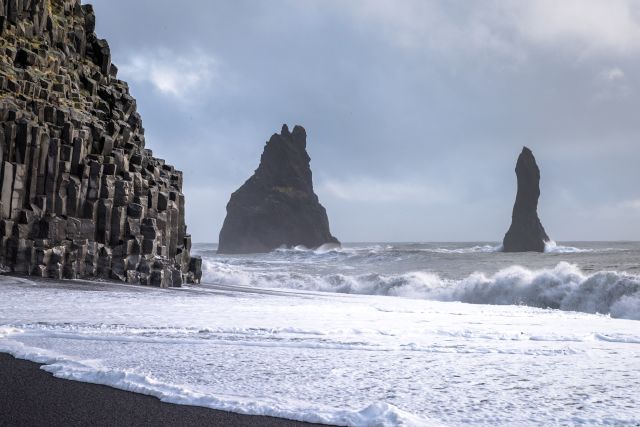
One of Iceland’s most iconic landscapes looks dramatically different this winter. Severe coastal erosion at Reynisfjara Beach has collapsed part of the shoreline and pushed the Atlantic closer to the basalt cliffs. Experts say unusual easterly winds—not rising sea levels—are responsible. Here’s what changed, why it happened, and what visitors should know before planning a trip.
Reynisfjara, located near Vík í Mýrdal on Iceland’s south coast, has undergone significant coastal erosion in early 2026.
A large section of slope beneath Reynisfjall collapsed, sending debris down toward the warning signs near the shoreline. Areas that were walkable just months ago are now steep erosion banks. In some places, deep water reaches much farther inland than before.
Local observers say the magnitude of change is greater than anything they have seen in this area.
According to coastal engineers, the changes are linked to persistent easterly winds throughout the winter.
Normally, prevailing south-westerly winds move sand eastward along Iceland’s south coast, helping replenish Reynisfjara. This winter, however, repeated low-pressure systems tracked south of Iceland, generating sustained easterlies. Those winds transported large amounts of sand westward instead.
The result: the beach lost more sand than it gained.
Importantly, experts say this event is not linked to rising sea levels. In fact, parts of Iceland’s south coast are still rising due to post-glacial rebound as glaciers retreat. This is a wind-driven sediment shift, not a climate-driven shoreline collapse.
The iconic basalt columns at Reynisfjara are still intact, along with the dramatic sea stacks known as Reynisdrangar.
Those columns have long been one of my favorite places I have visited in Iceland, largely because of their almost architectural precision. The hexagonal formations feel impossibly symmetrical, like a cathedral carved by volcanic geometry.
The beach’s shape may have changed, but one of the geological hearts of Reynisfjara remains.
Reynisfjara has always been dangerous.
The beach is notorious for “sneaker waves” that surge unexpectedly and have caused multiple fatalities over the years. Now, newly formed erosion banks create additional risk. Tourists may be tempted to climb down unstable slopes to reach the waterline, but retreat could be difficult if waves intensify.
Local guides are urging caution while conditions stabilize.
If visiting:
Stay well back from the waterline
Obey all warning signs
Avoid climbing unstable sand banks
Monitor weather and wave forecasts
Visitors should always check the official Black Beach safety page from SafeTravel Iceland, which provides real-time hazard levels, closures, and wave forecasts.
The site categorizes conditions using a clear color system:
Yellow: Moderate hazard. Stay alert and cautious.
Orange: Considerable hazard. Stay at least 25 meters from the water.
Red: Severe hazard. The beach is closed, but visitors may view from designated areas.
Sneaker waves can strike without warning, even after long periods of calm water. Local safety officers may close the beach with little notice depending on conditions.
Before heading to Reynisfjara, check current alerts and forecasts at: https://safetravel.is/travel-conditions/blackbeach-safety/
Conditions can change quickly along Iceland’s south coast, especially during winter.
It depends entirely on wind direction in the coming months. If westerly winds dominate for sustained periods, sand could gradually redeposit along the beach. If easterlies continue, erosion may persist.
Reynisfjara has always been dynamic. What makes this event unusual is the speed and scale of the change.
Reynisfjara is one of Iceland’s most photographed natural landmarks. Hundreds of thousands of visitors stop here each year while exploring the south coast.
For first-time travelers, the beach will likely remain breathtaking. For returning visitors, it may feel dramatically different.
Iceland’s landscapes are dynamic systems shaped by wind, water, and volcanic geology. Reynisfjara’s sudden change is a reminder that even the country’s most iconic destinations are continually evolving. For travelers heading to Iceland in 2026, Reynisfjara is still worth the stop, just with a renewed respect for the power that shaped it.
Is Reynisfjara Beach disappearing?
No. While significant erosion has occurred, the beach has not disappeared. The shoreline has shifted, and some areas are currently steeper or narrower than before.
Was the erosion caused by climate change?
According to coastal experts, this specific event was caused by unusual and persistent easterly winds combined with strong wave activity. It has not been attributed to rising sea levels.
Is Reynisfjara still open to visitors?
At the time of reporting, the beach remains accessible. However, visitors should follow all safety signage and exercise caution near the water.
Will the sand come back?
Possibly. If wind patterns shift back to prevailing south-westerlies for an extended period, sand could gradually redeposit along the beach.
Are the basalt columns still there?
Yes. The basalt columns and the sea stacks remain intact and continue to define the landscape.
Is Reynisfjara dangerous?
Yes. The beach is known for powerful, unpredictable waves. Visitors should maintain a safe distance from the shoreline at all times.