We use cookies to enhance your browsing experience, serve personalized content, and analyze our traffic. By clicking "Accept All" you accept this and consent that we share this information with third parties and that your data may be processed in the USA. For more information, please read our .
You can adjust your preferences at any time. If you deny, we will use only the essential cookies and unfortunately, you will not receive any personalized content.

Ireland has been named Best Destination in Europe for the 12th year in a row by Travel Weekly readers, beating out heavyweights like France, Italy, and Spain. If you’ve ever visited, that probably feels less like news and more like confirmation.
Ireland is one of our favorite places in the world. Not because it tries to impress you, but because it doesn’t have to. The landscapes are effortlessly beautiful, the towns feel warm and lived-in, and history is everywhere without ever feeling staged. Here are a few of the places that make Ireland unforgettable and why this island keeps winning over American travelers year after year.
Ask ten people why they love Ireland and you’ll likely hear ten different answers. That’s part of its charm. Still, there are a few places that almost everyone agrees have a way of staying with you long after the trip is over. Here are a few of the ones we keep coming back to.
Skellig Michael isn’t easy to get to, and that’s part of what makes it special. The boat ride depends on the weather, the climb up the stone steps is steep, and you usually have to plan well in advance just to set foot on the island. But once you reach the top, surrounded by nothing but sea and sky, it feels unlike anywhere else.
Of all the places I have been, this is truly one of the most special. Puffins nest all around the island, and the ancient stone monastery built on top gives the place an incredible sense of history. At the same time, there is a quiet feeling that you have arrived somewhere rare and a little magical.
It's ancient, peaceful, and humbling. Whether you come for the history, the scenery, or because you recognize it from film, Skellig Michael feels like stepping briefly into another era.
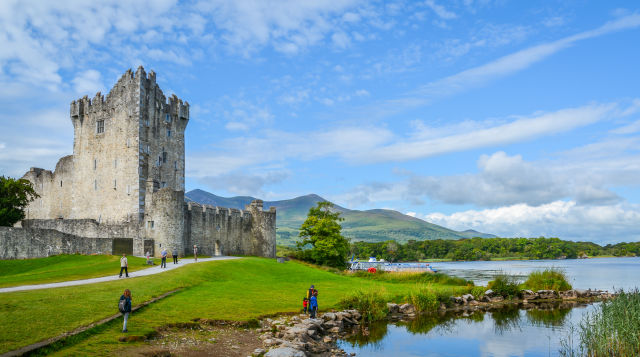
Killarney National Park is in County Kerry in southwest Ireland, and it’s one of those places that easily lives up to its reputation. Lakes, forests, and mountains stretch out in every direction, and whether you’re driving the scenic roads or walking the trails, the whole park has a way of slowing you down and making you forget about rushing anywhere.
Just outside the park, Muckross Abbey is well worth a visit. The 15th-century stone ruin is still in remarkably good shape, but what really makes it memorable is the large yew tree growing right through the center of the cloister courtyard. The tree has been there for centuries, its branches rising above the old stone walls, and the mix of ancient ruins and living nature gives the place a feeling you don't really expect until you're standing in it.
The Cliffs of Moher are one of those places that really do live up to the hype, which is not something you can say about every famous landmark. The cliffs stretch for about eight miles along the west coast of County Clare, dropping straight down into the Atlantic. When you first see them, the scale is surprising in a way photos never quite capture. The wind comes in steadily from the ocean, the waves crash far below, and standing at the edge makes you realize just how big and wild this coastline really is.
It’s worth giving yourself more time here than many visitors do. Most people stay close to the main visitor center, but if you walk a little farther along the path in either direction, the experience becomes much quieter. The views are just as dramatic, but with fewer people around you can actually pause and take it all in. Plan for at least a couple of hours, and bring something windproof. The weather on this stretch of coast tends to do exactly what it wants.
Kylemore Abbey sits along the edge of a lake in the heart of Connemara, with soft hills rising behind it. The setting is simple and beautiful, and when the abbey’s reflection appears clearly in the water, it’s the kind of view that makes you stop for a moment. It definitely did for me.
The abbey itself is lovely, but the grounds are what make the visit especially enjoyable. The restored Victorian walled garden is one of the highlights, and the paths around the estate make it easy to wander and explore at your own pace. There are plenty of quiet spots where you can slow down and just take in the landscape.
My husband and I actually drove out of our way to see Kylemore Abbey, and we didn’t regret it for a second. If you’re traveling through Connemara, it’s truly worth the trip. It’s the kind of place you plan to visit briefly and then realize you’ve spent most of the afternoon there.
In County Donegal, Glenveagh Castle has a wonderfully unhurried feel. The castle sits beside a quiet lake in the middle of Glenveagh National Park, surrounded by rugged mountains and long walking trails that make the whole area feel wide open and peaceful. The drive in alone sets the tone, with the landscape gradually becoming wilder and more remote the closer you get.
The castle itself is charming, but much of the appeal is simply walking the grounds, exploring the gardens, and taking in the scenery around the lake. The balance between nature and history works especially well here, and the setting makes it easy to slow down and enjoy both.
Kissing the Blarney Stone is undeniably strange. You lean backward, nearly upside down, trusting a complete stranger to hold onto you while you kiss a stone set into the side of a castle wall.
And yet, it’s genuinely one of my favorite memories from Ireland.
There’s something joyful about the whole experience. Everyone laughs, everyone cheers, and people step away with the same slightly stunned grin. Beyond the stone itself, the castle grounds are beautiful and sprawling, with gardens, winding paths, and quiet corners that make it easy to linger. There’s even a little ice cream shop on the grounds that’s absolutely worth a stop!
Trinity College sits right in the middle of Dublin, but stepping through its gates feels like the city suddenly quiets down. The cobblestone courtyards and old stone buildings give the whole place a sense of history that’s hard to miss.
Most visitors come to see the Book of Kells, the beautifully illustrated manuscript created around 800 AD, and it absolutely lives up to the hype. But the real highlight for many people is the Long Room library above it. The long, vaulted hall is lined with more than 200,000 old books, with marble busts of writers and philosophers running down the center. The smell of old paper fills the space, and it’s the kind of room that naturally makes you lower your voice.
If you plan to visit, it’s worth booking tickets in advance, especially in summer. The lines without them can get surprisingly long.
Cork often surprises first-time visitors in the best way. It’s lively without being overwhelming, with colorful streets, good pubs, and excellent coffee shops that make the city feel welcoming and easy to settle into. The food scene is one of Cork’s biggest highlights. The English Market, a historic covered market dating back to 1788, is a great place to start, and the city has plenty of restaurants and bakeries that take food seriously.
Cork also makes a great base for exploring nearby places like Kinsale and the Wild Atlantic Way. Many travelers plan a short stop here and leave wishing they had stayed longer.
Ireland doesn’t try very hard to impress you. That’s part of why people love it. People talk to you. Not because they have to, but because they want to. Conversations in pubs turn into stories you end up retelling for years. Small towns feel lived in rather than staged. Even in the most popular places, there’s a sense that everyday life comes first and tourism simply fits around it.
That kind of balance is harder to find than you might think. It’s also a big part of why Ireland keeps ranking so highly with American travelers.
The award reflects votes from thousands of US travel professionals. These are the people who see where Americans actually go, what they talk about when they come home, and which places they recommend again and again. Ireland stands out because it manages to be several things at once:
Deeply historic without feeling stuck in the past
Wild and dramatic, yet genuinely welcoming
Easy to navigate, even for first-time Europe travelers
Memorable in a way that keeps people wanting to return
It’s a destination that feels special without ever feeling overwhelming.
Tourism Ireland reports that about 1.3 million Americans visited the island in 2024, bringing nearly €2.2 billion (around $2.4 billion) into the Irish economy. Those numbers are impressive, but the more interesting question is why so many people keep coming back.
At a time when many destinations are struggling with overcrowding, access limits, and general tourist fatigue, Ireland still offers something travelers are increasingly looking for. Space to breathe. Genuine warmth from the people you meet. A sense of connection that feels real rather than staged. And landscapes that were never designed for Instagram, but somehow look incredible in every direction anyway.
Twelve consecutive wins is an impressive streak, but anyone who has stood on the Cliffs of Moher with the wind whipping around them or gotten happily lost in conversation at an Irish pub already understands why. Ireland does not really need an award to prove its appeal. It simply keeps being what it has always been, warm, beautiful, and full of character. That is exactly what American travelers keep coming back for. If Ireland is not on your list yet, it probably should be.
Ireland has now won the Travel Weekly Readers' Choice Award for Best Destination in Europe for 12 consecutive years, beating France, Italy, Spain, Portugal, and Croatia. It combines dramatic landscapes, deep history, and genuine hospitality in a way that consistently resonates with American travel professionals and visitors alike.
.
Yes. It is English-speaking, easy to navigate, and offers a mix of cities, countryside, and coast without long travel times.
Late spring through early fall offers the best balance of weather and daylight, though Ireland is beautiful year-round.
For cities like Dublin or Galway, no. For rural areas, coastal routes, and national parks, a car offers much more flexibility.
North American visitors spent almost €2.2 billion (around $2.4 billion) in Ireland in 2024, a 19 percent increase on the previous year, making it Ireland's most valuable tourism source market.
Skellig Michael, the Cliffs of Moher, Killarney National Park, Blarney Castle, Trinity College Dublin, Kylemore Abbey, and Cork are among the most visited and most loved destinations for American travelers.