We use cookies to enhance your browsing experience, serve personalized content, and analyze our traffic. By clicking "Accept All" you accept this and consent that we share this information with third parties and that your data may be processed in the USA. For more information, please read our .
You can adjust your preferences at any time. If you deny, we will use only the essential cookies and unfortunately, you will not receive any personalized content.

The ceasefire between the U.S. and Iran was supposed to bring some relief. Instead, Wednesday brought a new flashpoint: Iran's Revolutionary Guard Corps seized two container ships in the Strait of Hormuz, disabled a third, and sent oil prices spiking above $100 a barrel for the first time in weeks. For travelers, the timing couldn't be worse. Summer booking season is already underway, and airlines are watching every tick in crude prices very closely.
Here's what's happening, and what it means for anyone with a trip on the calendar.
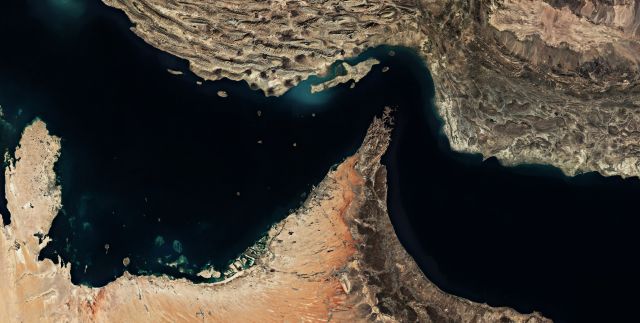
The Strait of Hormuz is one of the most consequential chokepoints on the planet. About 20% of the world’s oil supply moves through this narrow passage between Iran and Oman every day, so when something disrupts that flow, oil markets react almost immediately.
Wednesday’s seizures involved the MSC Francesca, a Panama-flagged container ship operated by Mediterranean Shipping Company, the world’s largest container line, and a second vessel called Epaminodas. Iran’s Revolutionary Guard claimed both ships were “operating without proper authorization” and “manipulating navigation systems.” A third vessel, the Euphoria, was reportedly disabled off the Iranian coast. A Greek-owned cargo ship was also attacked near the strait, though Greece’s foreign minister said it has not been confirmed as seized.
The incidents came just hours after President Trump extended the ceasefire with Iran, saying he was giving Tehran time to present a “unified proposal” while keeping the U.S. naval blockade in place. Markets didn’t read that as stability.
Brent crude pushed back above $100 a barrel on Wednesday, rising about 2% to $100.47. The U.S. benchmark, West Texas Intermediate, climbed by a similar margin to $91.56, marking a third straight session of gains.
Analysts at Saxo Bank summed up the mood bluntly: “Oil prices continue to whipsaw as traders respond to a confusing and often contradictory flow of headlines,” pointing to the deep mistrust between Tehran and Washington. Energy research firm Ritterbusch added that Trump’s ceasefire extension, while easing the immediate risk of escalation, is also being read as keeping “the U.S. blockade intact indefinitely.” That’s a meaningful signal. A closed or heavily disrupted strait tightens global supply, raises transport costs, and keeps upward pressure on fuel prices.
The only things preventing a sharper spike right now are alternative export routes and releases from strategic petroleum reserves, both of which have real limits.
Fuel is the second-largest cost for airlines after labor, so oil above $100 hits carriers quickly and directly. United Airlines CEO Scott Kirby said Wednesday that jet fuel costs have roughly doubled since before the Iran conflict began, and the response has been straightforward: summer fares are increasing by 15% to 20%.
Demand remains strong, and United is already offsetting about 40% to 50% of those higher fuel costs through fare increases, with plans to recover the rest later in the year. That approach isn’t unique to United. It’s the same playbook most major carriers are using right now.
In Europe, the impact is just as visible. Lufthansa Group has announced plans to cut 20,000 short-haul flights through October, citing rising jet fuel costs and concerns about supply. That’s a meaningful reduction in seat capacity across European routes, which tends to push prices higher, even for travelers who aren’t flying Lufthansa directly.
The short version is simple: flights are getting more expensive, and the situation in the Strait of Hormuz is a big reason why. Travelers who haven’t booked summer flights yet are stepping into a market where prices are moving in real time. Airlines have already been successful at passing higher fuel costs onto passengers, and with demand still strong, there’s little pressure to hold fares down.
If your dates are flexible, booking sooner rather than later is a safer move. Long-haul routes, especially those tied to Middle Eastern fuel supply chains, are more exposed to further disruption. European routes on carriers like Lufthansa and KLM are also worth watching as capacity cuts start to take effect.
The diplomatic outlook remains uncertain. Peace talks between the U.S. and Iran are ongoing but fragile, the blockade of the strait is still in place, and the latest ship seizures show how quickly tensions can flare up again. Until there’s a clearer path forward, oil markets and airline pricing are likely to stay volatile.
What happens in the Strait of Hormuz doesn’t stay there. It shows up in your booking confirmation.
Jet fuel comes from crude oil, and a significant share of the world’s oil supply moves through the Strait of Hormuz. When that flow is disrupted by conflict, ship seizures, or a blockade, supply tightens and oil prices rise. Airlines absorb those higher fuel costs and pass them on to travelers through higher fares.
United Airlines has already raised summer fares by 15% to 20%, citing jet fuel costs that have roughly doubled since the Iran conflict began. Other airlines are expected to follow a similar path as the summer travel season ramps up.
European carriers are under particular pressure due to concerns about jet fuel supply shortages. Lufthansa Group has announced 20,000 short-haul flight cuts through October, and KLM has also reduced flights. U.S. airlines like United are raising fares but have not yet made major capacity cuts.
Iran’s Revolutionary Guard Corps seized two vessels, the MSC Francesca and the Epaminodas, in the Strait of Hormuz, and disabled a third ship off its coast. These actions signal continued instability in one of the world’s most important shipping lanes, which directly affects global oil supply and fuel prices.
Yes, but with important caveats. President Trump extended the ceasefire to allow time for further negotiations, but the U.S. naval blockade of the strait remains in place. The ship seizures that followed have raised doubts about how stable that ceasefire really is.
They could if a diplomatic agreement reopens the Strait of Hormuz and oil prices fall. But analysts say that outcome is uncertain and could take time. In the near term, fares are expected to stay elevated or rise further as summer demand peaks.
Given the current trend of rising fares and reduced capacity, booking sooner is likely the safer move. Airlines are already increasing prices and cutting seats, which means the market is unlikely to get cheaper in the short term.
That’s still unclear. Negotiations between the U.S. and Iran are ongoing but fragile, and the latest ship seizures show how quickly tensions can escalate. The blockade of the Strait of Hormuz is expected to continue until a deal is reached, and volatility is likely to persist in the meantime.