We use cookies to enhance your browsing experience, serve personalized content, and analyze our traffic. By clicking "Accept All" you accept this and consent that we share this information with third parties and that your data may be processed in the USA. For more information, please read our .
You can adjust your preferences at any time. If you deny, we will use only the essential cookies and unfortunately, you will not receive any personalized content.

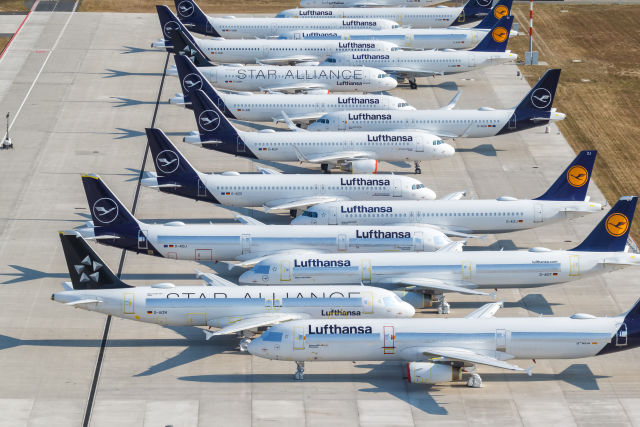
The war in Iran has done something no one fully predicted: it's made flying in Europe significantly more expensive. Prices are rising not just at checkout, but in how airlines are planning, pricing, and operating their flights. Lufthansa Group just announced it's cutting 20,000 short-haul flights through October. That's not a minor schedule tweak. It's a structural response to a fuel crisis that isn't going away anytime soon.
The trigger is jet fuel. Since the U.S. and Israel launched military operations against Iran in late February, the price of aviation kerosene in Europe has more than doubled. That’s not something Lufthansa can quietly absorb, especially on short-haul routes where margins are already tight and every liter of fuel matters.
So the Group is cutting what no longer makes financial sense. The 20,000 flights being removed account for roughly one percent of total capacity across the network, mostly short European routes operated by its regional arm, Lufthansa CityLine, which is now being phased out. When the cost of flying a short route suddenly doubles, the decision becomes straightforward. Some flights just aren’t worth running anymore.
The first wave is already underway. Around 120 daily flights were cut starting Monday, with changes in place through the end of May. Three destinations, Bydgoszcz and Rzeszów in Poland, and Stavanger in Norway, have been temporarily dropped, while about ten additional routes are being rerouted through other Lufthansa Group hubs.
The cuts span all six of Lufthansa Group’s European hubs: Frankfurt, Munich, Zurich, Vienna, Brussels, and Rome. The impact is concentrated on short-haul routes, affecting:
Lufthansa Airlines
SWISS
Austrian Airlines
Brussels Airlines
ITA Airways
These are the feeder flights that connect passengers into long-haul departures, so while they may seem minor on their own, they play an important role in keeping the broader network moving.
Not every route is disappearing entirely. Around ten connections are being consolidated rather than cut, including:
Heringsdorf
Cork
Gdańsk
Ljubljana
Rijeka
Sibiu
Stuttgart
Trondheim
Tivat
Wrocław
Passengers can still reach these destinations, but often with an added connection or a longer travel day as routes are funneled through different hubs. For now, long-haul flights remain largely unaffected.
Looking ahead, the summer schedule is still being reworked, with more details expected in late April or early May. If you’re booked on a short-haul Lufthansa Group flight in June, July, or August, it’s worth keeping a closer eye on your email than usual for updates or changes.
Lufthansa Group is the largest airline group in Europe by passenger volume, and when it makes a move this decisive, it tends to shift the market around it. Not because other airlines have to follow, but because they’re dealing with the same underlying pressure.
Fuel is the common denominator. Every European carrier is buying from roughly the same market, and the same price surge hitting Lufthansa is also sitting on the books at Air France-KLM, IAG (which includes British Airways and Iberia), easyJet, and Ryanair. The difference comes down to how much each airline can absorb. Low-cost carriers with newer, more fuel-efficient fleets and stronger hedging strategies have a bit more flexibility. Legacy airlines running older regional aircraft on thinner routes have far less room to maneuver.
We’re already starting to see that play out. KLM moved earlier this month to cancel flights for similar fuel-related reasons, and more announcements are likely as airlines lock in their summer schedules. Expect to hear a lot about “capacity rationalization” in the coming weeks. It’s a technical way of saying the same thing: fewer flights, adjusted networks, and a market recalibrating under pressure.
Fewer seats in the market with the same, or even growing, demand is the kind of setup that usually leads to higher ticket prices. That’s what’s quietly taking shape for European short-haul travel this summer.
This isn’t a panic response. The cuts Lufthansa is making are focused on routes that no longer make financial sense, not the core of its network. Long-haul and transatlantic flights are less directly affected by the spike in European fuel costs. But if you’re flying within Europe, especially on smaller regional routes out of hubs like Frankfurt or Munich, the mix of reduced capacity and higher operating costs is likely to push prices up.
In that kind of environment, flexibility starts to matter more. If your specific route gets consolidated or dropped, the replacement options may be more expensive or less convenient than what you originally booked.
Lufthansa says affected passengers are being notified directly, but it’s worth being proactive. If you’re booked on a CityLine-operated flight or a short-haul connection through one of the six Group hubs, check your email now and keep an eye on it through May. The full summer schedule is still being finalized, which means a second round of changes isn’t off the table.
If your flight is canceled, EU passenger rights rules apply. Under EC 261/2004, you’re entitled to a full refund or to be rebooked at no additional cost. Because these cancellations are tied to operational decisions rather than extraordinary circumstances, you may also be eligible for compensation between €250 and €600 (about $275–$660), depending on the distance of your flight.
More broadly, this is one of those moments where flexibility really pays off. If you’re booking travel within Europe this summer, refundable or changeable fares are worth considering. Schedules are less stable than usual right now, and that may not settle down anytime soon.
This is a fuel story, but it’s also a summer travel story. The Iran conflict has reshaped the economics of flying almost overnight, driving up jet fuel costs and forcing airlines to cut routes, reroute flights, and rethink their schedules.
The itinerary you booked in January may not look exactly the same by June. Not dramatically, but enough to notice. A connection might shift, a route might disappear, or a short-haul leg might get rerouted through a different hub. Airlines are still adjusting in real time, and those adjustments are likely to continue as long as fuel prices remain elevated. The practical takeaway is simple. Stay close to your inbox, know your rights, and don’t assume the short-haul part of your trip is as locked in as the long-haul one.
Jet fuel prices in Europe have more than doubled since the Iran conflict began in late February 2026. Lufthansa Group is cutting unprofitable short-haul routes to reduce fuel consumption and stabilize its finances ahead of the full summer season.
The cancellations span all six of the Group's hub airlines: Lufthansa Airlines, SWISS, Austrian Airlines, Brussels Airlines, and ITA Airways. The majority of cuts involve Lufthansa CityLine, the regional subsidiary being wound down.
The first confirmed dropped destinations are Bydgoszcz, Rzeszów (both Poland), and Stavanger (Norway) from Frankfurt. Ten additional connections — including Cork, Ljubljana, Rijeka, Stuttgart, Trondheim, and Wrocław — are being rerouted through other Group hubs rather than fully canceled.
Lufthansa is notifying affected passengers directly. You're entitled to a full refund or free rebooking under EU regulation EC 261/2004. For cancellations due to operational decisions (not extraordinary circumstances), compensation of €250–€600 (around $275–$660) may also apply depending on route distance.
Possibly. All European carriers face the same fuel cost pressures. KLM has already made similar moves, and industry analysts expect further capacity cuts from major carriers as summer schedules are finalized. Low-cost carriers with newer fleets may be more insulated.
Reduced capacity combined with consistent demand tends to push prices up, especially on short-haul regional routes. Transatlantic and long-haul fares are less directly affected for now, but the situation is still developing.
Lufthansa Group has said the updated medium-term route plan will be released in late April or early May 2026.
The Group says it expects a largely stable fuel supply for its planned summer flights and is using a combination of physical fuel procurement and price hedging to manage the situation.