We use cookies to enhance your browsing experience, serve personalized content, and analyze our traffic. By clicking "Accept All" you accept this and consent that we share this information with third parties and that your data may be processed in the USA. For more information, please read our .
You can adjust your preferences at any time. If you deny, we will use only the essential cookies and unfortunately, you will not receive any personalized content.

It's easy to forget, especially lately, but good things are still happening every single day. They just don't always make the front page. Here are five stories from this week that prove it. No fine print, no hidden downside, just the good stuff.
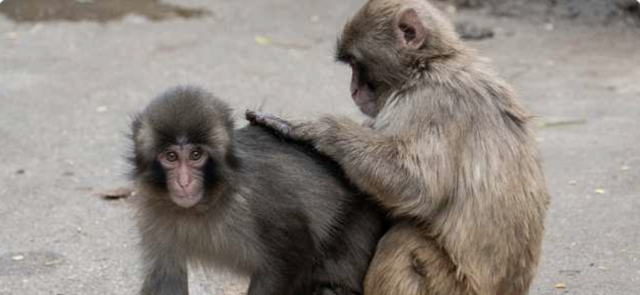
Punch, the Japanese macaque who went viral after being rejected by his mother and clinging to an IKEA stuffed orangutan for comfort, has a new chapter. He's now inseparable with a female macaque at Ichikawa City Zoo in Japan, and the internet is absolutely losing it over their cuddling videos. The consensus online: Punch is thriving, and people are here for it.
Despite the rough start, Punch has adapted, persevered, and now apparently he's something of a catch. Good for him.
A new report examined air quality in 100 cities worldwide and found 19 had cut toxic pollution by 20 to 45 percent since 2010, including London, Hong Kong, Beijing, Warsaw, and San Francisco. The reductions came from a mix of approaches: switching to electric vehicles, adding bike lanes, restricting wood-burning stoves, and moving away from fossil fuel power plants.
The takeaway: this isn't a one-city fluke. It's happening across continents, using different methods, and it's working. Cities that were once synonymous with smog are breathing measurably easier than they were 15 years ago.
With airspace closures stranding thousands in the UAE and Qatar, the Greek government organized a dedicated Aegean Air flight to bring Greek expats home alongside their cats and dogs. When the plane landed in Athens, pets leaped straight out of their carriers into their owners' arms. The Greek interior ministry called it a good result for people and animals alike.
It's a small story in the context of a very large and difficult situation in the region, but it's a reminder that governments can get things right, and that sometimes the right thing looks like a plane full of relieved people reunited with their very stressed cats.
Berlin and Washington DC handed out 200,000 free tulips between them last weekend as part of the annual Tulip Day tour organized by Royal Anthos with support from the European Union.
This Saturday, San Francisco joins the lineup. Union Square will be filled with 80,000 tulips on March 21 from 1 to 4:30 p.m., and every single one is free to take home. Based on how fast flowers disappeared in Berlin and DC, arriving right at 1 p.m. is not optional.
This one deserves a moment. Giant pandas were officially downgraded from Endangered to Vulnerable on the IUCN Red List, the result of decades of conservation work that grew the wild population by 17 percent in a single decade. There are now an estimated 1,864 giant pandas living in the wild, up from as few as 1,114 in the 1980s. Habitat protection, breeding programs, and sustained government investment in China made it happen.
It's proof that when conservation efforts are serious and sustained, they work. Happy National Panda Day indeed.
The world is not all bad. Sometimes a monkey finds love, a city cleans its air, and someone hands you a free tulip on a Saturday afternoon. We'll be back next week with more.
Punch is a Japanese macaque at Ichikawa City Zoo in Japan who went viral after being rejected by his mother and finding comfort in an IKEA plush orangutan toy he named Ora-mama. He recently made headlines again after forming a close bond with a female macaque at the zoo.
Beijing and Warsaw led the way on fine particulate matter reductions, cutting PM2.5 by more than 45 percent. Amsterdam and Rotterdam saw the greatest improvements in nitrogen dioxide. San Francisco reduced both by 20 percent.
Tulip Day San Francisco takes place on Saturday, March 21 at Union Square from 1 to 4:30 p.m. Each visitor can pick up to six tulips for free while supplies last.
No. Giant pandas were officially downgraded from Endangered to Vulnerable on the IUCN Red List after their wild population grew by 17 percent over a decade. There are now an estimated 1,864 giant pandas in the wild.
National Panda Day is March 16 each year.
With ongoing airspace closures in the region stranding passengers in the UAE and Qatar, the Greek government arranged a dedicated Aegean Air flight to bring Greek expats home with their pets, bypassing the usual difficulties of international pet travel during the crisis.
San Francisco is the most recent stop on the spring 2026 Tulip Day tour. Washington DC hosted its event on March 15, and Berlin held its event on March 14.
Royal Anthos is the Dutch trade organization for flower bulb growers. It organizes Tulip Day events in partnership with the European Union to promote Dutch-grown tulip bulbs, which are exported to markets around the world including the US.