We use cookies to enhance your browsing experience, serve personalized content, and analyze our traffic. By clicking "Accept All" you accept this and consent that we share this information with third parties and that your data may be processed in the USA. For more information, please read our .
You can adjust your preferences at any time. If you deny, we will use only the essential cookies and unfortunately, you will not receive any personalized content.

If you've been waiting for the final chapter of Denis Villeneuve's Dune trilogy, the wait just got a lot harder. Warner Bros. dropped the first trailer for Dune: Part Three this week, and it's exactly as epic as you'd expect from a franchise that's been raising the bar since 2021. The film hits cinemas on December 18, where it's set to go head to head with Avengers: Doomsday in what film fans are already calling "Dundesday." But before we get to December, here's everything worth knowing about the trailer and the stunning real-world locations that bring Arrakis to life.
The trailer opens quietly, with Paul Atreides (Timothée Chalamet) and Chani (Zendaya) in an intimate moment, discussing what they'd name their children. Chani says she'd name a boy Leto, after Paul's father, so he'd have the wisdom of his grandfather. It's a tender few seconds before the trailer pivots hard into war.
The film picks up 17 years after the events of Dune: Part Two, with Paul now ruling as galactic emperor and grappling with the consequences of that rise to power. The trailer cuts between battle scenes, political intrigue, and what looks like a galaxy on the edge of collapse. In a quiet moment with his mother Lady Jessica (Rebecca Ferguson), Paul asks how his father managed it. She tells him simply that his father never started a war.
The trailer also gives us our first proper look at some of the newer cast additions. Anya Taylor-Joy appears briefly as Alia, Paul's sister. Robert Pattinson shows up with a platinum blond buzzcut, staring menacingly as Scytale, a villain described as wanting to dethrone Atreides. Jason Momoa is back too, this time as Hayt, a resurrection of his character Duncan Idaho. The trailer closes with Chalamet's character saying he's not afraid to die, but that he must not die yet. Then Zendaya sprinting toward an unseen threat, and a cut to black.

You need to agree with the cookies and privacy policy of this external service to view the content
It's a strong two minutes. The film is based on Frank Herbert's novel Dune Messiah, and the scale looks like it matches everything the first two films built toward.
The core cast returns in full. Timothée Chalamet and Zendaya are back as Paul and Chani, joined by Rebecca Ferguson as Lady Jessica, Florence Pugh as Princess Irulan, Javier Bardem as Fremen leader Stilgar, Jason Momoa as Hayt, and Josh Brolin. Anya Taylor-Joy joins the cast as Alia, Paul's sister, and Robert Pattinson is new to the trilogy as villain Scytale. The film also introduces Nakoa-Wolf Momoa and Ida Brooke as Paul and Chani's twin children, Leto II and Ghanima.
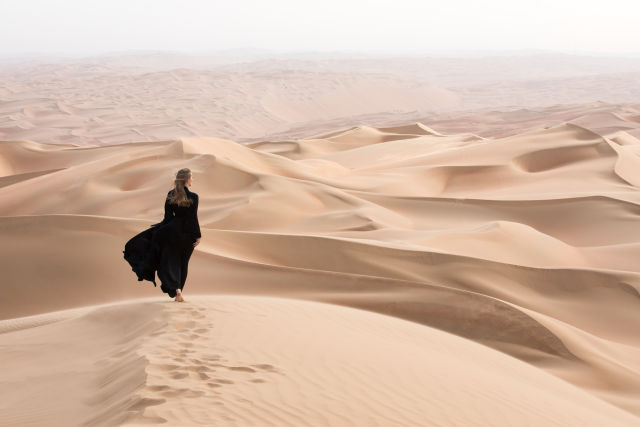
This is the heart of Arrakis. The Liwa Desert sits in the southern UAE and is part of the Rub' al Khali, or Empty Quarter, one of the largest continuous sand deserts in the world. The dunes here reach up to 300 meters tall, which goes a long way toward explaining why Villeneuve has returned for all three films. Abu Dhabi's Film Commission has been a production partner across the entire trilogy, and the emirate has hosted over 180 film productions in the past decade.
Temperatures on set were brutal enough that Robert Pattinson described losing the ability to think clearly in the heat. If you want to stand where Paul Atreides rode sandworms, this is the place.
The rocky, cave-carved landscapes where the Fremen make their home were filmed in Wadi Rum, a protected desert reserve in southern Jordan that the franchise has returned to across all three films. The stone cliffs rise straight out of the orange sand, and the scale of the place is genuinely hard to prepare for.
You may already recognize it without realizing. Wadi Rum has appeared in Lawrence of Arabia, Star Wars, The Martian, and Rogue One, among dozens of other productions. It's open to visitors, with jeep tours, overnight desert camps, and hiking routes all available.
The interior sets for Dune: Part Three were built and filmed at Origo Studios in Budapest, one of Europe's largest soundstage complexes. The production constructed new Atreides chambers and set extensions here before moving to desert locations abroad. Hungarian craftspeople have been part of the Dune production family since the very first film, and their work is visible in every interior frame of the trilogy.
Many of the wide-open desert scenes in Dune: Part One and Part Two, including the sweeping aerial shots that show the vast scale of Arrakis and its sandworms, were filmed in the Liwa Desert. It’s a huge stretch of rolling dunes that feels almost otherworldly, which makes it a perfect stand-in for the planet in the film.
Nearby, the Qasr Al Sarab Resort served as a base for the cast and crew during production. The five-star hotel sits right in the middle of the dunes, surrounded by towering waves of golden sand. Even without the movie connection, it’s one of the most dramatic hotel settings you’ll ever see and absolutely worth visiting on its own.
Photo of Qasr Al Sarab Desert Resort By Anantara Courtesy of Trip Advisor
Wadi Rum did double duty across Parts One and Two, providing the rocky terrain for Fremen sietches and cave dwellings. Production designer Patrice Vermette built part of the Makers' Temple facade directly into a rock formation in the Wadi Rum area, blending practical construction with the natural landscape in a way that's hard to distinguish on screen.
Almost all of the interior scenes across the first two films were built at Origo Studios, where Stage 6 alone covers 10,000 square meters. The Atreides chambers, Bene Gesserit interiors, Fremen tunnels, and Harkonnen palace sets were all constructed here. An entire village was built in the middle of the Abu Dhabi desert for Part Two with over 1,000 people working on the production, but the backbone of the world was assembled in Budapest.
A few real Budapest locations also made it into the films. The historic mausoleum at Kerepesi Cemetery, one of Budapest's most significant burial grounds, doubled as the Emperor's quarters in Dune: Part Two. It's open to visitors and worth a visit even without the Dune connection.
Added for Dune: Part Two, the Brion Tomb is a modernist architectural masterpiece in a small town in the Veneto region of northern Italy. Designed by architect Carlo Scarpa and completed in 1978, it served as the Emperor's palace exterior and fits Villeneuve's visual language almost perfectly. It's a real, visitable landmark and one of the more unexpected locations in the franchise.
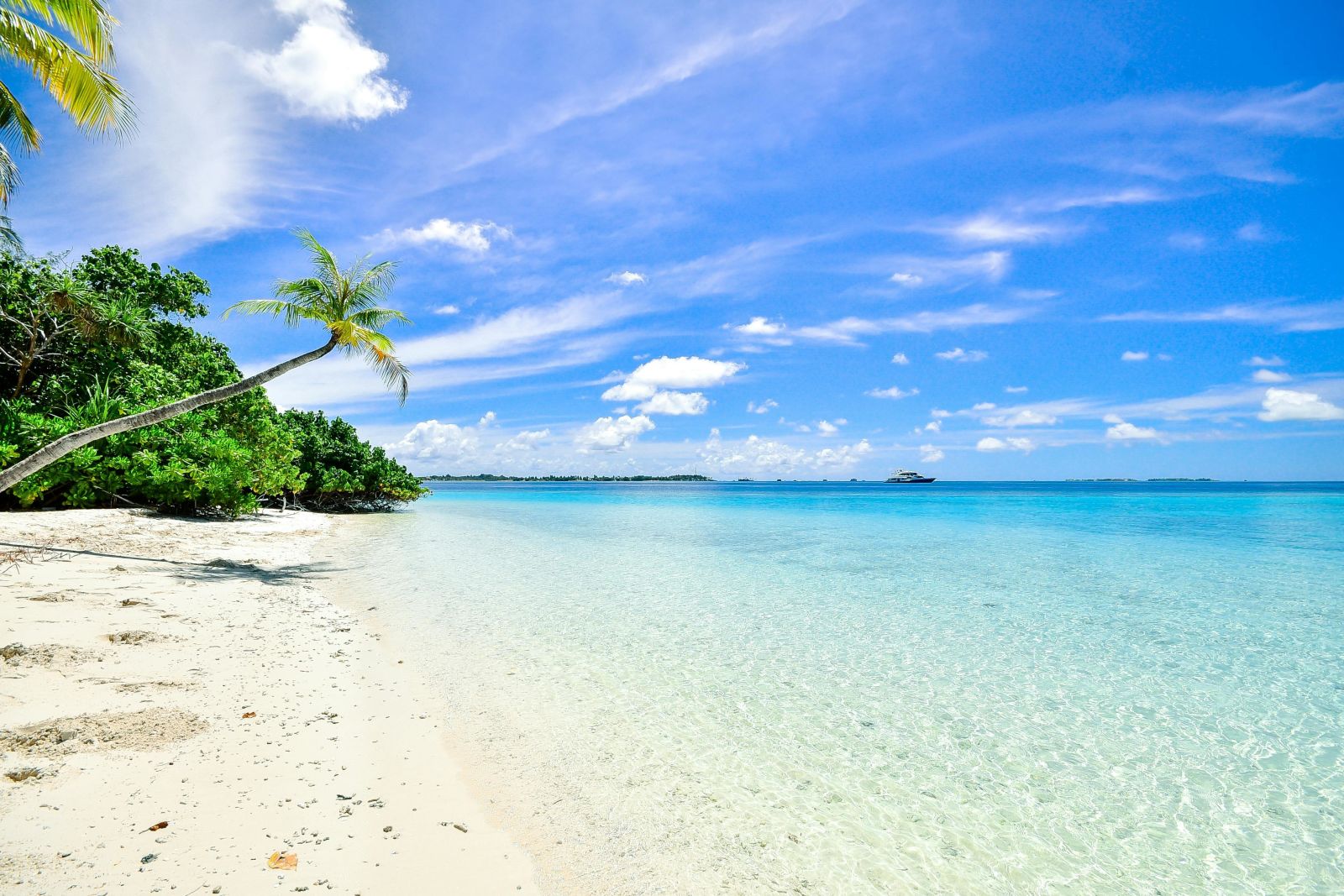
Caladan, the lush ancestral home of the Atreides family, was filmed on Kinn Island and the Stadlandet Peninsula on Norway's Nordfjord Coast. The island is permanently inhabited by only a handful of people and a herd of goats, which gives you some sense of how remote and cinematic it is. The rugged coastline, moody beaches, and dramatic cliffs gave Caladan its distinct feel, and the area sits near the westernmost point of Norway on the gorgeous Nordfjord Coast. It's one of the most beautiful and least crowded stretches of the country.
For a scene in Dune: Part Two that was kept in total secrecy during production, a small unit traveled to the Namib Sand Sea in Namibia, one of the few places in the world where massive dunes extend all the way to the coast. The scene was shot quietly to conceal a casting reveal, and it's one of the most visually distinct sequences in the film.
The franchise has been building steadily. The first Dune made $402 million at the global box office. Dune: Part Two nearly doubled that at $714 million. Dune: Part Three arrives with serious momentum, a December release on Imax screens, and a box office showdown with Avengers: Doomsday that no one is quite sure how to call.
Warner Bros. dropped this trailer just days after a triumphant Oscars night, riding the momentum of two big winners in Sinners and One Battle After Another. Releasing the Dune trailer right after that is a confident move, and the footage delivers. December 18 is a long way off. But this trailer makes it feel close.
The film is scheduled for release on December 18, 2026, where it will go head to head at the box office with Marvel's Avengers: Doomsday.
The film picks up 17 years after Dune: Part Two, following the consequences of Paul Atreides' rise as galactic emperor. It's based on Frank Herbert's novel Dune Messiah.
Timothée Chalamet and Zendaya return as Paul and Chani, joined by Rebecca Ferguson, Florence Pugh, Javier Bardem, Jason Momoa, Josh Brolin, and Anya Taylor-Joy. Robert Pattinson joins the cast as new villain Scytale.
Principal filming took place in Abu Dhabi's Liwa Desert, Wadi Rum in Jordan, and Origo Studios in Budapest, Hungary. Production wrapped in late 2025.
Yes. Wadi Rum in Jordan is open to visitors and offers jeep tours and overnight camping. The Liwa Desert in Abu Dhabi is accessible and the Qasr Al Sarab Resort is a popular stay in the area. The Brion Tomb in Altivole, Italy, used in Dune: Part Two, is also open to the public.
Caladan was filmed in Norway, on Kinn Island and the Stadlandet Peninsula on the Nordfjord Coast.
The nickname film fans have given to the December 18 box office showdown between Dune: Part Three and Avengers: Doomsday, both currently scheduled for the same release date.