We use cookies to enhance your browsing experience, serve personalized content, and analyze our traffic. By clicking "Accept All" you accept this and consent that we share this information with third parties and that your data may be processed in the USA. For more information, please read our .
You can adjust your preferences at any time. If you deny, we will use only the essential cookies and unfortunately, you will not receive any personalized content.

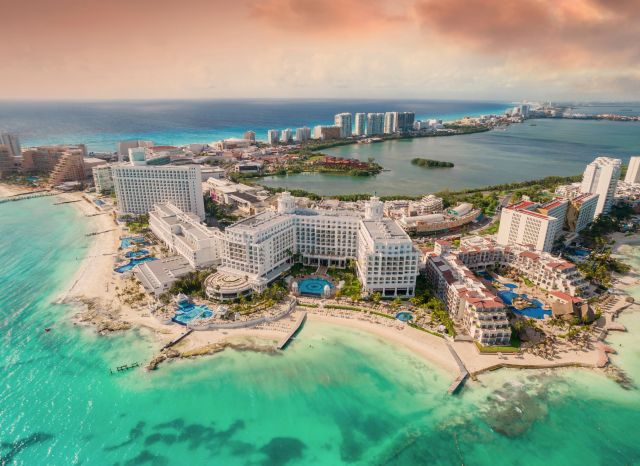
Every year, about 1.5 million Americans head to Mexico for spring break, and a significant chunk of them go straight to Cancun. This year, those travelers are going with more questions than usual. A major cartel-related security operation in Puerto Vallarta on February 22 sent shockwaves across Mexico's tourism industry, and the U.S. Embassy followed up on March 2 with a formal spring break safety alert. Headlines were alarming. The reality, as usual, is more nuanced. Here's what you actually need to know before you go.
On February 22, Mexican security forces killed Nemesio "El Mencho" Oseguera Cervantes, leader of the Jalisco New Generation Cartel, in a military operation in Jalisco. What followed was a short but intense period of retaliatory violence across the state, with road blockages, vehicle fires, and flight disruptions in Puerto Vallarta and Guadalajara.
The U.S. Embassy issued temporary shelter-in-place guidance for Americans in affected areas. Several airlines waived change fees. Some cruise lines skipped Puerto Vallarta port calls entirely. The shelter-in-place advisory was lifted within a few days, and airports in Guadalajara and Puerto Vallarta resumed normal operations with airlines restoring regular schedules.
But the images spread fast online, and travelers with upcoming trips began reconsidering plans not just to Puerto Vallarta but to destinations across Mexico, including Cancun, which had nothing to do with any of it.
The short answer is yes, with the same common-sense caveats that have always applied.
Cancun sits in Quintana Roo on Mexico’s Caribbean coast, more than a thousand miles from Puerto Vallarta. The state remains at Level 2, the same advisory it has held since August 2025, and tourism has continued operating normally. As of February 23, officials in Quintana Roo confirmed that all four international airports, cruise ports, ground transportation, hotels, and tourism activities were running without disruptions.
The Hotel Zone in Cancun also operates with a noticeable security presence, including Mexican National Guard and Tourism Police patrols along the beaches and main strips throughout the year. One travel adviser who spent nearly three weeks in Cancun in January summed it up well: the distance between Cancun and Puerto Vallarta is similar to something happening in California not preventing someone from traveling to Chicago.
It’s also helpful to remember what Level 2 actually means. The same advisory level currently applies to destinations like France, Italy, and the United Kingdom. It simply means travelers should exercise increased caution, not that people should avoid visiting.
Source: Screenshot from TravelState.Gov
On March 2, the State Department issued a formal Message to U.S. Citizens: Spring Break Travel. The alert confirmed that the widespread violence surrounding the late-February events has officially ended, while noting that baseline risks of general crime remain a factor across Mexico.
The practical warnings in the alert are common-sense items that apply to any international trip:
Use official airport taxis or app-based services like Uber, not random street cabs
Do not leave drinks unattended or accept them from strangers
Do not bring vaping devices, e-cigarettes, pods, or e-liquid into Mexico — it is illegal, with penalties including fines over $10,000 or arrest
Do not bring firearms, ammunition, or empty shell casings — U.S. permits are not valid in Mexico
Register your trip with STEP (Smart Traveler Enrollment Program) at step.state.gov so the Embassy can reach you in an emergency
Download the Guest Assist app if you are in Cancun, Playa del Carmen, Tulum, or Cozumel for bilingual emergency services
None of this is new. The Embassy issues a version of this guidance every spring break. The difference this year is that the February 22 events gave it a more urgent news peg.
Source: Screenshot from TravelState.Gov
Not all of Mexico is the same, and the State Department's advisory reflects that. Here is exactly where every state stands as of the current advisory, issued August 12, 2025:
Campeche
Yucatan
Aguascalientes
Baja California Sur
Coahuila, Durango
Hidalgo
Mexico City
State of Mexico
Nayarit
Nuevo Leon
Oaxaca
Puebla
Queretaro
Quintana Roo (Cancun, Tulum, Playa del Carmen, Cozumel)
San Luis Potosi
Tabasco
Tlaxcala
Veracruz
Baja California
Chiapas
Chihuahua
Guanajuato
Jalisco (Puerto Vallarta, Guadalajara)
Morelos
Sonora
Colima
Guerrero
Michoacan
Sinaloa
Tamaulipas
Zacatecas
The Level 4 states are not new designations. They have been in place for quite some time and existed well before the February 22 events.
For travelers heading to places like Cancun, the Riviera Maya, Tulum, Cozumel, or Los Cabos, tourism is operating normally and trips are continuing as planned. If you’re traveling to Puerto Vallarta, the area has largely recovered, though it’s still a good idea to keep an eye on updates as your trip approaches.
If your itinerary includes a Level 4 state, however, that’s a different story. Those areas carry a “Do Not Travel” advisory and generally shouldn’t be part of a travel plan right now.
Source: Screenshot from TravelState.Gov
For travelers heading to places like Cancun, the Riviera Maya, Tulum, Cozumel, or Los Cabos, tourism is operating normally and trips are continuing as planned. If you’re traveling to Puerto Vallarta, the area has largely recovered, though it’s still a good idea to keep an eye on updates as your trip approaches.
If your itinerary includes a Level 4 state, however, that’s a different story. Those areas carry a “Do Not Travel” advisory and generally shouldn’t be part of a travel plan right now.
The advice here isn’t about fear. It’s about bringing the same awareness you would to any international trip.
Stick to the Hotel Zone or established resort areas, especially at night. Security experts in Cancun often point out that most problems happen when groups split up late in unfamiliar neighborhoods. The rule of thumb is simple: if you arrive as a group of four, you leave as a group of four.
It’s also smart to book with flexibility. Travel advisers generally recommend avoiding basic economy flights or prepaid non-refundable hotel bookings when possible. If plans change, you want the ability to adjust without losing your entire trip.
Travel insurance is another good idea, but it’s important to read the details carefully. Many standard policies don’t cover cancellations related to civil unrest. “Cancel for Any Reason” plans offer more flexibility, and it’s worth making sure your policy includes medical evacuation coverage as well. Companies like Global Rescue, International SOS, and Ripcord offer specialized evacuation coverage that goes beyond typical insurance plans. Just remember that most policies must be purchased before a destination is flagged for issues.
For now, flights into Cancun remain busy heading into the March and early April travel rush, and resort occupancy is still strong. In other words, the people who know the destination well are still going.
Millions of Americans will visit Mexico this spring and enjoy the vacations they planned. Cancun has weathered plenty of news cycles before, and it will likely weather this one too. Go informed, stay aware, travel together after dark, and consider downloading the Guest Assist app before you arrive. The Caribbean is ready for you.
Yes. Cancun remains under a Level 2 Exercise Increased Caution advisory, the same designation it has held since August 2025. Recent violence was centered in western Mexico, more than a thousand miles away, and officials confirmed normal tourism operations throughout the February events.
The State Department maintains a Level 2 Exercise Increased Caution advisory for Quintana Roo, which includes Cancun, Tulum, Playa del Carmen, and Cozumel. This has not changed since August 2025. Level 2 is the same designation applied to France, Italy, and the UK.
On February 22, 2026, Mexican security forces killed cartel leader El Mencho in Jalisco, triggering brief retaliatory violence in Puerto Vallarta and Guadalajara. Cancun is in Quintana Roo on the Caribbean coast, more than a thousand miles away. The two regions operate entirely independently.
A free emergency services app recommended by the U.S. Embassy for travelers in Cancun, Playa del Carmen, Tulum, and Cozumel. It provides bilingual emergency assistance and is worth downloading before you land.
No. Vaping devices, e-cigarettes, pods, and e-liquid are illegal to bring into Mexico. Penalties range from confiscation and fines over $10,000 to arrest.
STEP is the Smart Traveler Enrollment Program, a free State Department service. Enrolling means the Embassy can contact you in an emergency and send real-time safety updates. It takes about five minutes at step.state.gov and is worth doing before any international trip.
Yes. Los Cabos is located in Baja California Sur, which sits at Level 2 and was entirely unaffected by the February 22 events. It remains one of the most popular and well-monitored destinations for American travelers.
Yes, and make sure it includes medical evacuation coverage. Basic plans typically do not cover cancellations due to civil unrest. Cancel for Any Reason policies offer the most flexibility. Buy before departure, as most providers will not issue new coverage once a destination has been flagged.