We use cookies to enhance your browsing experience, serve personalized content, and analyze our traffic. By clicking "Accept All" you accept this and consent that we share this information with third parties and that your data may be processed in the USA. For more information, please read our .
You can adjust your preferences at any time. If you deny, we will use only the essential cookies and unfortunately, you will not receive any personalized content.

Berlin is trying something unusual this summer: giving tourists perks for doing something good while they travel.
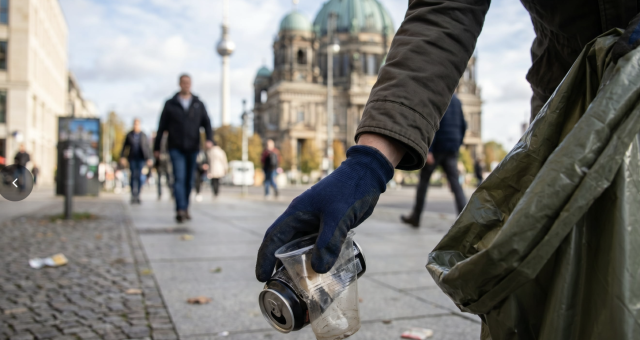
Through a new initiative called BerlinPay, visitors can score free kayak tours, museum perks, drinks, and even ice cream simply by making environmentally friendly choices around the city. That might mean cycling instead of calling an Uber, helping clean up litter from the River Spree during a canoe trip, or volunteering with a local community project. It’s part sustainability campaign, part tourism experiment, and part acknowledgment that Berlin’s litter problem has become increasingly hard to ignore. And surprisingly, the idea is already working elsewhere. Now Germany’s capital wants in, too.
BerlinPay launched on May 14 and runs through June 14, 2026, offering visitors rewards in exchange for genuinely sustainable behavior. Bike to an attraction instead of grabbing a rideshare, help clean up the River Spree during a canoe trip, or volunteer with a local social project, and participating partners will thank you with perks ranging from free kayak rentals and guided tours to ice cream and drink vouchers. The initiative is backed by the Berlin Senate Department for Economics, Energy and Public Enterprises and organized through the city’s official tourism agency, visitBerlin.
Image Source: BerlinPay Official Website
The timing is deliberate. Berlin’s tourism theme for 2026 is centered around its waterways, and BerlinPay leans heavily into the city’s surprisingly vast network of rivers, lakes, and canals. In fact, Berlin has more bridges than Venice, which sounds made up until you realize just how much of the city is connected by water. The broader idea is simple: encourage visitors to experience those spaces in a slower, more sustainable way while making the environmentally friendly option feel like part of the fun instead of a chore.
There’s no app to download or complicated points system to track. BerlinPay works on a pretty simple premise: do something sustainable, get rewarded for it. More than 30 partners are currently participating through the visitBerlin website, including kayak operators, museums, restaurants, sailing clubs, and cultural organizations. Some activities require advance booking, but most are designed to be easy additions to a normal day of sightseeing.
And the rewards are actually worth wanting. Participants can unlock guided kayak tours, waterfront art workshops, tree-watering projects, and volunteer beach days around the city. Haus Zenner, a popular riverside spot in Treptow, is handing out complimentary drinks and ice cream, while Marina Lanke is offering picnic bags to visitors who complete a sailing course. GreenKayak Berlin is also running cleanup paddle sessions along the Spree, which honestly feels like one of the more Berlin ways imaginable to spend a summer afternoon.
Source: Eric Trump via X (formerly Twitter), posted May 5, 2026.
Importantly, the program isn’t just rewarding people for picking up trash. Choosing lower-impact transportation counts too. If you’re already planning to use public transit, cycle around the city, or arrive via Deutschlandticket instead of renting a car, BerlinPay treats that as part of the initiative as well. The broader goal is less about guilt and more about nudging visitors toward the kinds of travel choices many people already want to make anyway.
It’s worth being honest about the context here. Berlin has a very real litter problem, and most of it is not being caused by tourists snapping selfies along the Spree. The city spent around €13.1 million (about $14.8 million USD) removing illegally dumped waste last year, up sharply from roughly €10.3 million (about $11.7 million USD) the year before. Sofas, mattresses, broken appliances, and construction debris regularly appear in parks, alleyways, and sidewalks across the city. In the district of Neukölln alone, officials recorded around 15,000 rubbish-related complaints in a single year.
Berlin has responded with much tougher penalties since late 2025. Tossing a cigarette butt on the street can now lead to fines of up to €250 (around $280 USD) instead of the previous €55 (about $62 USD), while more serious littering offenses can climb into the thousands. Illegal dumping of bulky waste carries penalties ranging from roughly €1,500 to €11,000 (about $1,700 to $12,500 USD), depending on the scale of the violation.
BerlinPay didn’t invent this idea. The program is directly inspired by CopenPay, a sustainability initiative launched by Copenhagen’s tourism board in 2024. In Denmark’s capital, visitors can earn perks like boat tours, free bike rentals, organic meals, coffee, and cultural experiences simply by making lower-impact travel choices. Some rewards are even tied to how travelers arrive, with vouchers available for visitors who choose trains over short-haul flights.
And the results from Copenhagen have been surprisingly strong. Around 5,000 tourists participated during the program’s 2024 pilot run. By the following summer, participation had jumped to roughly 25,000 people. Bike rentals reportedly increased by 59 percent during the initiative, and a survey from Wonderful Copenhagen found that about 70 percent of participants said the program encouraged them to adopt more environmentally friendly habits they continued after returning home.
The concept has attracted global attention since then. More than 100 cities and tourism organizations have reportedly contacted Copenhagen about creating similar programs of their own, including several destinations across Germany. Berlin is simply the latest city betting that rewarding good behavior may work better than endlessly lecturing people about it.
If you’re visiting Berlin this summer and already planning to cycle along the Spree or hop on public transit between museums and neighborhoods, BerlinPay is basically free travel perks disguised as a sustainability initiative. If the idea of picking up litter while kayaking sounds more like community service than vacation, that’s a fair reaction too, and plenty of people online have said exactly that.
But the program’s smarter idea is a little broader than the cleanup angle alone. BerlinPay rewards the kind of slower, lower-impact travel many people already quietly want from a trip in the first place, and makes it feel less like a sacrifice and more like part of the experience itself. Berlin’s rivers, lakes, and canals are genuinely beautiful in summer. Spending an afternoon out on the water, doing a small bit of good, and ending the day with free ice cream by the river is honestly not a terrible travel itinerary.
The promotional weeks run from May 14 through June 14, 2026. Full partner listings and booking details are available through visitBerlin.
BerlinPay is a summer 2026 initiative run by Visit Berlin that rewards tourists and locals for sustainable behavior, such as picking up litter, cycling instead of driving, or volunteering with local projects, with perks at participating partners including museums, kayak operators, restaurants, and cultural venues.
The BerlinPay promotional weeks run from May 14 to June 14, 2026.
Rewards vary by partner and include free or discounted kayak hire, guided tours, art workshops, ice cream, drinks, picnic bags, and other Berlin experiences. Check the Visit Berlin website for a full list of participating partners and their specific offers.
No app is required. Some activities need advance booking or registration through individual partners. It's worth checking the Visit Berlin website before you go to confirm how your chosen activity works.
Qualifying actions include picking up litter, using public transport or a bicycle instead of a car, arriving by Deutschlandticket, participating in a river cleanup during a canoe trip, or supporting a local social project. Exact requirements vary by partner.
Yes. It's directly inspired by CopenPay, Copenhagen's sustainable tourism rewards program launched in 2024, which has since attracted interest from over 100 cities worldwide.
Copenhagen's version grew from 5,000 participants in its 2024 pilot to 25,000 the following summer. Around 70 percent of participants reportedly adopted more eco-friendly habits as a result, and bike rentals increased by 59 percent.
It does. Berlin spent around 13.1 million euros removing illegally dumped waste last year, and introduced significantly tougher fines in late 2025, with cigarette butt fines rising from 55 euros to as much as 250 euros. BerlinPay is a complementary, positive-incentive approach running alongside stricter enforcement.