We use cookies to enhance your browsing experience, serve personalized content, and analyze our traffic. By clicking "Accept All" you accept this and consent that we share this information with third parties and that your data may be processed in the USA. For more information, please read our .
You can adjust your preferences at any time. If you deny, we will use only the essential cookies and unfortunately, you will not receive any personalized content.

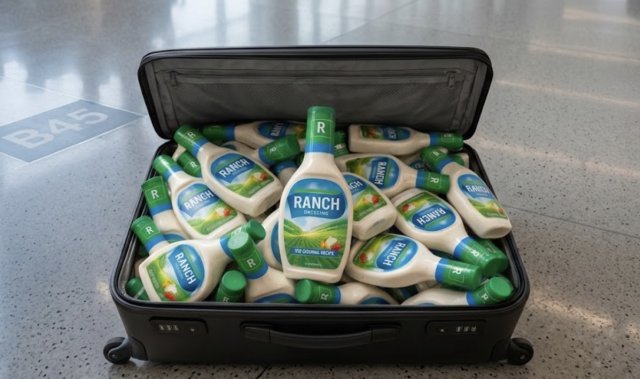
International FIFA World Cup visitors have been trying to take bottles of ranch dressing home, prompting TSA to issue a viral reminder about airport security rules. The warning followed a wave of social posts from fans discovering the American condiment during trips across the United States. Kraft and Hidden Valley quickly joined the conversation with travel-friendly ideas, turning a routine packing issue into one of the tournament’s funniest cultural exchanges and a surprisingly useful lesson for anyone flying home with a new favorite food.
Ranch counts as a liquid or gel when passengers bring it through a TSA security checkpoint.
Carry-on containers cannot exceed 3.4 ounces, or 100 milliliters, regardless of how much ranch remains inside.
All travel-size liquids must fit inside one clear, quart-sized, resealable bag per passenger.
Larger bottles belong in checked luggage and should be sealed carefully to prevent a creamy suitcase disaster.
Dry ranch seasoning is allowed in carry-on and checked bags because TSA treats it as a solid food item.
Kraft’s travel kit is coming soon, but the company hasn’t announced a release date or confirmed where it will be sold.
Hidden Valley sells one-ounce packets that can be mixed with milk and mayonnaise to make ranch at home.
Prepared ranch dressing falls under TSA’s rules for liquids, gels, aerosols, sauces, and spreadable foods. Each container inside a carry-on must hold no more than 3.4 ounces, or 100 milliliters, and everything must fit inside a single quart-sized bag. A larger bottle isn’t permitted simply because it’s almost empty. TSA looks at the size of the container, not the remaining ranch.
Full-size bottles can travel inside checked luggage, but they should be packed with more care than the average souvenir magnet. Tighten the cap, place the bottle inside a sealed plastic bag, and surround it with soft clothing. Ranch may be the taste of America, but it’s significantly less charming after it has coated every shirt inside your suitcase.
The same rules apply to other pourable or creamy foods, including dips, sauces, jams, soft cheeses, and spreads. Solid food is generally allowed in carry-on bags, although officers may ask passengers to remove certain foods or powders during screening. The final decision always rests with the TSA officer at the checkpoint.
The World Cup ranch obsession may sound slightly ridiculous, but international visitors have stumbled upon one of the most distinctly American foods imaginable. Ranch is the best-selling salad dressing in the United States and has held that position since overtaking Italian dressing near the end of the 20th century. It has also escaped the salad bowl almost entirely.
Americans now use ranch as a dip for wings, pizza, fries, fried pickles, onion rings, quesadillas, vegetables, and nearly anything else that appears remotely dippable. A YouGov poll conducted earlier this year found that ranch was the only salad dressing kept at home by a majority of Americans. Italian dressing came in well behind it at 39%.
The history of ranch is also a particularly American success story. Steve Henson developed the dressing while working as a plumbing contractor in Alaska, where he served a mixture of herbs, spices, buttermilk, and mayonnaise to workers. He and his wife later opened the Hidden Valley dude ranch in California and began serving the dressing to guests.
Visitors liked it enough to ask for jars to take home, so the Hensons began selling the seasoning as a mail-order dry mix. The small operation grew into a multimillion-dollar business before being sold to the Clorox Company in the 1970s. Bottled ranch followed, competitors joined the category, and a dressing invented for ranch guests became a permanent part of American food culture.
The sudden wave of European ranch appreciation feels especially appropriate after Hidden Valley’s Ranchbassador campaign went hugely viral earlier this year. The company announced that it was hiring two teams of ranch enthusiasts for an eight-week paid summer program, including seven weeks of all-expenses-covered travel across Europe.
The selected pairs would visit countries including the United Kingdom, Ireland, Iceland, France, Germany, Switzerland, Spain, Portugal, Italy, Croatia, Greece, and Sweden. Their job was to create social content while introducing ranch to local dishes. Four short-form videos and one longer YouTube episode were expected each week, with transportation, lodging, food stipends, and filming equipment covered.
At the time, the idea of Americans traveling across Europe and putting ranch on everything sounded like a wonderfully chaotic piece of marketing. Only a few months later, European World Cup visitors are completing the cultural exchange in reverse by discovering ranch in the United States and trying to bring industrial quantities of it home.
Maybe Hidden Valley didn’t need to bring ranch to Europe after all. Europe came to the ranch, filled its suitcase, and then learned a surprisingly expensive lesson about the TSA liquids rule.
Screenshot Source: @elsathora via X
The World Cup has always been about bringing people together, although ranch dressing probably wasn’t included in FIFA’s original vision. Still, there are worse forms of cultural diplomacy than sharing a plate of fries and collectively deciding they would be better with ranch. Here’s to one world, one ranch, and remembering to put the full-size bottle in your checked bag.

You need to agree with the cookies and privacy policy of this external service to view the content
Yes, but prepared ranch dressing must follow TSA’s liquids rule. Carry-on containers must hold no more than 3.4 ounces, or 100 milliliters, and fit inside your quart-sized liquids bag.
Yes. Full-size bottles of ranch dressing are allowed in checked bags. Seal the bottle inside a plastic bag and pack it securely to reduce the risk of leaks.
Yes. TSA treats ranch dressing as a liquid or gel because of its creamy, pourable consistency. The same rule applies to many sauces, dips, spreads, and salad dressings.
Yes. TSA allows dry spices and other solid food items in both carry-on and checked luggage. Officers may occasionally ask travelers to remove powders or food products for additional screening.
Mix one packet of Hidden Valley Original Ranch seasoning with mayonnaise and milk or buttermilk. The exact quantities depend on whether you’re making dressing or a thicker dip, so follow the instructions printed on the packet.
Not yet. Kraft has announced that it is working on a travel-friendly ranch kit, but it hasn’t shared a release date, price, or list of retailers.
International visitors have been posting about discovering ranch while traveling through the United States for the World Cup. The trend grew after TSA warned passengers not to put full-size bottles in carry-on luggage.
Ranch is available in some European grocery stores and through American import retailers, but it isn’t nearly as common as it is in the United States. Dry seasoning packets are often easier to transport and store than bottled dressing.