We use cookies to enhance your browsing experience, serve personalized content, and analyze our traffic. By clicking "Accept All" you accept this and consent that we share this information with third parties and that your data may be processed in the USA. For more information, please read our .
You can adjust your preferences at any time. If you deny, we will use only the essential cookies and unfortunately, you will not receive any personalized content.
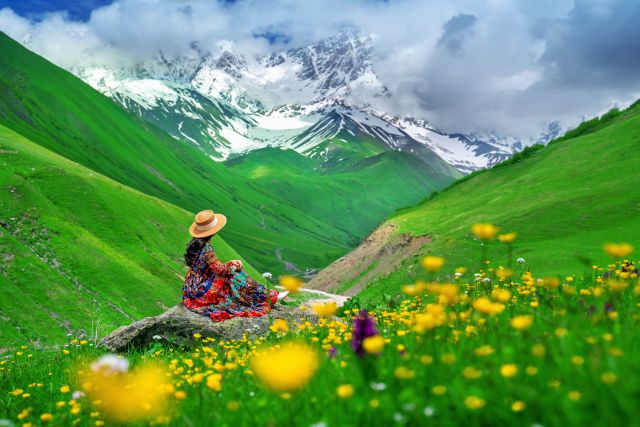
If you are feeling burned out on the same European itineraries and rising prices across Western Europe, Georgia offers something increasingly rare: dramatic landscapes, deep history, and genuinely affordable travel that still feels undiscovered.
Located at the crossroads of Eastern Europe and Western Asia, Georgia sits in the Caucasus Mountains and delivers an experience that feels both familiar and entirely new. Think alpine scenery, centuries-old cities, rich food traditions, and a hospitality culture that is heartfelt rather than performative.
Georgia has not yet been overtaken by large tour groups or cruise crowds, and that window will not stay open forever. Locals still bake bread in traditional clay ovens. Family-run guesthouses remain common. Meals stretch long into the evening, driven by conversation rather than reservation times.
It's also one of the safest countries in the region, with low violent crime rates and a strong reputation for welcoming visitors. Add to that affordable prices, improving infrastructure, and easy English communication in major cities, and Georgia becomes a compelling alternative to more crowded destinations.
For Americans and Canadians, Georgia is especially appealing right now because it remains outside the mass tourism circuit, offers excellent value for money, and allows visa-free stays far longer than most European destinations.
Georgia is small, but vibrant. Here are the three cities you absolutely need to visit:
Tbilisi:
Georgia’s capital is layered, imperfect, and full of character. The old town is a maze of wooden balconies, stone courtyards, and sulfur bathhouses that date back centuries. Narikala Fortress offers sweeping views of the city, while the Abanotubani baths provide a deeply relaxing break after a day of exploring.
Tbilisi also has a surprising modern side. Contemporary art spaces, wine bars, and underground techno clubs operate alongside historic churches and traditional markets. It is a city that does not try to impress and somehow does anyway.
This mountain town sits beneath Mount Kazbek and is home to one of Georgia’s most iconic sights: the Gergeti Trinity Church, perched alone on a hilltop. Visitors can hike up or take a 4x4, but either way the view is unforgettable.
Beyond the postcard image, the region offers hiking trails, alpine valleys, and a sense of scale that makes daily worries feel very small.
Just outside Tbilisi, Mtskheta is Georgia’s spiritual heart and a UNESCO World Heritage Site. The Svetitskhoveli Cathedral and Jvari Monastery tell the story of the country’s early Christian history and are among the most important religious landmarks in Georgia.
As one of the oldest continuously inhabited cities in the Caucasus, Mtskheta offers a compact introduction to Georgian culture, architecture, and faith. It is an easy half-day trip from Tbilisi that adds depth and historical context without requiring major planning.
Food is a central part of Georgian culture, and meals here are meant to be shared, savored, and stretched long into the evening. If you come hungry and curious, Georgia delivers bold flavors, comforting classics, and one of the world’s oldest wine traditions.
Khachapuri – Georgia’s most iconic dish and the ultimate comfort food. This cheese-filled bread comes in many regional styles, with Adjaruli khachapuri being the most famous: boat-shaped, filled with molten cheese, topped with egg and butter, and mixed at the table.
Khinkali – Large Georgian dumplings filled with juicy meat and savory broth. Eating them properly is an experience in itself, and locals are always happy to teach visitors the correct technique.
Lobio – A traditional bean stew seasoned with herbs, garlic, and walnuts, often served in clay pots. It is simple, filling, and a staple of Georgian home cooking.
Badrijani Nigvzit – Thin slices of eggplant rolled with a rich walnut and garlic paste, finished with pomegranate seeds. This dish shows how central walnuts are to Georgian cuisine.
Mtsvadi – Georgian-style grilled meat, usually pork, cooked over open flames and served with fresh herbs and onions. It is a common feature at gatherings and roadside restaurants.
Georgian Wine – Georgia is considered the birthplace of wine, with an 8,000-year-old winemaking tradition using clay vessels called qvevri buried underground. Tastings are often hosted by families, making them feel personal rather than polished.
Chacha – A strong grape-based spirit often compared to grappa. It's typically offered at the end of meals and taken as a sign of hospitality.
Georgia is a true year-round destination, with each season offering a completely different way to experience the country. From snowy mountain resorts to sunlit vineyards and Black Sea beaches, the best time to visit depends less on weather and more on how you want to travel.
Winter: Winter in Georgia is ideal for travelers looking for snow without luxury-resort prices. Ski resorts like Gudauri and Bakuriani offer excellent conditions at a fraction of the cost of the Alps or Rockies. Snowy landscapes, cozy guesthouses, and Tbilisi’s famous thermal baths make winter travel both affordable and atmospheric.
Spring: Spring brings mild temperatures, blooming countryside, and fewer crowds. It is one of the best times to explore cities like Tbilisi and Kutaisi, visit monasteries, and enjoy wine regions such as Kakheti as vineyards come back to life. Hiking trails reopen at lower elevations, making it perfect for slower, scenic travel.
Summer: Summer opens up Georgia’s mountains and highlands. Hiking in Svaneti, rafting near Martvili Canyon, and visiting remote villages feel adventurous without being overwhelming. On the coast, Batumi offers a completely different vibe, with beaches, nightlife, modern architecture, and a lively Black Sea promenade.
Fall: Autumn is harvest season and one of the most rewarding times to visit Georgia. The wine harvest, known as rtveli, fills villages with celebrations, food, and homemade wine. Cooler temperatures make it ideal for hiking, road trips, and cultural travel, while landscapes turn golden across the countryside.
Georgia remains very budget-friendly by North American standards.
Meals: $5–10 for casual dining, $12–20 for a full sit-down meal
Accommodation: $30–40 for guesthouses, $60–90 for comfortable hotels
Transportation: Shared minibuses and local taxis cost just a few dollars
Luxury exists, but everyday travel in Georgia still feels refreshingly accessible.
Georgia is farther than Western Europe, but it is not as distant or difficult to reach as many travelers expect. Most flights from the United States or Canada connect through major European or regional hubs such as Istanbul, Frankfurt, Warsaw, or Vienna before continuing to Tbilisi.
Total travel time typically ranges from 13 to 17 hours, depending on your departure city, route, and layover length. Travelers from the U.S. East Coast often have slightly shorter journeys, while West Coast departures usually require longer connections.
For many North American travelers, Georgia feels like a far-flung adventure without the high costs, complex visas, or extended travel times associated with destinations in Asia or South America. Once you arrive, the compact size of the country and affordable domestic travel make getting around surprisingly easy.
Georgia is not polished or overly curated, and that is exactly what makes it special. It is a place where landscapes feel untamed, meals turn into conversations, and visitors are welcomed with genuine curiosity rather than a sales pitch.
For travelers looking for something different but still approachable, Georgia offers rare value. It feels meaningful without being intimidating, adventurous without being exhausting, and affordable without sacrificing comfort or safety.
Do Americans and Canadians need a visa for Georgia?
No. US and Canadian passport holders can stay visa-free for up to one full year.
Is Georgia safe to visit?
Yes. Georgia consistently ranks as one of the safest countries in the region.
Is English widely spoken?
English is common among younger Georgians and in tourist areas. Outside cities, communication may rely more on gestures, but help is usually easy to find.
What currency is used?
The Georgian Lari (GEL). Credit cards work well in cities, but cash is needed in rural areas.
How do you get around?
Shared minibuses are common and inexpensive. Ride-hailing apps work well in cities. Renting a car is an option but not required.
Do I need travel insurance?
Yes. Georgia is outside European health coverage, and insurance is recommended, especially for hiking or skiing.
How is internet access?
Reliable and affordable. Local SIM cards with generous data plans are easy to buy at the airport.