
We use cookies to enhance your browsing experience, serve personalized content, and analyze our traffic. By clicking "Accept All" you accept this and consent that we share this information with third parties and that your data may be processed in the USA. For more information, please read our .
You can adjust your preferences at any time. If you deny, we will use only the essential cookies and unfortunately, you will not receive any personalized content.
Emerald Fennell’s much-anticipated Wuthering Heights opens in theaters in just days, and the obsession has already begun. If you are already plotting a trip to the Yorkshire moors, welcome. This is a safe space.
Before Margot Robbie and Jacob Elordi even appear on screen as Catherine and Heathcliff, many fans are already focused on the landscape. The Yorkshire moors are central to Wuthering Heights, shaping the mood, the relationships, and the story as a whole.
This latest adaptation doesn't treat the setting as a backdrop. It treats Yorkshire as a character. And the good news is that you can visit nearly all of it. Here is where Wuthering Heights (2026) was filmed, how to see it yourself, and how to turn opening-weekend excitement into a properly moody, literary trip.
Emily Brontë’s 1847 novel is inseparable from the land that shaped it. The isolation. The emotional extremity. The sense that love and grief are as relentless as the weather. All of it comes from the Yorkshire moors.
Emerald Fennell leaned into that truth. Rather than relying on studio-heavy recreations, the production filmed extensively across North Yorkshire and West Yorkshire, choosing places that still feel raw, remote, and slightly unforgiving.
That choice shows on screen, and it is already one of the most talked-about elements in early reactions.
One reason interest in Wuthering Heights (2026) has surged beyond book lovers is its soundtrack. Director Emerald Fennell tapped Charli xcx to create original music for the film, including the dark, gothic track Chains of Love, which features prominently in the official trailer.
The song’s release helped push searches for the new film nto breakout territory, introducing the story to a younger audience discovering it for the first time. The sound matches the setting perfectly: raw, romantic, and emotionally uncontained, much like the Yorkshire moors themselves.
If you found your way here after watching the trailer and wondering where those windswept landscapes actually are, you are exactly where you should be.
Yorkshire Dales National Park
Much of the film’s sweeping scale comes from the Yorkshire Dales, particularly Swaledale and Arkengarthdale. These wide valleys are shaped by wind, old stone walls, and the remains of historic lead mining.
They are not gentle landscapes. They are dramatic, exposed, and emotionally charged, which is exactly the point. If you have ever pictured Catherine and Heathcliff running headlong into the wind, this is where that image comes from.
Reeth
The village of Reeth served as a base for parts of the production and makes an ideal starting point for visitors. It is small, walkable, and surrounded by some of the most striking scenery in Swaledale.
Reeth is also practical. It has pubs, bakeries, and just enough civilization to regroup after a long moorland walk without breaking the spell.
Low Row
Tiny and stone-built, Low Row appears in the film as a quietly grounded village setting. It looks largely unchanged by time, which makes it perfect for a story that feels suspended between eras.
Stop here for a drink at The Punch Bowl Inn, a 17th-century coaching inn where it is very easy to imagine Heathcliff brooding in the corner.
Simonstone Hall (Near Hawes)
If you want the closest thing to living inside the film, Simonstone Hall is it.
This country house hotel near Hawes is where cast and crew stayed during filming. Today, it leans fully into that legacy with candlelit dinners, open fires, and views over Upper Wensleydale that feel almost theatrically moody.
It isn't subtle. It doesn't need to be.
Haworth and Brontë Country
No Wuthering Heights trip is complete without Haworth, home to the Brontë Parsonage Museum where Emily Brontë wrote the novel.
Walk the cobbled main street. Visit the parsonage. Stand at the edge of the village where the moors begin. This is where the line between literary history and landscape disappears entirely. Even when filming happened elsewhere, this is the emotional anchor of the story.
Top Withens
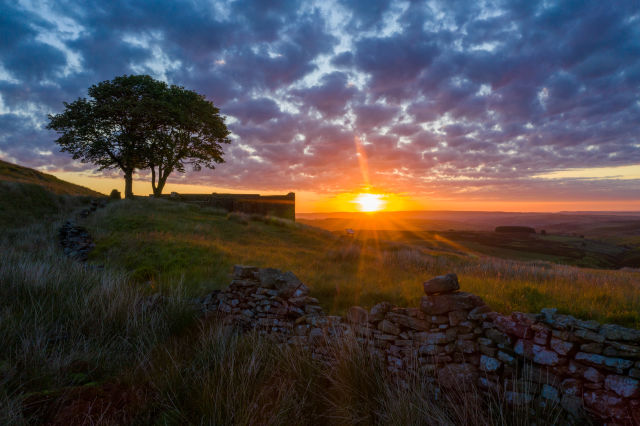
Perched on Haworth Moor, Top Withens is the ruined farmhouse long associated with the inspiration for Wuthering Heights.
It's not a confirmed filming location for the 2026 adaptation, but it is inseparable from the novel’s legacy. The walk there is muddy, windswept, and entirely worth it.
Bring proper boots. This is not an Instagram stroll.
East Riddlesden Hall
A National Trust property near Keighley, East Riddlesden Hall appears as one of the film’s more formal interiors.
Dark beams, enclosed rooms, and a sense of contained tension make it an ideal counterpoint to the open moors. Ending your trip here feels intentional, like closing the final chapter.
Day 1: Dales drama, village stops, and a cast-approved stay
Sunrise walk near Reeth in Swaledale for a cinematic start
Lunch and bakery stops in Reeth
Detour to Low Row and The Punch Bowl Inn for a proper old-inn break
Overnight at Simonstone Hall near Hawes, where the cast and crew stayed
Optional add-on: Aysgarth Falls if you have daylight and energy left.
Day 2: Brontë country deep dive and the iconic moor walk
Brontë Parsonage Museum in Haworth, ideally before crowds build
Wandering Haworth’s cobbled main street, bookshops, cafés, and galleries
Walk the Brontë Way to Top Withens via the Brontë Waterfall and Bridge
Finish at East Riddlesden Hall for the final gothic interior chapter
This route follows the same rhythm as the film: wide, exposed landscapes balanced by moments of interior stillness.
Weather changes fast on the moors. Treat this like a real hike, not an aesthetic walk.
Plan to drive if you want to cover both the Dales and Haworth efficiently.
Respect private land and keep to marked paths, especially on open moorland.
Go if: you want landscapes that feel like a character, love literary travel, and enjoy walks that make your cheeks sting in the most romantic way.
Skip if: you hate mud, wind, long stretches without cafés, or anything that could be described as bleakly beautiful.
Wuthering Heights is not just one of my favorite novels. It is also one of my favorite songs. Long live Kate Bush.
If your timing is right, keep an eye out for Wuthering Heights Day, held annually on July 27. Fans around the world gather in flowing red dresses to recreate the iconic choreography from Kate Bush’s 1978 music video. Yorkshire has embraced it wholeheartedly, including events held on the moors near Haworth.
It is theatrical, slightly unhinged, and deeply sincere. Which, frankly, feels exactly right.
It will take a lot to top Tom Hardy’s Heathcliff for many fans. That performance lives rent-free in the collective memory.
But based on early reactions, we believe in Jacob Elordi and Margot Robbie. The chemistry is there. The scale is there. And the landscape does a lot of the emotional heavy lifting.
The movie opens in just a few days. The moors are already waiting.
Where was the 2026 Wuthering Heights filmed?
Across Yorkshire, including the Yorkshire Dales (Swaledale and surrounding moorland areas) and Brontë country around Haworth and Top Withens.
Is Haworth a filming location?
Haworth is central to Brontë tourism and the itinerary, especially for the museum and moorland walks. Some guides focus on it more as Brontë country than an on-camera set, but it is the anchor stop for most trips.
Can you walk to Top Withens?
Yes. It is a popular moorland hike from Haworth, and it can get muddy, so proper boots help.
Where did the cast stay?
VisitEngland lists Simonstone Hall Hotel near Hawes as the cast and crew base.
Is it worth visiting even if you have not seen the film yet?
Yes, because the moors, villages, and Brontë sites are the point. The film just gives you a new excuse to go.
Who wrote the music for Wuthering Heights (2026)?
Charli xcx created original music for Emerald Fennell’s adaptation, including tracks featured in the official trailer.