We use cookies to enhance your browsing experience, serve personalized content, and analyze our traffic. By clicking "Accept All" you accept this and consent that we share this information with third parties and that your data may be processed in the USA. For more information, please read our .
You can adjust your preferences at any time. If you deny, we will use only the essential cookies and unfortunately, you will not receive any personalized content.

The Hunger Games are back, and this time, Panem has taken over some pretty incredible places in Europe! The Hunger Games: Sunrise on the Reaping, arriving in U.S. theaters November 20, 2026, was filmed across northern Spain and Germany, with real mountains, industrial ruins, and historic stadiums standing in for the fictional districts and Capitol.
The new movie follows a young Haymitch Abernathy during the 50th Hunger Games, and the filming locations are almost as interesting as the story. From a lush Spanish valley transformed into the arena to Berlin’s massive Olympic Stadium, here are the real places behind the new movie, including several you can actually visit.
Somiedo Natural Park in Spain provided the mountain landscapes for the 50th Hunger Games arena.
Valle de Lago in Asturias was used for the arena’s opening sequence, according to director Francis Lawrence.
Landschaftspark Duisburg-Nord in Germany provided an industrial backdrop for scenes set in District 12.
Berlin’s Olympiastadion was used for major Capitol ceremony scenes, according to German location reporting.
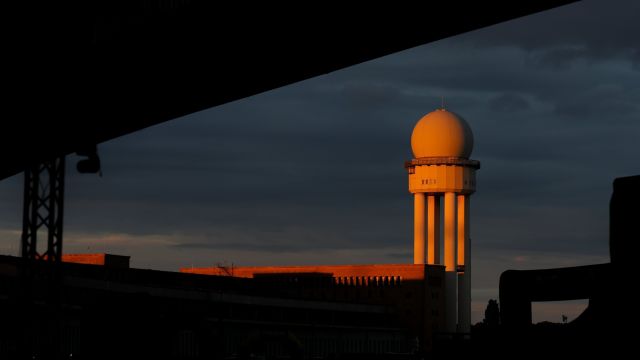
Berlin’s former Tempelhof Airport was reported as another Capitol filming location, and the airfield around it is now a free public park.
Messe Berlin and the ICC provided settings for the Capitol’s arrival and training sequences.
Berlin’s Velodrom arena was used for scenes involving the tributes before entering the Games.
November 20, 2026 is the U.S. release date

You need to agree with the cookies and privacy policy of this external service to view the content
The most beautiful location in the movie is also where things get particularly dangerous for the tributes. Filming began in Somiedo Natural Park in Asturias, a mountainous region of northern Spain known for its green valleys, forests, and glacial lakes. It’s an absolutely gorgeous place to visit, although perhaps slightly less relaxing when you’re competing in the Hunger Games.
Director Francis Lawrence confirmed that production began with the arena’s opening sequence in Valle de Lago. The team needed to film during late summer, before the landscape changed with the seasons. The result is an arena that looks almost like a peaceful nature retreat, at least until you remember what’s happening in it.
Somiedo’s lakes and mountains provided the landscape for the new Hunger Games arena.
Unlike Panem’s fictional arena, Somiedo is a real protected natural park where visitors can explore mountain trails and traditional villages. The area is part of a UNESCO Biosphere Reserve, with landscapes shaped by ancient glaciers and a network of scenic walking routes. If you’re visiting, the village of Valle de Lago makes a particularly good starting point.
One popular outing is the hike to Lago del Valle, Asturias’ largest natural lake. It’s a wonderful way to experience the scenery that attracted the filmmakers, but don’t expect to find the movie’s Cornucopia waiting beside the water. The production structures were temporary, and this is a protected landscape, so stick to designated routes and check local trail conditions before heading out.
Glacial lakes ringed by rocky peaks are the reward on many of the area’s best-known hikes.
From Spain’s lush mountains, production moved to western Germany, where an old steelworks complex helped bring District 12 to life. Landschaftspark Duisburg-Nord is a former industrial site that’s been transformed into a public park, complete with enormous blast furnaces, steel pipes, and towering industrial structures. It’s not exactly the sort of place you’d picture for a pleasant afternoon stroll, but that’s part of what makes it so interesting.
The location has a history with the franchise, having previously been used for The Hunger Games: The Ballad of Songbirds & Snakes. Today, visitors can explore much of the atmospheric industrial landscape, and parts of the complex are illuminated with colorful lights after dark. It makes a surprisingly good stop for industrial history fans, photographers, and anyone curious about the real-world places used to create Panem.
The former steelworks at Landschaftspark Duisburg-Nord helped bring District 12 to life.
Some of the film’s most imposing locations are right in Berlin. The historic Olympiastadion was used for scenes involving the Capitol’s extravagant Hunger Games ceremonies. With its enormous grandstands and monumental architecture, it’s a pretty convincing setting for President Snow’s carefully staged displays of power.
Even better, the stadium is a real attraction that offers visitor access and guided tours when events allow. You can explore the grounds and learn about its complicated history, which stretches back to the 1936 Berlin Olympics. This is one filming location where the real building has a much bigger story than its appearance in the movie.
Berlin’s historic Olympic Stadium provided an imposing setting for the Capitol.
Berlin has another movie-ready landmark in the former Tempelhof Airport. Location reports list the sprawling terminal among the Berlin sites that stood in for the Capitol, and WorldAtlas reports that the production returned in November 2025, with cast members including Joseph Zada, Mckenna Grace, Ralph Fiennes, Elle Fanning, and Glenn Close spotted at the airport. The building’s stark, symmetrical design makes it easy to see why a story about a totalitarian regime would want it.
It’s a franchise favorite, too. WorldAtlas notes that crews spent 12 days filming there in 2014 for Mockingjay, when it stood in for District 2’s rebel encampment, Commander Lyme’s control room, and a train station. Not many airports can say they’ve played both a rebel base and a seat of government.
Tempelhof is also one of the easiest filming locations to visit. The old airfield, Tempelhofer Feld, has been a free public park since 2010, and its former runways are popular with cyclists and skaters. The terminal building, completed in 1941, is roughly three-quarters of a mile long, and two-hour Tempelhof Myths guided tours start from the visitor center at Platz der Luftbrücke 5. The airport is also famous for the Berlin Airlift of 1948 and 1949, when American and British aircraft flew food and coal into West Berlin during the Soviet blockade.
Another surprising filming location is Messe Berlin, the enormous exhibition complex in the western part of the city. Its south entrance was used to represent a Capitol railway station, where tributes arrive after being transported from their districts. The nearby Internationales Congress Centrum, better known as the ICC, was also used for training-center sequences.
Messe Berlin’s round south entrance building stood in for a Capitol railway station.
The ICC is one of Berlin’s most recognizable pieces of futuristic architecture, with a sprawling metallic exterior that could easily belong in the Capitol. It’s not generally open as a walk-in tourist attraction, but visitors can admire the exterior from public areas. Another location, the Velodrom, was used for sequences involving the tributes preparing to enter the arena. Access to its interior depends on scheduled events rather than regular sightseeing.
Futuristic Berlin venues like the ones used for the Capitol’s training and launch sequences are all sleek metal and clean lines.
If you want to visit the locations, Germany is the easier place to start. Berlin has several sites connected to the film, including the Olympiastadion, Tempelhof Airport, Messe Berlin, ICC, and Velodrom, while Duisburg makes a separate stop in western Germany. You could build a short Berlin city break around the locations, then explore the city’s museums, historic neighborhoods, and excellent public transportation.
Spain’s Somiedo Natural Park deserves a trip of its own. It’s better suited to travelers who enjoy hiking, mountains, and quiet countryside rather than a quick filming-location photo stop. And while the movie’s world of Panem is decidedly not somewhere we’d want to spend our vacation, its real-life landscapes are another story entirely.
Quiet mountain lakes and empty trails make this corner of Europe better suited to hikers than tributes.
The movie was filmed in Spain and Germany during 2025. Confirmed regions include Asturias in northern Spain, North Rhine-Westphalia in western Germany, and Berlin.
The arena was filmed in Somiedo Natural Park in Asturias, Spain. Director Francis Lawrence identified Valle de Lago as the location for the arena’s opening sequence.
District 12 scenes were filmed in western Germany, including Landschaftspark Duisburg-Nord. The former industrial site is now a public park.
Yes. Locations reported in Berlin include the Olympiastadion, Tempelhof Airport, Messe Berlin, Internationales Congress Centrum, and Velodrom.
Yes, several are accessible. Somiedo Natural Park offers hiking, Landschaftspark Duisburg-Nord is a public park, and the Olympiastadion offers tours on selected dates. Studio sets and restricted interiors are not necessarily open to visitors.
The film opens in U.S. theaters on November 20, 2026.
Unlike the original 2012 Hunger Games, which used North Carolina filming sites, Sunrise on the Reaping was filmed in Europe, primarily Spain and Germany.
Reportedly, yes. Location reports list Tempelhof Airport in Berlin among the Capitol filming sites, and the airfield around it, Tempelhofer Feld, is a free public park.
Yes. WorldAtlas reports that admission to the park is free and that it never closes, and the blast furnaces are lit with colorful lights on weekend evenings.
Yes. Studio Babelsberg in Potsdam, outside Berlin, served as the production base for the German shoot. The studio’s sound stages are closed to the public, but neighboring Filmpark Babelsberg is open to visitors.