We use cookies to enhance your browsing experience, serve personalized content, and analyze our traffic. By clicking "Accept All" you accept this and consent that we share this information with third parties and that your data may be processed in the USA. For more information, please read our .
You can adjust your preferences at any time. If you deny, we will use only the essential cookies and unfortunately, you will not receive any personalized content.

If you've been paying attention to passport rankings over the last couple of years, you already know the American passport has had a rough ride. The good news is that 2026 brings a modest recovery. The less good news: recovery doesn't mean what it used to. Here’s what the new ranking really means for American travelers.
The Henley Passport Index remains the most widely cited benchmark for global passport strength, tracking 199 passports across 227 destinations. It’s updated monthly and based on data from the International Air Transport Association, which means these shifts tend to reflect broader changes in global mobility, not just short-term fluctuations. Here is the most current list for April 2026:
Singapore (192 destinations) — The world's most powerful passport for the fourth year running, granting visa-free access to nearly every country on earth
Japan, South Korea, United Arab Emirates (187 destinations) — A strong Asian trio, with the UAE continuing its remarkable climb from outside the top 20 just a decade ago
Sweden (186 destinations) — The lone Scandinavian country to hold its own rank this quarter, just ahead of its Nordic neighbors
Belgium, Denmark, Finland, France, Germany, Ireland, Italy, Luxembourg, Netherlands, Norway, Spain, Switzerland (185 destinations) — The EU's powerhouse cluster, offering holders near-universal access across every continent
Austria, Greece, Malta, Portugal (184 destinations) — Four of Europe's most popular expat destinations, and their passport holders enjoy almost identical global mobility
Hungary, Malaysia, Poland, United Kingdom (183 destinations) — The UK holds steady in the top ten post-Brexit, tied with Malaysia, which continues to punch well above its weight
Australia, Canada, Czechia, Latvia, New Zealand, Slovakia, Slovenia (182 destinations) — Two of the world's most popular English-speaking destinations share a rank with several quietly strong Central European passports
Croatia, Estonia (181 destinations) — Both EU members and both steady climbers since joining the Schengen Area
Liechtenstein, Lithuania (180 destinations) — One of the world's smallest nations shares a rank with one of the Baltic's most connected
Iceland, United States (179 destinations) — The US sits at number 10, a position it has held for several years, well behind its closest allies at the top of the list
That last entry is the one worth lingering on.
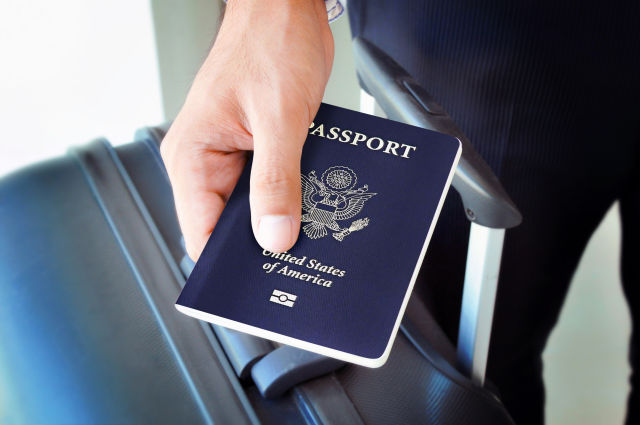
The US passport is back in the top 10 for 2026, landing at No. 10 on the latest Henley Passport Index after briefly slipping out last year. On the surface, that sounds like good news, with Americans able to travel to 179 destinations without a visa in advance. But that number is actually one fewer than when the US ranked lower at No. 12 in October 2025, which means the ranking has improved even as real-world access has quietly narrowed.
To understand where the US passport stands today, it helps to look at the broader trajectory. Not long ago, it was among the most powerful in the world, but that position has gradually eroded over the past decade. The decline bottomed out in July 2025 at the lowest ranking in the index’s history, followed by a drop out of the top 10 entirely for the first time in October, when the US tied with Malaysia at No. 12. The 2026 result marks a partial recovery, but it doesn’t change the overall direction.
At its core, passport strength is about diplomacy. Visa-free access is built through bilateral agreements between countries, and those agreements shift as relationships evolve. A country’s position on the Henley Index is, in many ways, a quiet reflection of how it is viewed by the rest of the world at any given moment.
For most American travelers, a No. 10 ranking is still genuinely useful. Access to 179 destinations means visa-free or visa-on-arrival entry to most of Europe, much of Latin America, and large parts of Asia and the Pacific. For everyday trips, the US passport continues to do what most people need it to do, without much friction.
Where it becomes more noticeable is in direct comparison. Iceland, the only other country sharing the No. 10 spot, has the same 179-destination access. But travelers from France, Germany, Spain, or Italy can enter six more destinations without extra paperwork. That difference may feel small on a single trip, but over years of frequent travel, those gaps start to matter.
The US passport is not in crisis. But it's no longer the near-universal key it once was, and the 2026 index makes that clearer than ever. If you're planning international travel, you're still in good shape. If you're weighing bigger decisions — a move abroad, a second passport, a longer-term shift in how you live and travel — the 2026 ranking is a useful reminder that those conversations are worth having now rather than later.
The US passport ranks No. 10 on the 2026 Henley Passport Index, tied with Iceland, with visa-free or visa-on-arrival access to 179 destinations.
Singapore holds the top spot with access to 192 destinations, followed by Japan, South Korea, and the United Arab Emirates at 187 each.
Yes and no. The US reclaimed its No. 10 position after briefly falling to No. 12 in October 2025, but it now has access to one fewer destination than it did then.
The Henley Passport Index is the original and most authoritative global passport ranking, covering 199 passports and 227 destinations. It's updated monthly and based on data from the International Air Transport Association.
Most Western European passports outrank the US in 2026. French, German, Spanish, and Italian passport holders have access to 185 destinations, six more than Americans.
For most tourist travel, not significantly. The US passport still covers the vast majority of popular destinations. The gap becomes more relevant for frequent travelers or those considering long-term life abroad.
Iceland shares the No. 10 ranking with the US at 179 destinations. Just above are Liechtenstein and Lithuania at No. 9 with 180 destinations.
Rankings shift based on changes in bilateral visa agreements between countries. A passport's power is essentially a reflection of its government's diplomatic relationships at any given time.