
We use cookies to enhance your browsing experience, serve personalized content, and analyze our traffic. By clicking "Accept All" you accept this and consent that we share this information with third parties and that your data may be processed in the USA. For more information, please read our .
You can adjust your preferences at any time. If you deny, we will use only the essential cookies and unfortunately, you will not receive any personalized content.
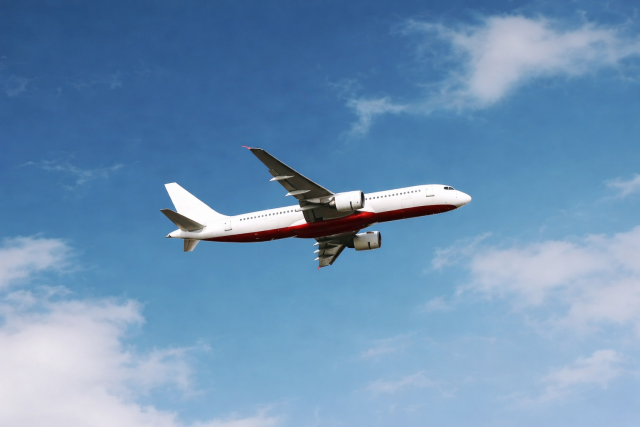
Weight-loss drugs like Ozempic and Wegovy have already changed how millions of people eat and think about health. Now analysts say they may be quietly changing the cost of flying, too. As average passenger weight declines, planes burn slightly less fuel on every flight. That small shift, repeated thousands of times a day, could save U.S. airlines hundreds of millions of dollars a year. It’s an unexpected ripple effect of the GLP-1 boom that most travelers will never notice, but the airline industry definitely will.
The link between passenger weight and fuel use is not new. Airlines have always tracked weight carefully, because fuel is one of their largest operating costs and even small efficiencies matter at scale. Everything onboard is designed with this in mind, from luggage limits to seat construction to how much fuel is loaded before takeoff.
What makes the current moment different is where the change is coming from. Rather than airlines redesigning cabins or adjusting policies, analysts say a gradual shift in average passenger weight could be happening outside the industry altogether. As GLP-1 medications become more widely used, the total weight planes carry may slowly decline over time, producing fuel savings airlines neither planned nor controlled.
Jefferies modeled what could happen if average passenger weight dropped by 10 percent across the U.S. flying public.
That change would lower total aircraft weight by about 2 percent. Analysts estimate it could reduce fuel costs by roughly 1.5 percent. For the four largest U.S. airlines American, Delta, United, and Southwest that could add up to as much as $580 million in fuel savings each year.
Those savings could also boost profitability, with earnings per share projected to rise by up to 4 percent.
To put the math into perspective, analysts used a Boeing 737 Max 8 as an example. With passengers, fuel, and baggage onboard, the aircraft’s takeoff weight is carefully balanced to maximize efficiency.
Lowering average passenger weight by even a modest amount reduces total weight enough to improve fuel performance. When that effect is repeated across thousands of flights over the course of a year, the savings become meaningful very quickly.
It is the same principle airlines have relied on for decades. The difference now is where the change is coming from.
GLP-1 medications are no longer a niche trend. With pill-based options entering the market and prescriptions continuing to rise, analysts expect usage to keep growing.
As more people use these medications, the combined effect could quietly reshape airline economics without airlines changing fleets, routes, or ticket prices. For carriers facing high fuel costs and tight margins, it represents a rare cost benefit that does not require major operational changes.
This analysis does not suggest airlines will weigh passengers or introduce new rules for individual travelers. The effect is gradual and broad, showing up in overall trends rather than personal experiences.
Instead, it highlights how changes in public health can ripple into industries far beyond medicine. In this case, what happens at the pharmacy could eventually show up in airline fuel budgets.
The GLP-1 boom is already influencing healthcare, food habits, and wellness culture. Aviation may be another industry quietly shaped by the trend.
Most travelers will never notice this change happening at all. But for airlines navigating volatile fuel prices and thin margins, it could become one of the most unexpected economic stories in modern travel. The next time you board a flight, nothing will look different. But behind the scenes, the economics of flying may already be changing in ways that have nothing to do with planes at all.
How much money could airlines actually save?
Analysts estimate up to $580 million per year across the four largest U.S. airlines if average passenger weight drops by 10 percent.
Which airlines benefit most?
American Airlines, Delta Air Lines, United Airlines, and Southwest Airlines account for most of the projected savings due to their size and fuel consumption.
Will this lower ticket prices?
There is no evidence that fuel savings from this trend will directly reduce fares. The primary benefit would be improved airline profitability.
Are airlines changing policies because of this?
No. This is an industry analysis, not an announced strategy or policy shift.
Why does weight affect fuel consumption so much?
Heavier aircraft require more fuel during takeoff and cruising. Over repeated flights, even small weight changes can have a measurable impact on fuel use.