We use cookies to enhance your browsing experience, serve personalized content, and analyze our traffic. By clicking "Accept All" you accept this and consent that we share this information with third parties and that your data may be processed in the USA. For more information, please read our .
You can adjust your preferences at any time. If you deny, we will use only the essential cookies and unfortunately, you will not receive any personalized content.

If the idea of living on a Greek island sounds appealing, but you want more than just beaches and sunsets, Syros offers something rare. Through Syros Cats, volunteers can live on the island with accommodation, brunch, and utilities included in exchange for hands-on work caring for rescued and street cats. And now, applications for the first half of 2027 are officially open.
It’s not a vacation and it’s not a short-term gig, but for the right person, it’s a deeply meaningful way to experience Greece from the inside.
Location: Syros, a Greek island in the Cyclades, with a more local, lived-in feel than nearby Mykonos or Santorini.
Opportunity: Applications are now open for January through June 2027. Volunteers help Syros Cats care for rescued and street cats across the island.
What’s Included: Accepted volunteers receive a private bedroom in shared housing, brunch, and utilities.
Time Commitment: Volunteers stay for at least one month and work about six hours per day, five days a week.
Typical Tasks: Feeding cats, cleaning enclosures, socializing kittens, assisting with vet care, helping with TNR work, and supporting daily cat-care routines.
Best For: Independent cat lovers, animal welfare volunteers, couples, and flexible digital nomads who can commit to the work.
Good To Know: This is not a free vacation. Volunteers cover travel, additional meals, personal expenses, insurance, and visa requirements.
Application Status: Applications for January through June 2027 are open now and close September 30, 2026, at 11:59 p.m. Greek time. Applications for July through December 2027 open November 1, 2026.
Application Fee: A non-refundable €10 donation to Syros Cats' Trap-Neuter-Return program is required to submit an application.
Syros is a small island in the Cyclades, a cluster of Greek islands scattered across the Aegean Sea, and the quiet heart of the region. It’s where the Cyclades are run from, but it’s also one of Greece’s most under-the-radar beautiful islands. Unlike its flashier neighbors, Syros feels genuinely lived-in. Neoclassical buildings spill down the hills of Ermoupolis, fishing villages hug the coastline, and life moves at a pace that actually lets you breathe.
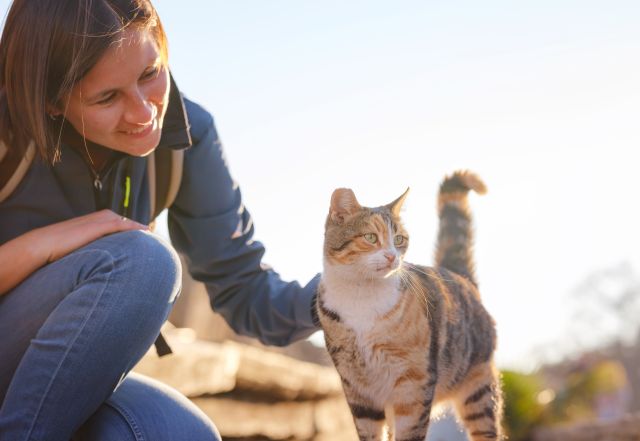
It is also home to a large population of stray cats. Many live around abandoned buildings, empty lots, and dumpsters, surviving largely through the efforts of local residents and animal welfare groups. There is no formal state safety net for animals on Greek islands. What help exists comes almost entirely from volunteers and donations. This is where Syros Cats comes in.
Syros Cats is a nonprofit organization dedicated to improving the lives of the island’s street and rescued cats. Their work centers on Trap–Neuter–Return (TNR), a humane sterilization program that helps control the stray cat population while reducing illness, fighting, and future suffering. In addition to TNR, the organization runs daily feeding programs, provides veterinary care and medication, and offers long-term support for cats who cannot safely survive on the streets.
Volunteers are essential to this mission. With a small permanent team and limited resources, Syros Cats relies on a rotating group of long-term volunteers to keep daily care running smoothly. The goal is not just rescue, but reducing long-term suffering through consistent, practical, hands-on work that makes a measurable difference over time.
If you visit Syros, you will notice that many cats are healthy, calm, and well cared for. That is not accidental. It is the result of years of steady, unglamorous effort.
Volunteering with Syros Cats is structured as a true exchange. In return for your time and work, you receive:
A private bedroom in shared volunteer housing
Breakfast provided daily
Utilities covered, including electricity, water, and WiFi
The chance to live on Syros without paying rent
A meaningful role in an active animal welfare program
Volunteers commit to a minimum stay of one month, which allows enough time to settle into the rhythm of the work and contribute in a meaningful way. Syros Cats gives priority to applicants who can stay longer. This is not a drop-in opportunity. It is designed for people who want to stay, help, and become part of the daily routine.
Volunteer housing is shared. You’ll have your own bedroom, but the kitchen, bathroom, and communal living spaces are shared with two or three other volunteers.
Volunteers work about six hours per day, five days a week. Morning duties begin at 8 a.m. and generally run until 1 p.m., with additional evening responsibilities beginning about an hour before sunset. Tasks vary, but often include:
Feeding resident and street cats
Cleaning enclosures and litter areas
Socializing kittens and shy or recovering cats
Administering medications when needed
Assisting with vet visits or sterilisation programs
Light gardening and general maintenance
Welcoming visitors and helping with tours
Laundry, dishes, sweeping, mopping, and keeping the cats' living areas clean
One thing applicants should know upfront: a large part of the job is cleaning. Syros Cats says roughly 75% of a volunteer's time can involve cleaning, mopping, sweeping, laundry, dishes, and other work needed to keep the cats' environment sanitary.
The work is physical and sometimes messy. It requires reliability, patience, and a willingness to show up even when the job is repetitive. Prior experience with cats or veterinary work is helpful but not required. What matters most is consistency and care.
Volunteers also need to be comfortable with the physical side of the role, including lifting 15-kilogram (about 33-pound) bags of cat food, navigating uneven steps and rough ground, bending and reaching while cleaning, and working outdoors in both hot and cold weather.
Syros Cats welcomes volunteers who are independent, emotionally resilient, and comfortable living communally. Volunteers are typically singles or couples from a wide range of backgrounds and countries, sharing housing and responsibilities together.
For 2027, Syros Cats says priority will be given to applicants over 25, people with animal-care qualifications or previous cat-rescue experience, and volunteers who can stay for longer than one month. These are priorities rather than strict requirements, however, and the organization says applicants should not be discouraged if they don't meet every preference.
Digital nomads are welcome if they can work flexibly around fixed volunteer shifts. Children and pets cannot be accommodated.
English is also important. Team communication, veterinary instructions, and daily handovers are conducted in English, and the application asks candidates about their level of spoken and written English.
Volunteers are responsible for travel to Syros, meals beyond the provided brunch, and personal expenses. For most non-EU citizens, Schengen rules limit stays to 90 days within a 180-day period, and applicants are responsible for making sure they can legally remain in Greece for their entire proposed stay.
Accepted volunteers must also arrange comprehensive travel and health insurance that covers volunteer work and physical activity for the duration of their stay.
Driving is not required for every volunteer, but anyone who wants to operate the Syros Cats vehicle must have a valid manual driver's license and be comfortable driving on Syros' steep, narrow roads. Depending on nationality, including for some US travelers, an International Driving Permit may also be required.
This is the big update: applications are officially open for Syros Cats volunteer placements from January through June 2027.
Applications close September 30, 2026, at 11:59 p.m. Greek time. Syros Cats says it receives far more applications than it has volunteer spaces available, so anyone seriously interested should apply during the current application window rather than assume a spot will be available later.
Want to volunteer during the second half of the year instead? Applications for July through December 2027 will open November 1, 2026.
There is a non-refundable €10 donation required when submitting the application. Syros Cats says 100% of that donation goes directly toward its Trap-Neuter-Return program, and the payment should be considered a donation rather than a guarantee of receiving a volunteer placement.
Applications must be submitted through the official application form on the Syros Cats website. The organization specifically notes that it only accepts volunteer applications submitted through this form.
Even if you can’t travel to Greece, Syros Cats relies heavily on donations to continue its work.
Funds go directly toward:
Sterilization and TNR programs
Veterinary care and emergency treatment
Food, medication, and supplies
Shelter maintenance and feeding stations
Donations can often be exchanged for small thank-you gifts like postcards or lavender sachets, and collection tins are available at select locations on Syros. This work only continues because of donors.
Volunteering with Syros Cats is not about checking a box or having a feel-good story to tell. It is about showing up, day after day, in a place that quietly needs help, and becoming part of something steady and real. And with applications for the first half of 2027 now officially open, this is the time to apply if spending a month or more caring for cats on a Greek island sounds like your kind of adventure.
Yes. Accepted volunteers receive free housing, breakfast, and utilities in exchange for their work.
Yes. Applications for January through June 2027 are officially open. The deadline is September 30, 2026, at 11:59 p.m. Greek time. Applications for July through December 2027 open November 1, 2026.
Applications must be submitted through the official application form on the Syros Cats volunteering page. There is a non-refundable €10 TNR donation required when you apply.
A minimum stay of one month is required. Applicants who can stay longer than one month are given priority.
Volunteers work about six hours per day, five days per week. Morning duties generally run from 8 a.m. to 1 p.m., with some additional evening responsibilities.
Expect plenty of hands-on cat care, including feeding, administering medications, socializing cats, helping with vet visits and TNR work, and keeping cat areas clean. Syros Cats says around 75% of the work can involve cleaning, laundry, dishes, sweeping, and mopping.
Yes, many volunteers come from the US. For most non-EU travelers, Schengen rules allow stays of up to 90 days within a 180-day period. Applicants are responsible for making sure they can legally stay in Greece for their entire placement.
Experience helps, but it’s not required. Syros Cats gives priority to people with animal-care qualifications or previous cat-rescue experience, but applicants without professional experience can still be considered.
Yes, couples are welcome and often apply.
Yes. Digital nomads are welcome, but remote work needs to fit around Syros Cats' fixed volunteer shifts and responsibilities.
You receive your own bedroom, but the kitchen, bathroom, and communal living areas are shared with other volunteers.
No. It’s a working volunteer program. Rewarding, immersive, and meaningful, but not a holiday resort stay.