We use cookies to enhance your browsing experience, serve personalized content, and analyze our traffic. By clicking "Accept All" you accept this and consent that we share this information with third parties and that your data may be processed in the USA. For more information, please read our .
You can adjust your preferences at any time. If you deny, we will use only the essential cookies and unfortunately, you will not receive any personalized content.

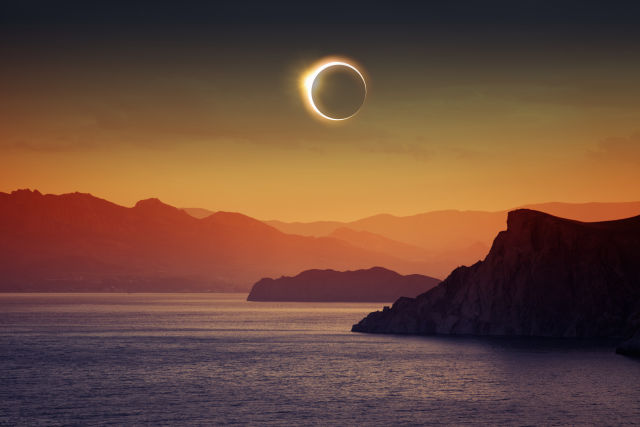
If you've been seeing eclipse chatter all over your feed, here's why: on August 12, 2026, the Moon will completely block the Sun along a narrow path stretching from the Arctic down through Greenland, Iceland, and Spain, with a sliver of northeastern Portugal caught in the path too. It's the first total solar eclipse to touch Europe since 1999, and it's a big deal for eclipse chasers everywhere, including here in the US.
The catch for American travelers? You won't see full totality from home. Here's what's actually happening, where the best views are, and what it means if you're watching from the United States.
The total eclipse happens on Wednesday, August 12, 2026, with the path of totality crossing Greenland, Iceland, a tiny corner of Portugal, and Spain.
The continental US will not see a total eclipse. A partial eclipse will be visible from 26 US states, but most of the country will see little to no effect at all.
Alaska and the far northern US will catch a partial eclipse, with the Sun only partly covered.
If you want to see the real, sky-goes-dark totality, you'd need to travel to Iceland or Spain.
Totality lasts just over a minute to about two minutes, depending on location.
This is short notice: the eclipse is just days away, so travel and hotel options may be limited or pricier than usual.
A total solar eclipse happens when the Moon passes directly between the Earth and the Sun, completely blocking sunlight for a few minutes along a narrow strip of the planet called the path of totality. Outside that narrow path, people see a partial eclipse instead, where the Moon only covers part of the Sun and the sky never fully goes dark.
For this eclipse, the path of totality starts over the Arctic Ocean, sweeps across eastern Greenland and western Iceland, crosses a stretch of open ocean, clips the northeastern tip of Portugal, and finishes across northern and eastern Spain right around sunset. Maximum totality lasts about 2 minutes 18 seconds over the open ocean near Iceland, though most land-based viewers will see closer to one to two minutes.
No, and it's worth being upfront about that. The continental United States is completely outside the path of totality this time. A partial eclipse will be visible from 26 US states, but what you'll get depends on where you live:
Alaska sees the most noticeable partial eclipse, with places like Fairbanks getting around 37% of the Sun covered.
Northern states like Maine catch a smaller partial eclipse, with Presque Isle around 28% coverage.
Most of the lower 48 will see only a modest partial eclipse, generally somewhere between 3% and 24% depending on location. New York City, for example, sees roughly 10% coverage, and Philadelphia around 7%.
The southern and western US will see very little to nothing at all.
Even where it's visible, the partial eclipse in the US will look like the Sun has a small bite taken out of it, sort of like a crescent or a smile. It will not get dark outside, and you'll need proper eclipse glasses to view it safely at any point. Regular sunglasses are not enough.
If you want the full experience, the sky briefly turning to night, stars appearing, temperatures dropping, you'll need to travel. Here are the top destinations, based on timing, ease of travel, and viewing conditions.
Totality begins in Reykjavík around 5:48 PM local time and lasts a little over a minute.
The Sun will still be reasonably high in the sky here, which generally makes for an easier, less obstructed view than a sunset eclipse.
Reykjavík has designated public viewing areas with amenities, and it's an easy home base with hotels, restaurants, and transportation already in place.
Traveling slightly west of the city can add a bit more totality time for those chasing every extra second.
Spain offers something rare: a total eclipse that entire cities and towns can watch together, right as the Sun sets. The path actually runs diagonally across the country, from Galicia on the Atlantic coast through León and Zaragoza to Valencia and the Balearic Islands on the Mediterranean, not just along the northern coastline. It's dramatic, but it comes with a challenge: you'll need a clear, unobstructed view toward the west-northwest horizon, since the Sun will be very low in the sky.
A few standout spots that eclipse-watchers are pointing to:
A Coruña, Galicia: around 1 minute 15 seconds of totality, with the historic Tower of Hercules as a scenic backdrop.
Gijón: roughly 1 minute 46 seconds of totality along the northern coast.
Bilbao: about 1.5 minutes of totality in a major, easy-to-reach city.
León: close to 2 minutes of totality, among the longer durations on the Spanish mainland.
Picos de Europa (Cantabrian Mountains): around 1 minute 43 seconds, with dramatic mountain scenery.
Zaragoza: about a minute of totality, a major, well-connected city if you want an easy trip.
Valencia: close to a minute of totality on Spain's Mediterranean coast, arguably the most tourist-friendly base on this list.
Majorca, Balearic Islands: about 1 minute 36 seconds, with coastal and boat-viewing options.
Note that Madrid and Barcelona are outside the path of totality. Both will see a very deep partial eclipse (around 99%), but not the real thing.
A tiny stretch of northeastern Portugal, Montesinho Natural Park near Bragança, right on the Spanish border, also sits inside the path. Totality there lasts under a minute along a single road between the villages of Rio de Onor and Guadramil. It's a real total eclipse, technically, but with almost no infrastructure and a razor-thin viewing window, it's a pick for die-hard eclipse chasers only, not a practical option for most American travelers this week.
Greenland is technically in the path too, with totality in the late afternoon, but it's a far more expensive and logistically difficult trip for most travelers, and not a realistic last-minute option for most Americans.
Choose Iceland if you want an easier viewing angle (the Sun is higher in the sky), a well-set-up tourism infrastructure, and you don't mind cooler weather.
Choose Spain if you want warmer weather, a wider choice of cities, and don't mind the added challenge of watching an eclipse low on the horizon just before sunset.
Both are within the Schengen Area, so US passport holders can visit either without a visa for a short trip.

If you miss this one, the wait for a total eclipse actually touching US soil isn't as long as you'd think: Alaska is set to see one in 2033. For the lower 48 states, the next total solar eclipse isn't expected until 2044, with an especially long, coast-to-coast eclipse following in 2045.
Always use certified eclipse glasses (look for the ISO 12312-2 label) when any part of the Sun is visible, whether you're watching a partial eclipse in the US or waiting for totality abroad.
It's only safe to look without glasses during the brief moments of full totality within the path, and only if you're an experienced eclipse viewer who knows exactly when to look away.
If traveling to Spain, plan your viewing spot with a clear view to the west-northwest, since the Sun will be low on the horizon.
Check the local weather forecast a day or two out and be ready to move to a nearby spot if clouds roll in.
Book refundable travel and lodging where possible, given how close this is to the event.
No. The continental US will not experience totality. Alaska and some northern states will see a partial eclipse, while most of the country will see little to no visible effect.
A partial eclipse will be visible from 26 US states, with Alaska seeing the most noticeable coverage.
Iceland and Spain are the two most accessible destinations for US travelers. Iceland offers a higher, easier viewing angle, while Spain offers a dramatic sunset eclipse across several cities, including Zaragoza and Valencia in addition to the northern coast.
Totality lasts a little over one minute in most locations along the path, with a maximum of about 2 minutes 18 seconds over the open ocean near Iceland.
No. It is never safe to look directly at the Sun during a partial eclipse without certified solar eclipse glasses.
Alaska will see one in 2033. The lower 48 states won't see another total solar eclipse until 2044, followed by a coast-to-coast eclipse in 2045.