We use cookies to enhance your browsing experience, serve personalized content, and analyze our traffic. By clicking "Accept All" you accept this and consent that we share this information with third parties and that your data may be processed in the USA. For more information, please read our .
You can adjust your preferences at any time. If you deny, we will use only the essential cookies and unfortunately, you will not receive any personalized content.

Planning a trip to Spain and just caught a headline about a "Level 2 travel advisory" and something called Ceuta? You're not the only one scratching your head. In early August 2026, the US State Department updated its guidance for Spain, and a small Spanish territory near Morocco started showing up in the news after a serious situation at its border. If you're wondering what any of this actually means for your trip, and whether you should be worried, here's the plain-language breakdown.
Spain overall is at Level 2, Exercise Increased Caution, a level it's held for a while and shares with many other popular travel destinations.
Ceuta, a small Spanish territory on the coast of North Africa, was raised to Level 3 – Reconsider Travel on August 1, 2026.
The change followed a large migrant crossing event at the Ceuta border with Morocco in late July 2026, which Spanish officials say resulted in dozens of deaths.
If your trip is to Madrid, Barcelona, Seville, the Balearic Islands, or most other popular Spanish destinations, this update doesn't change anything for you.
It only matters if your itinerary includes Ceuta itself or the surrounding border area.
The State Department ranks every country on a scale from 1 to 4:
Level 1 – Exercise Normal Precautions
Level 2 – Exercise Increased Caution
Level 3 – Reconsider Travel
Level 4 – Do Not Travel
Level 2 is the second-lowest level. It's not a warning to cancel your trip. It's more like a reminder to stay alert, the same way you'd want to be alert in any big city or unfamiliar place. Millions of Americans travel to Spain every year at this advisory level without any issue.
The State Department points to a few ongoing, general concerns across the country:
Terrorism risk. The advisory notes that groups have plotted possible attacks in the past, and tourist spots, transportation hubs, and big events are commonly named as potential targets. This is a standing concern across much of Europe, not something unique to Spain right now.
Demonstrations. Protests happen fairly often in Spanish cities and can occasionally turn tense or disruptive.
Petty crime. Pickpocketing and theft are common in busy tourist areas, and the advisory also references isolated reports involving US citizens.
None of this is new or dramatic. It's the kind of everyday-awareness advice you'd get for many popular travel destinations.
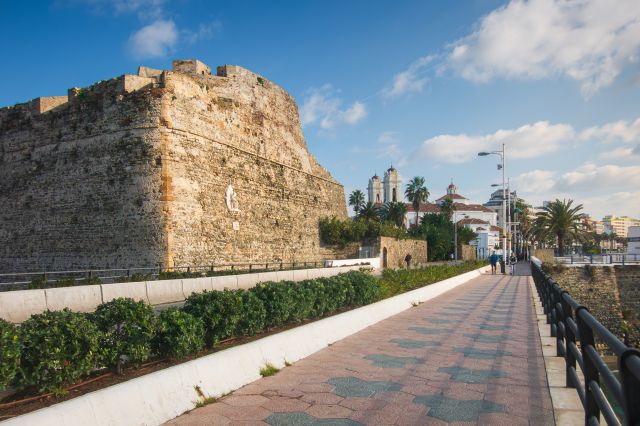
Ceuta is a small Spanish territory on the coast of North Africa, right next to Morocco. It's not a typical stop on a US traveler's Spain itinerary. Most Americans visiting Spain are headed to places like Madrid, Barcelona, Seville, or the Balearic Islands, hundreds of miles away.
Here's what happened, according to Spanish officials and multiple news reports:
Starting around July 29–30, 2026, a very large number of people, Spanish officials have cited estimates in the tens of thousands, attempted to cross from Morocco into Ceuta, mostly by swimming or crossing the breakwater near the border.
Spanish authorities reported that at least 67 people died during the crossing attempts, mainly from drowning or crush injuries.
Spain responded by sending in additional Guardia Civil officers and members of the armed forces to help manage the border and the situation in the city.
By early August, Spain's government said the large majority of people who had entered Ceuta had returned to Morocco, and officials described the situation as stabilizing.
Spain has also announced plans for a floating barrier along part of the coastline to help manage future crossings.
Because of the scale and unpredictability of this event, the State Department raised Ceuta specifically to Level 3 – Reconsider Travel, while the rest of Spain stayed at Level 2. This is a good example of how travel advisories can apply to a small, specific area without reflecting the safety of the whole country.
For most US travelers, the honest answer is: probably not much. Ceuta is geographically separate from mainland Spain, sits across the Strait of Gibraltar, and isn't part of typical tourist routes. If your itinerary includes the cities and regions most Americans visit, this advisory update doesn't change your plans.
Where it's worth paying attention:
If your trip includes Ceuta itself, or ferry travel between southern Spain and Morocco through that route, it's worth checking the latest guidance before you go.
If you're traveling anywhere in southern Spain near the Strait of Gibraltar, it's smart to stay updated on local news in the days before you travel, since situations like this can shift quickly.
If you're already in Spain and plan to visit Ceuta, check in with the nearest US Embassy or Consulate for the most current guidance.
Travel advisories exist so you can make informed decisions, not so you panic and cancel a trip you've been looking forward to. Understanding the difference between a general country-level advisory and a specific regional one helps you plan smart instead of overreacting to a headline. It also helps to know that advisories can change quickly during an active situation, so checking right before you travel, and again a day or two before, is a good habit no matter where you're headed.
Enroll in the State Department's free Smart Traveler Enrollment Program (STEP) so you get real-time alerts and the embassy can reach you if needed.
Check travel.state.gov for the latest advisory before you leave and again a day or two before departure.
Avoid large demonstrations or protests, even if they look peaceful from a distance.
Keep a photocopy or photo of your passport separate from the original.
Stay aware of your surroundings in crowded tourist areas, where pickpocketing is most common.
If your travel plans include Ceuta or nearby border areas, check the most current guidance first.
Yes, for the vast majority of Spain, the advisory level is Level 2, which simply means normal, sensible caution, the same as many popular destinations. It is not a recommendation to avoid travel.
It means the State Department recommends exercising increased caution due to general concerns like crime, demonstrations, or terrorism risk. It's the second of four levels and does not mean travel should be avoided.
Ceuta is currently at Level 3 – Reconsider Travel due to the recent migrant crossing situation and its aftermath. If your trip involves Ceuta specifically, it's worth checking the latest State Department guidance before you go.
Based on current reports, there's no indication that flights or cruise itineraries to major Spanish destinations like Madrid, Barcelona, or the Balearic and Canary Islands are affected.
The official source is travel.state.gov, along with the US Embassy in Spain's website, which posts updates as the situation develops.
This article reflects information available as of August 4, 2026. Travel advisories can change quickly, so always check official sources close to your departure date.