
We use cookies to enhance your browsing experience, serve personalized content, and analyze our traffic. By clicking "Accept All" you accept this and consent that we share this information with third parties and that your data may be processed in the USA. For more information, please read our .
You can adjust your preferences at any time. If you deny, we will use only the essential cookies and unfortunately, you will not receive any personalized content.
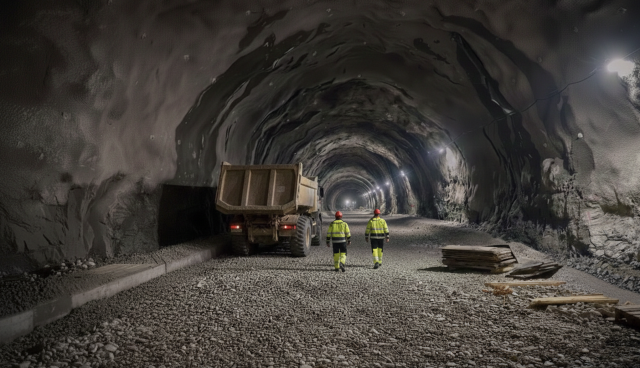
Norway is constructing the longest and deepest undersea road tunnel ever built. Known as Rogfast, this massive subsea highway will permanently reshape transportation along Norway’s west coast by eliminating ferry crossings, reducing travel times between major cities, and pushing the limits of modern engineering beneath the sea. When it opens, drivers will travel more than 16 miles through solid rock, far below the ocean floor, in a project that redefines what infrastructure can look like in extreme landscapes.
The Rogfast project, short for Rogaland Fixed Link, is an underwater road tunnel being built beneath Norway’s fjords as part of the E39 coastal highway. When completed, it will be the longest undersea road tunnel in the world, stretching approximately 16.6 miles through solid bedrock.
At its deepest point, Rogfast will reach roughly 1,280 feet below sea level, making it the deepest road tunnel ever constructed. The project is designed to replace ferry crossings and create a continuous, reliable road connection along Norway’s rugged western coastline, where geography has long slowed travel and trade.
Rogfast will link western Norway’s major population centers, including Stavanger, Haugesund, and Bergen. Today, this route depends on multiple ferry crossings that are vulnerable to weather and seasonal delays.
Once the tunnel opens, travel time between Stavanger and Bergen is expected to drop by about 25 minutes, while reliability improves dramatically for commuters, freight transport, and emergency services. For the first time, large sections of Norway’s west coast will be connected by uninterrupted road travel.
Rogfast is being constructed by drilling and blasting directly through solid rock rather than assembling prefabricated concrete segments. Engineers maintain at least 165 feet of rock between the tunnel ceiling and the seabed, using the natural strength of bedrock to withstand extreme water pressure.
Midway through the tunnel, a spur connects to Kvitsøy, Norway’s smallest municipality. Here, engineers are carving two full traffic roundabouts into the rock roughly 850 feet beneath the sea, allowing traffic to flow even if part of the tunnel is closed. Crews are drilling from both ends of the tunnel and aim to meet in the middle with a margin of error of less than two inches, guided by continuous laser scanning and 3D measurement.
The tunnel will consist of two parallel tubes, each carrying two lanes of traffic, with emergency cross-passages, advanced ventilation systems, and real-time monitoring throughout. These features are designed to support heavy daily traffic safely in one of the longest road tunnels ever built.
Rogfast is expected to cost about $2.4 billion USD and is scheduled to open in 2033. By mid-century, it is projected to carry roughly 13,000 vehicles per day. Beyond faster drives, the tunnel is expected to strengthen Norway’s seafood industry, expand regional labor markets, and make western Norway more accessible for tourism and business without reliance on ferries.
How long is the Rogfast tunnel?
Rogfast will be approximately 16.6 miles long, making it the longest undersea road tunnel in the world.
How deep does the tunnel go?
At its deepest point, the tunnel will reach about 1,280 feet below sea level.
Is it safe to drive through an undersea tunnel this deep?
Yes. Rogfast is designed with twin tubes, emergency exits, advanced ventilation, and continuous monitoring systems that meet strict safety standards.
Why didn’t Norway build a bridge instead?
Bridges across deep fjords are more expensive, more exposed to extreme weather, and harder to maintain. Subsea tunnels are often the safer and more reliable option in Norway’s geography.
When will the tunnel open?
If construction stays on schedule, Rogfast is expected to open in 2033.