We use cookies to enhance your browsing experience, serve personalized content, and analyze our traffic. By clicking "Accept All" you accept this and consent that we share this information with third parties and that your data may be processed in the USA. For more information, please read our .
You can adjust your preferences at any time. If you deny, we will use only the essential cookies and unfortunately, you will not receive any personalized content.

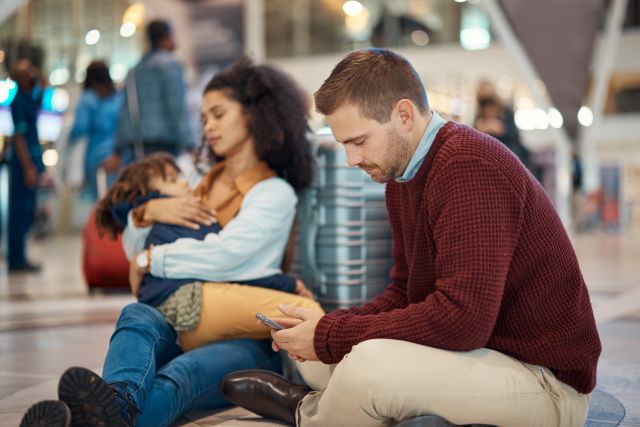
Air travel across the United States is technically improving after Winter Storm Fern, but for many travelers, “improving” still looks like canceled flights, overwhelmed airport staff, and last-minute decisions that turn international arrivals into unexpected road trips.
Flight-tracking data shows that cancellations are trending downward compared to the weekend peak, when more than 15,000 U.S. flights were canceled in just two days. But the ripple effects of the storm are far from over. Aircraft are still out of position. Crews are scattered across the country. And at major hubs, the backlog is playing out gate by gate.
One of our editors, Molly, experienced that chaos firsthand while trying to return home to North Carolina after traveling abroad.
After Winter Storm Fern swept across much of the U.S., airlines canceled tens of thousands of flights in a matter of days. While cancellation numbers have dropped from their weekend peak, recovery has been uneven and slow, particularly at major hub airports.
On paper, things look better. In practice, travelers are still running into rolling delays, sudden cancellations, and gates packed with people who have been waiting since the day before. The reason is simple: when a storm hits multiple regions at once, it doesn’t just ground flights—it scrambles the entire system.
Planes end up in the wrong cities. Crews time out or get stuck elsewhere. And even once the weather improves, airlines need days to realign everything. That gap between “storm over” and “system stable” is where most of the chaos is happening right now.
One of our editors, Molly, saw this play out firsthand while trying to return to North Carolina after returning from abroad.
She arrived at Charlotte Douglas International Airport after three canceled flights from London Heathrow and a night spent at the airport, already exhausted before even reaching the U.S.
Clearing customs didn’t help. Baggage claim was heavily delayed, and once through, she had to run back through security to catch her connecting flight. At first, the departure board offered hope: boarding shortly. Then, abruptly, it switched to canceled.
Gate agents gave passengers two options: try another flight that had been delayed since 11:00 a.m.—it was now 4:00 p.m.—or rebook onto an 8:00 p.m. departure.
Neither option held.
The delayed gate was already overflowing. Many passengers had been there all day, and some had spent the previous night at the airport after earlier cancellations. When the evening flight was also canceled, the situation escalated quickly.
Gate staff explained they were still waiting on flight attendants stuck in Dallas—an illustration of one of the biggest bottlenecks in airline recovery. Even when planes are ready, flights cannot operate without fully available crews, and crews are often scattered across the country after widespread cancellations.
When pilots and flight attendants finally arrived around 6:00 p.m., the gate erupted in cheers. But boarding still didn’t begin. Staffing updates hadn’t yet filtered through the airline’s system. There was no way to know if the plane would be able to depart that evening. That was the breaking point.
Around 6:30 p.m., Molly and a few other passengers made a decision many travelers are quietly making right now: they rented a car.
“We asked one of the pilots if it was worth sticking around,” Molly said. “They told us to absolutely get the car and go.”
The four-hour drive to Wilmington turned into an impromptu road trip, made lighter by small coincidences and familiar connections. “I even knew one of the guy’s brothers,” Molly said. “North Carolina is such a small world.”
It’s a choice more travelers are quietly making right now. For shorter distances, waiting through multiple rolling delays can feel riskier than switching to the road.
Even as airlines add extra flights and issue travel waivers, recovery after a storm of this scale takes time. Experts point to several compounding factors:
Aircraft and crews are out of position after mass cancellations
De-icing, maintenance schedules, and crew rest requirements slow turnaround
Hub airports feel congestion first and longest
Rebooking demand quickly outpaces available seats
The result is a system that looks functional on the surface but remains fragile underneath.
If you are flying in the next few days, especially through major hubs like Charlotte, New York, Boston, or Dallas, flexibility matters more than optimism.
Based on what we’re seeing:
Expect rolling delays even if your departure city looks clear
Have a backup plan before you arrive at the airport
Consider alternative routes—or even alternative transportation—if you are traveling shorter distances
Pack for long waits, including chargers, medications, and extra clothing
Most importantly, trust what is happening on the ground, not just what’s on the departure board. In some cases, getting home may mean choosing an option outside the airport altogether.
Are flights still being canceled after the winter storm?
Yes. While cancellation numbers are lower than during the peak of the storm, thousands of flights are still being delayed or canceled as airlines work to reposition aircraft and crews.
Why are flights delayed even when the weather is clear?
Airlines need aircraft, pilots, and flight attendants in the same place at the same time. After widespread cancellations, crews and planes are often scattered across the country, causing ripple effects that can last for days.
Which airports are still experiencing the most disruption?
Major hubs in the Northeast, Mid-Atlantic, and Southeast—including Charlotte, New York–area airports, Boston, and Dallas—are among those seeing continued impacts.
Should I consider alternatives to flying right now?
If you are traveling a shorter distance and your flight has already been delayed or canceled, renting a car or rebooking for a later date may be more reliable than waiting through multiple rolling delays.
Will airlines automatically rebook canceled flights?
In most cases, yes. Airlines typically rebook passengers on the next available flight on the same carrier, though options may be limited during widespread disruptions.
Am I entitled to a refund if my flight is canceled?
Yes. Under U.S. Department of Transportation rules, passengers are entitled to a refund if their flight is canceled and they choose not to travel, regardless of the reason for cancellation.
When are flights expected to return to normal?
Industry experts say recovery can take several days after a large, multi-region storm. While operations improve gradually, some disruptions may continue as airlines stabilize their networks.