For many people, Christmas markets are the coziest way to welcome the season. There is nothing better than wandering past decorated stalls with a warm cup of hot chocolate or glühwein in hand.
Consider this my confession: I’m completely obsessed with Christmas markets, I’ve visited an unreasonable number of them, and my mug collection now requires its own shelf (no regrets). If you love twinkling lights, festive treats, and the kind of holiday spirit that makes you accidentally buy another ceramic mug you don’t need, I think you’ll enjoy this list. ☺️
Christmas markets began in the German-speaking world, so it makes sense that Europe is filled with them today. Every city puts its own twist on the tradition. Some feel elegant and historic. Others feel loud and joyful. All of them smell like cinnamon and happiness. Here are ten of our absolute favorite markets in Europe and what makes each one worth the trip.
Dates: Nov 15 to Dec 24
Vienna glows in December. The giant market at Rathausplatz draws big crowds, but the smaller ones at Spittelberg and Karlsplatz feel warm and intimate. Expect golden lights, roasted chestnuts, and the feeling that you’ve stepped into a winter fairytale.
Dates: Nov 26 to Dec 30
Strasbourg proudly calls itself the Capital of Christmas, and it earns it. The old town shines with lights, the cathedral rises above the chalets, and every corner feels festive and full of charm. It is one of the most magical Christmas destinations in Europe and a must-visit if you love classic holiday magic.
Dates: Nov 29 to Jan 6
Prague is beautiful year-round, but December gives it a special kind of sparkle. Old Town Square fills with stalls, treats, and warm drinks. The tree here is always impressive, and because the markets run into early January, you get extra time to soak in the holiday spirit. And of course, no visit is complete without a warm chimney cake in hand as you wander through the glowing streets.
Dates: Nov 24 to Jan 5
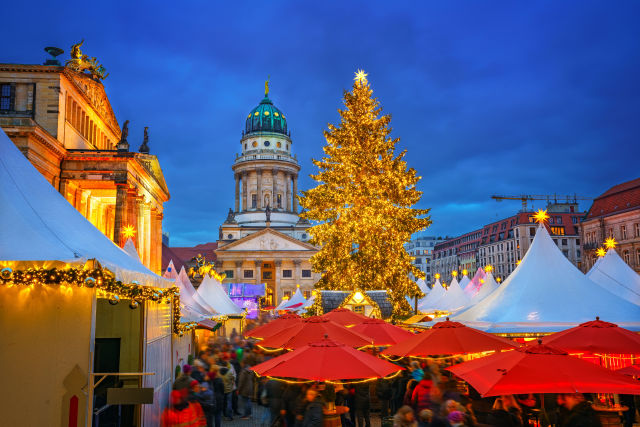
Berlin has dozens of Christmas markets, but a few always stand out. Gendarmenmarkt is the iconic one, known for its elegant white tents, artisan stalls, and a beautiful historic square framed by the French and German Cathedrals. Alexanderplatz brings a bright ferris wheel and funfair energy. Charlottenburg Palace glows at night with its own wheel in front of the palace. It is impossible to visit Berlin in December without taking home another mug. Trust me, I have tried.
Dates: Nov 17 to Dec 23
Cologne is cheerful, cozy, and full of themed markets. The cathedral market is the centerpiece, and its backdrop is truly impressive, with the towering Cologne Cathedral making every photo look dramatic and unforgettable. Expect friendly crowds, delicious food, and some of the best glühwein in Germany.
Yes, another German market — and for good reason! Dresden hosts one of the oldest Christmas markets in the world, dating back to 1434. Striezelmarkt feels classic and welcoming with handmade crafts, wooden pyramids, and Dresden’s famous Stollen fruitcake. This market is the definition of traditional Christmas.
Dates: Nov 16 to Jan 1
Budapest blends Old World charm with modern touches. The Basilica market features a nightly light show that transforms the cathedral. Food stalls serve chimney cakes, mulled wine, and some of Europe’s best winter street food. And if you want an extra festive touch, hop on the city’s holiday tram, which glows with thousands of lights as it winds through Budapest at night.
Dates: Late November to Jan 7
Wrocław’s market looks like it was lifted straight from a storybook. Wooden towers, whimsical displays, and a colorful main square give it warmth and character. It is one of Europe’s most underrated holiday destinations, with excellent Polish comfort food to match.
Dates: Nov 28 to Jan 5
Winter Wonders takes over central Brussels with more than 200 chalets, a ferris wheel, light displays, projections, and ice skating with curling lanes. It feels lively and modern, perfect for travelers who want a holiday celebration spread across an entire city.
Dates: Late November to Dec 23
Aachen feels warm and nostalgic. The cathedral rises above the market, and the air is filled with the scent of the city’s famous Printen cookies. It is smaller than Berlin or Cologne but full of charm and perfect for slow, cozy wandering.
Christmas markets are more than holiday events. They are places where cities feel softer, food tastes richer, and winter nights feel warmer. Whether you prefer small, cozy markets or giant festivals that take over entire neighborhoods, Europe has something for every type of traveler. And with so many markets connected by quick train routes, it’s easier than ever to turn a weekend escape into a full-on Christmas adventure. Pack warm layers, bring an empty suitcase, and leave plenty of room for a new mug or two. Or five. No judgment.
Are Christmas markets free to enter?
Yes. Almost all Christmas markets in Europe are free. You only pay for food, drinks, rides, or souvenirs.
What kind of food and drinks are served?
Glühwein
Hot chocolate
Bratwurst
Chimney cakes
Roasted almonds
Waffles and crêpes
Gingerbread and cookies
What is glühwein?
Glühwein is hot spiced wine, usually red, simmered with citrus, cinnamon, cloves, and sugar. It is the official drink of European Christmas markets and will keep your hands warm while you wander.
Can I easily travel between markets by train?
Yes. Many major markets are connected by fast, inexpensive train routes. Cities like Cologne, Düsseldorf, Bonn, Aachen, Brussels, and Amsterdam are only 30 to 90 minutes apart. Munich to Salzburg is a similar quick hop. Germany in particular is ideal for multi-market itineraries.
Are Christmas markets family-friendly?
Very. Kids love the carousels, ferris wheels, treats, lanterns, and festive music. Many markets also offer craft stations and special visits from Santa or St. Nicholas.
What kind of things are sold?
Handmade ornaments, candles, wooden toys, wool scarves, jewelry, ceramics, nativity sets, artisanal snacks, and of course, collectible mugs.
Can I visit more than one market in a city?
Absolutely. Many cities host multiple markets. Berlin alone has over 60 Christmas markets, ranging from traditional to quirky to ultra-modern. Cologne has six main markets, each with its own theme and layout.
We use cookies to enhance your browsing experience, serve personalized content, and analyze our traffic. By clicking "Accept All" you accept this and consent that we share this information with third parties and that your data may be processed in the USA. For more information, please read our .
You can adjust your preferences at any time. If you deny, we will use only the essential cookies and unfortunately, you will not receive any personalized content.