
We use cookies to enhance your browsing experience, serve personalized content, and analyze our traffic. By clicking "Accept All" you accept this and consent that we share this information with third parties and that your data may be processed in the USA. For more information, please read our .
You can adjust your preferences at any time. If you deny, we will use only the essential cookies and unfortunately, you will not receive any personalized content.
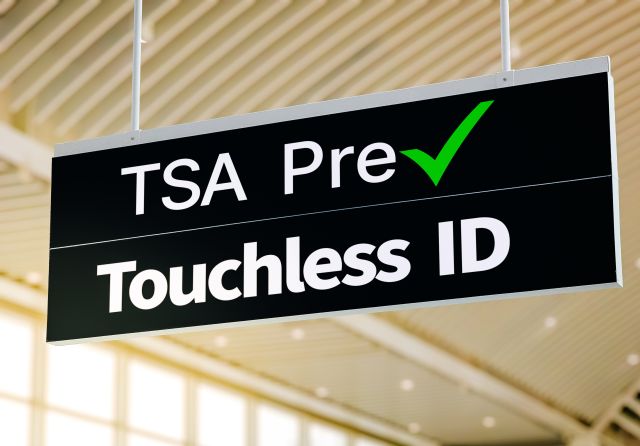
If you have TSA PreCheck, there is a new “hands-free” option that can make the security checkpoint feel noticeably smoother.
It's called TSA PreCheck Touchless ID, and it uses a quick facial comparison to verify your identity so you don't have to present your ID or boarding pass at the front of the lane. TSA says it's expanding to 65 airports in spring 2026, and it's already live at select checkpoints with participating airlines. The key detail is that this is opt-in, and you still need to travel with a physical ID as a backup. Here is what it is, where you will see it first, and how to set it up before your next flight.
Think of TSA PreCheck Touchless ID as a faster identity check inside TSA PreCheck. In the Touchless ID lane, you look briefly into a camera, and the system compares your live photo to the passport photo you have on file, which can let you move forward without handing over documents at that step. (tsa.gov)
It is designed to feel simple on purpose: less digging for your wallet, fewer handoffs, and (ideally) a quicker flow into screening.
To use TSA PreCheck Touchless ID, you generally need:
An active TSA PreCheck membership
A valid passport
A participating airline at a participating airport
Opt-in consent (you have to actively choose it, it is not automatic)
At Miami International Airport (MIA), local coverage described the setup steps this way: you must be a TSA PreCheck customer, create a profile with an authorized airline, add your Known Traveler Number and passport information, and then opt in.
This is the part that catches people: you usually need to do a little setup in advance.
Most airlines prompt you through your airline profile or check-in flow: you add passport details, confirm your TSA PreCheck Known Traveler Number, and consent to Touchless ID for that airline.
The rollout is expanding, but it is not universal yet.
Philadelphia International Airport (PHL) announced Touchless TSA PreCheck is available at multiple terminal checkpoints, and it notes that availability depends on airline participation.
TSA’s partner guide says Touchless ID is expanding to 65 airports in spring 2026.
If you are flying a major carrier through a major hub in 2026, it is increasingly worth checking, because you may already be eligible without realizing it.
Two things can be true at once: it is touchless, and you should still be prepared.
TSA states that even if you opt in, you should carry a REAL ID compliant or otherwise acceptable physical ID and present it if asked.
TSA also says that in this program, your photo and personal data are deleted within 24 hours of your scheduled flight departure, and the technology is not intended for law enforcement, surveillance, or sharing with other entities (per TSA’s stated privacy framing in its materials).
In other words, you can use the faster lane, but you should not plan your entire morning around technology being perfect.
TSA PreCheck Touchless ID is one of those upgrades that matters most on your most chaotic travel days, like early flights, tight connections, and spring break mornings when every line looks too long. If you are already a PreCheck member, it is worth checking your airline profile now, because the benefit is real when it works, and the setup is easier when you are not rushed.
No. TSA PreCheck is your trusted-traveler program. Touchless ID is an optional identity verification method inside TSA PreCheck lanes.
TSA says the program is available to TSA PreCheck travelers with a valid passport on file for matching.
Yes. TSA advises carrying a physical ID as a backup in case identity cannot be verified or an officer requests it.
No. You typically have to opt in through a participating airline.
TSA materials describe expansion to 65 airports in spring 2026.