We use cookies to enhance your browsing experience, serve personalized content, and analyze our traffic. By clicking "Accept All" you accept this and consent that we share this information with third parties and that your data may be processed in the USA. For more information, please read our .
You can adjust your preferences at any time. If you deny, we will use only the essential cookies and unfortunately, you will not receive any personalized content.

If you are flying in the United States right now, airport security looks different than it did two months ago. A partial government shutdown has left TSA officers working without pay since mid-February, driving up callout rates and stretching security lines at airports across the country. On Saturday, President Trump announced he would send ICE agents to airports starting Monday. Here is the full picture.
Congress missed a February 14 deadline to fund the Department of Homeland Security, triggering a partial shutdown that left nearly 50,000 TSA officers working without pay. The shutdown stems from a deadlock between Republicans and Democrats over how to fund DHS.
On Saturday, the Senate rejected a Democratic motion to pass a standalone TSA funding bill in a 41 to 49 vote. Republicans have argued that funding parts of DHS separately is not an approach they are willing to accept. Democrats have argued that TSA workers and travelers should not be held hostage to a broader immigration funding dispute.
On Saturday, Trump posted a series of statements on Truth Social announcing he would deploy ICE agents to airports on Monday. He said the move was a direct response to the congressional standoff over DHS funding and framed it as a security measure. He also said ICE agents would be tasked with arresting undocumented immigrants at airports.
Source: Screenshot from @realDonaldTrump on Truth Social
Border czar Tom Homan said that ICE agents would be present at airports to support TSA officers, but he does not expect them to take on specialized roles like X-ray screening. Those tasks require technical training that ICE agents do not have.
The White House has not yet outlined a detailed plan for how ICE agents would work alongside TSA officers or what exactly they would do at security checkpoints. President Trump also posted on Truth Social on Saturday evening, confirming that ICE would be deployed to airports.
Senate Majority Leader John Thune is pushing negotiators from both parties to move faster, warning that conditions at airports will only get worse if a deal is not reached soon. Republican Senator John Hoeven said this week that Republicans have already put several concessions on the table, including requiring body cameras for agents, expanding training, and limiting arrests near places like churches, hospitals, and schools.
On the other side, Senate Minority Leader Chuck Schumer said it is unacceptable for TSA workers and travelers to be stuck in what he called a political standoff. He accused Republicans of linking TSA funding to ICE funding as part of the negotiations. Senator Patty Murray, one of the lead Democratic negotiators, made a similar argument, saying Republicans are refusing to fund TSA unless it is tied to a broader ICE funding bill that does not include reforms.
Talks are ongoing. Bipartisan groups of senators have been meeting with White House officials for several days in a row. Schumer said the conversations have been productive so far, but Thune continues to stress that time is running short and a deal needs to happen quickly.
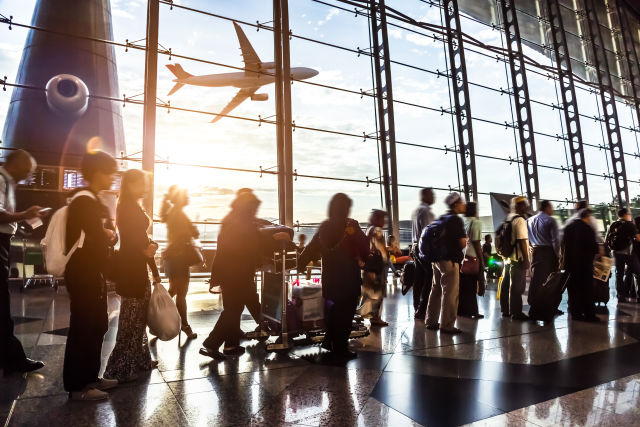
The shutdown is already having a real impact on travelers, and it is getting worse. At Houston Hobby Airport on March 14, more than half of TSA officers called out, with the absence rate hitting 55 percent. Since the shutdown began, at least 376 officers have quit altogether. That kind of strain is starting to show. With fewer people on the job, the officers who are still working are stretched thinner, which analysts say could affect everything from alertness to how well potential threats are spotted.
At the same time, there is debate over bringing in ICE agents to help. ICE officers are trained for immigration enforcement, not airport security screening. They do not have the technical training needed to operate screening machines or carry out the specialized work TSA officers do. Critics say their presence raises concerns, especially in busy airport spaces filled with families, older travelers, and children. Supporters argue that in a staffing crisis, any additional personnel can help ease the pressure.
Until lawmakers reach a deal, TSA officers will continue working without pay, and travelers should expect ongoing disruptions at airports.
Check TSA wait times at your airport before you leave using the MyTSA app. Arrive earlier than usual. Build in at least an extra hour of buffer on top of your normal arrival time. If you have TSA PreCheck or CLEAR, use those lanes as they have been less affected by the staffing shortages. If you are flying through a major hub including Houston, Atlanta, New York, Los Angeles, or Chicago, check for specific advisories before heading to the airport.
A partial government shutdown has left nearly 50,000 TSA officers working without pay since mid-February. Callout rates have increased significantly as a result, with some airports seeing absence rates of over 50 percent on certain days. At least 376 TSA officers have quit since the shutdown began.
President Trump announced on Saturday that he would deploy ICE agents to airports starting Monday. Border czar Tom Homan clarified that ICE agents will be present to assist TSA but are not expected to perform specialized tasks like X-ray screening.
No. ICE agents are trained for immigration enforcement, not airport security screening. They do not have the technical training required to operate screening equipment. Their role at airports is expected to be supplementary.
Congress failed to pass a funding bill for DHS by the February 14 deadline. Republicans and Democrats remain deadlocked over the terms of a funding agreement, leaving TSA officers without paychecks for over a month.
No resolution has been formally agreed as of this writing. Bipartisan senators have been meeting with White House officials and there are signs of progress, but no deal has been announced.
Arrive earlier than usual. Check TSA wait times at your airport using the MyTSA app before you leave. If you have TSA PreCheck or CLEAR, use those lanes. Build in at least an extra hour of buffer on top of your normal arrival time.
Yes. International departures and arrivals at US airports are subject to TSA screening, so travelers on international itineraries should plan for the same extended wait times as domestic passengers.
Callout rates have spiked at airports nationwide. At Houston Hobby on March 14, the rate hit 55 percent. At least 376 officers have quit since the shutdown began in mid-February. Industry analysts warn the remaining officers face increased strain.