We use cookies to enhance your browsing experience, serve personalized content, and analyze our traffic. By clicking "Accept All" you accept this and consent that we share this information with third parties and that your data may be processed in the USA. For more information, please read our .
You can adjust your preferences at any time. If you deny, we will use only the essential cookies and unfortunately, you will not receive any personalized content.

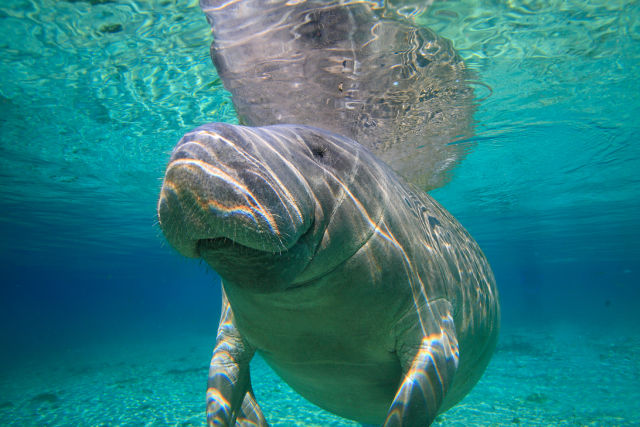
Florida offers countless chances to see manatees in the wild. But there’s only one place in the United States where you can legally get in the water and swim alongside them in their natural habitat. In winter, hundreds of manatees drift into the warm, spring-fed waters of Kings Bay in Crystal River, Florida, turning a quiet Gulf Coast town into something that feels almost unreal. Think clear water, slow motion silhouettes, and that once-in-a-lifetime feeling when a gentle giant decides you are interesting. The catch is this experience only works when it’s done responsibly, which is exactly why Crystal River has strict rules and permitted operators.
Crystal River National Wildlife Refuge is uniquely set up to protect manatees while still allowing a carefully managed in-water experience. It was established specifically to protect the threatened Florida manatee, and it preserves key habitat like Three Sisters Springs.
That protection comes with structure. In Kings Bay, manatee tours operate under Special Use Permits issued by the U.S. Fish and Wildlife Service, and seasonal sanctuary areas are marked off near spring vents during peak cold months to protect resting manatees. Kings Bay itself is a first-magnitude spring system, fed by more than 70 freshwater springs that push hundreds of millions of gallons of clear water into the bay each day. That steady flow from the Florida aquifer is what keeps winter water temperatures stable enough for manatees to gather here in such large numbers in the first place.
If you want the classic “manatees everywhere” moment, plan for late fall through early spring, when manatees seek out warmer water and the population in Kings Bay swells. Many guides and destination resources focus on November through March as prime season, with sanctuary markers in place during the winter window (often noted as November 15th to March 31st) to protect critical resting areas.
There’s no rushing manatees. The best encounters happen when you move slowly and let them approach. Done correctly, it is mostly floating, watching, and letting curiosity come to you.
Most licensed tours generally include:
Boat ride into Kings Bay and spring areas
Wetsuit + snorkel gear (often provided)
A quick briefing on rules and “manatee manners”
Time in the water for passive observation (calm, slow, hands to yourself unless instructed otherwise)
A key point: The Crystal River and Kings Bay area is emphasized by Florida wildlife officials as the only area in Florida where swimmers are actively monitored around manatees, and visitors are expected to follow guidelines and respect sanctuary rules.
The goal is straightforward: act as a quiet guest in a warm-water refuge.
Do not chase, crowd, or surround manatees
Do not block their path to the surface for air
Stay out of sanctuaries and roped-off zones
Keep movements slow and calm, and avoid splashing
Follow your guide and posted refuge rules, always
Crystal River’s tourism authority explicitly frames the in-water encounter as a privilege and a responsibility, with guides trained to protect manatees and educate visitors before they enter the water.
Not everyone wants a wetsuit morning. Crystal River is still a manatee destination even if you never get in the water.
Dry or mostly-dry alternatives include:
Boardwalk viewing at Three Sisters Springs for an overhead look at clear-water habitat
Kayak and clear kayak tours in Kings Bay and spring runs (close to the action, lower intensity)
Choose a permitted operator through the official Crystal River and Homosassa tour hub to ensure your experience follows all federal refuge guidelines. Booking through an approved provider helps protect the manatees while giving you access to trained guides who understand both the rules and the rhythms of Kings Bay.
There are wildlife encounters that feel curated or hurried, designed to move you through quickly and check a box. This is not one of them. Floating quietly in clear spring water while a thousand-pound manatee glides past at its own pace feels less like a tour and more like a rare opportunity to simply share space with an animal in its natural habitat.
Image Courtesy of Discover Crystal River
Crystal River works because it carefully balances access with protection. The regulations are in place to safeguard the manatees, the guides are trained to prioritize the animals’ well-being, and the seasonal sanctuaries are enforced so resting manatees are not disturbed. That structure is what makes it possible to have an experience that still feels genuinely wild while remaining responsible.
If you decide to go, approach it with patience and intention. Winter offers the best chance of seeing larger numbers, and booking a permitted operator ensures you are following the rules designed to protect the refuge. The most meaningful moments tend to happen when you slow down, float calmly, and allow the encounter to unfold naturally rather than trying to force it.
Under the right conditions, a gentle giant may drift close out of simple curiosity, and that quiet, unplanned moment often stays with you long after you have left the water.
Crystal River is widely cited as the only U.S. location where an in-water manatee encounter is legally permitted in a structured, refuge-managed setting, supported by federal refuge oversight and permitted operators.
Rules and monitoring are strict in Kings Bay, and permitted operators exist for a reason. For most travelers, a licensed tour is the safest, most rule-compliant way to do this.
Winter is the headline season. Many resources focus on November through March, when manatees concentrate in warm spring-fed water and seasonal sanctuaries are marked.
They designate critical resting areas near spring vents during winter. People and watercraft are kept out so manatees can conserve energy and stay warm.
Your safest editorial stance is: assume no and keep it passive. Follow refuge rules, posted guidance, and your guide’s instructions. The experience is about calm observation, not contact.
Yes. It is observed on the last Wednesday in March.
Three Sisters Springs is a major spring area within the Crystal River refuge system and is central to manatee habitat. Access rules can vary by season and protection status, so visitors should rely on official refuge and local guidance when planning.
It can be, especially for calm, rules-following kids who can handle cool water and quiet observation. If not, do the boardwalk or a gentle paddle instead. Guidance and monitoring in Kings Bay are designed to prioritize manatees’ safety first. (myfwc.com)