We use cookies to enhance your browsing experience, serve personalized content, and analyze our traffic. By clicking "Accept All" you accept this and consent that we share this information with third parties and that your data may be processed in the USA. For more information, please read our .
You can adjust your preferences at any time. If you deny, we will use only the essential cookies and unfortunately, you will not receive any personalized content.

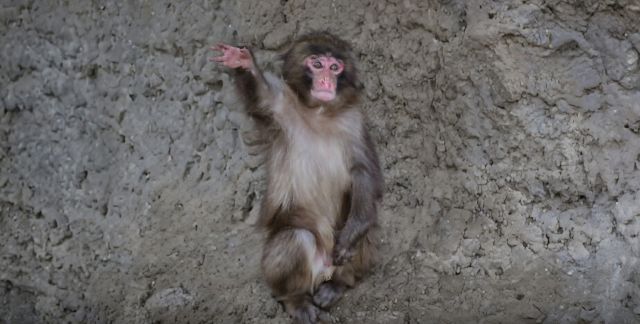
If you haven't been following Punch, the seven-month-old baby macaque at Ichikawa City Zoo in Japan, here’s the quick version: abandoned by his mother days after birth, hand-raised by zookeepers, and given a stuffed orangutan for comfort. Since then, the internet has been watching as he slowly figures out how to belong with his troop. Now Punch seems to have reached another small but charming milestone. In new clips circulating online, the young macaque lifts his tiny arm toward visitors as if he’s waving goodbye. Whether it’s imitation, curiosity, or simply a normal movement people are interpreting through a human lens, the gesture has sparked another wave of fascination.
“He knows he’s a star,” one commenter wrote. “He’s so special.” Another declared him “My Princess Diana.” The people have spoken.
When Punch was first introduced to the macaque troop at Ichikawa City Zoo, the transition wasn’t exactly smooth. Early videos showed older monkeys dragging or scolding him, which worried many viewers who had already grown attached to the tiny newcomer. The zoo quickly stepped in to explain what people were seeing.
“While Punch is scolded, he shows resilience and mental strength,” the zoo said in a statement. “When you observe these disciplinary behaviors from other troop members toward Punch when he tries to communicate with them, we would like you to support Punch’s effort rather than feel sorry for him.”
In other words, this is how young macaques learn their place. They get corrected, test boundaries, and slowly figure out the social rules of the troop.
Since those early weeks, Punch has grown noticeably more confident. He has started making friends within the troop and has also formed a close bond with one of the zoo’s keepers. At the same time, he has begun relying less on his stuffed orangutan companion, Oran-Mama, a shift keepers see as an encouraging sign of his growing independence.
For now, Punch still sleeps with the toy each night. But the next milestone his caregivers are quietly watching for is the day he chooses to curl up with the other monkeys instead.
Photo: Courtesy of Ichikawa City Zoo (@ichikawa_zoo via X)
The latest attention came after a short video circulated online showing Punch lifting his arm toward visitors gathered outside his enclosure. The clip spread quickly across platforms such as TikTok and Instagram, drawing millions of views and thousands of comments from fans celebrating the moment
In the video, Punch appears to raise his small arm while facing the crowd, which many viewers interpreted as a wave. Visitors outside the enclosure are also seen waving toward him, which may have helped reinforce the perception.
For fans who have followed his journey from the beginning, the gesture felt like another step forward for a monkey who once seemed overwhelmed by the social dynamics of the troop.

You need to agree with the cookies and privacy policy of this external service to view the content
Before we crown Punch the world’s tiniest celebrity greeter, it’s worth pausing for a quick reality check from the primate experts.
Scientists say short viral clips can be surprisingly misleading when it comes to animal behavior. What looks like a deliberate “wave” to human eyes may simply be a normal movement taken out of context. In the case of a young macaque like Punch, that raised arm could mean a number of things that have nothing to do with acknowledging a crowd.
Researchers who study primates point out that gestures like this can often be:
A stretch or balance adjustment
A reach toward something outside the camera frame
A reaction to a nearby sound or movement
A signal directed toward a familiar caregiver
That last explanation is especially plausible here. Punch spent his earliest months being hand-raised by zookeepers after his mother rejected him, which means he is highly attuned to the humans who cared for him. Young primates, much like young children, sometimes raise their arms as a way of reaching toward someone they trust.
Photo: Courtesy of Ichikawa City Zoo (@ichikawa_zoo via X)
At the same time, imitation does play a real role in primate behavior. Studies have shown that monkeys often mirror movements they see repeatedly, and those shared gestures can help build social bonds. Scientists sometimes describe this kind of behavioral matching as a form of social glue that strengthens relationships and reduces aggression within a group.
So whether Punch is copying the crowd, reaching for a caretaker, or simply stretching at the right moment, the gesture reflects something meaningful: a young macaque becoming more confident and engaged with the world around him. And honestly, that might be even better than a wave.
What started as a few clips of a tiny macaque clutching a stuffed toy has turned into something much bigger than anyone at Ichikawa City Zoo expected. The clip of Punch's apparent wave spread quickly across TikTok and Instagram, drawing millions of views and thousands of comments from fans who have been following his journey since birth.
The surge of attention has been remarkable for a small zoo in Chiba Prefecture. Visitor numbers in February 2026 reportedly doubled compared with the previous year. Over Valentine’s Day weekend alone, about 8,000 people passed through the gates in just two days. At one point the zoo even issued a public apology because the lines had grown far longer than staff were used to handling.
Photo: Courtesy of Ichikawa City Zoo (@ichikawa_zoo via X)
The ripple effects have been strange, funny, and occasionally surreal. Here are some of our favorite Punch highlights:
IKEA Japan sent a team to the zoo and donated 33 Djungelskog plush toys after Punch’s beloved stuffed orangutan triggered a global sell-out
K-pop star LISA from BLACKPINK stopped by to visit Punch and brought her own stuffed orangutan along
The Tate brothers reportedly tried to place a bid to “buy” Punch, which the zoo quietly ignored
One enthusiastic commenter suggested making Punch the next Pope
For the zoo, the sudden fame has been both flattering and a little overwhelming. Staff have responded by posting regular updates about Punch’s development and patiently explaining what people are actually seeing when they watch macaque behavior.
That balance of transparency, humor, and genuine care for the animal seems to be part of why the story keeps spreading. People may arrive because of a viral clip, but they stay because they feel like they are watching a small creature slowly find his place in the world.
If Punch has convinced you that your next trip to Japan should include a stop at a monkey enclosure in Chiba, the good news is that it’s actually a pretty easy detour from Tokyo.
Ichikawa Zoological and Botanical Garden sits in Ichikawa City in Chiba Prefecture, about 30 to 40 minutes from central Tokyo by train. Most visitors take the Sobu Line from stations like Akihabara or Shinjuku to Motoyawata Station. From there, it’s a short taxi ride or a local bus to the zoo.
The zoo is usually open from 9:30 a.m. to 4:30 p.m. It’s closed on Mondays, though if Monday falls on a public holiday it typically closes the following Tuesday instead. Admission is refreshingly simple and affordable. Adult tickets cost about 700 yen, which is roughly $5.
That part requires a little luck. Punch lives on “Monkey Mountain” with the rest of the macaque troop, not in a separate enclosure. The zoo doesn’t move him around for visitors, so where he is on the mountain at any moment is entirely up to him. Arriving early, taking your time, and bringing binoculars can help if you’re hoping for a closer look.
Since Punch went viral, weekends have been busy. Very busy. Weekdays tend to be much calmer, while some weekends have brought lines that stretch for hours. If a weekend visit is your only option, arriving before the gates open is your best bet.
For travelers already heading to Tokyo, the zoo makes an easy side trip. It’s also a convenient stop if you’re flying through Narita Airport, which is closer to Chiba than central Tokyo. That means you could easily squeeze in a Punch visit on an arrival or departure day without needing to trek all the way back into the city.
Punch’s tiny raised hand may or may not be a wave. Either way, he didn't ask for any of this. He just keeps trying, keeps reaching out, and keeps carrying his orange mama when things get hard. And now, seven months in, he lifts his little hand and the whole world waves back like loyal subjects. There are worse ways to become famous.
Keep being you, Punch. Our little Princess Diana.
Punch is a young Japanese macaque at Ichikawa City Zoological and Botanical Garden in Chiba Prefecture, Japan. He gained global attention after videos showed him relying heavily on a stuffed orangutan for comfort during his early reintegration into the troop.
Punch required hand-rearing after birth for health and developmental reasons. Like many hand-raised primates, he needed gradual reintroduction to his troop to ensure safe and successful social integration.
Oran-Mama is the nickname fans gave to Punch's IKEA Djungelskog stuffed orangutan toy. Zookeepers gave it to him as a comfort object to substitute for the physical contact baby macaques need from their mothers. Punch carried it everywhere for months. Following his viral moment, IKEA's Djungelskog sold out globally, and IKEA Japan donated 33 additional toys to the zoo in February 2026.
Experts say the jury is still out. Debra Curtin of the New England Primate Conservancy told Newsweek that the movement could be a stretch, a reach toward a familiar caregiver, or a balance adjustment rather than a deliberate wave at fans. That said, research on primate imitation suggests that behavior-matching is a meaningful form of social bonding in primates, so the gesture isn't without significance either way.
He still sleeps with it every night, but zookeepers say he's been using it less and less during the day — which they consider a positive sign of growing independence and social confidence. The next milestone they're watching for is Punch sleeping grouped together with other monkeys.
Yes. The zoo has confirmed that while Punch has been scolded and physically corrected by older macaques, no serious aggression has been directed at him. The zoo describes this as normal social learning, the way young macaques figure out the rules of the troop, and has specifically asked visitors to support Punch's efforts rather than feel sorry for him. He has been seeing hugging older macques and being groomed by them.
In Japanese macaque society, grooming builds trust, reinforces hierarchy, and strengthens long-term social bonds. When Punch both receives and initiates grooming, it signals that he is participating in group dynamics rather than remaining on the margins.
Keepers intentionally limit visible human bonding to encourage species-appropriate relationships within the troop. Over-attachment to humans could interfere with long-term integration.
Punch’s viral story has drawn international attention. On peak days, more than 6,000 visitors have arrived. The zoo has implemented crowd-management measures to protect the animals from stress.
The zoo has warned of extremely heavy weekend crowds and recommends visitors read posted guidelines carefully. Officials emphasize calm viewing behavior to support animal welfare.
Integration is gradual. The key indicators to watch are continued grooming, independent play, normal feeding behavior, and reduced reliance on the plush for reassurance. Current updates suggest positive momentum.
Take the Sobu Line from central Tokyo to Motoyawata Station, then a short bus or taxi to the zoo. Admission is approximately 700 yen (around $5). The zoo opens at 9:30 a.m. and is closed on Mondays. Weekday visits will be far less crowded than weekends, which have seen unprecedented queues since February 2026.
The Djungelskog is available on IKEA's website and in IKEA stores for around $25. Stock has been restoring gradually after the global sell-out following Punch's viral moment. Check IKEA.com or your nearest store for current availability.