We use cookies to enhance your browsing experience, serve personalized content, and analyze our traffic. By clicking "Accept All" you accept this and consent that we share this information with third parties and that your data may be processed in the USA. For more information, please read our .
You can adjust your preferences at any time. If you deny, we will use only the essential cookies and unfortunately, you will not receive any personalized content.

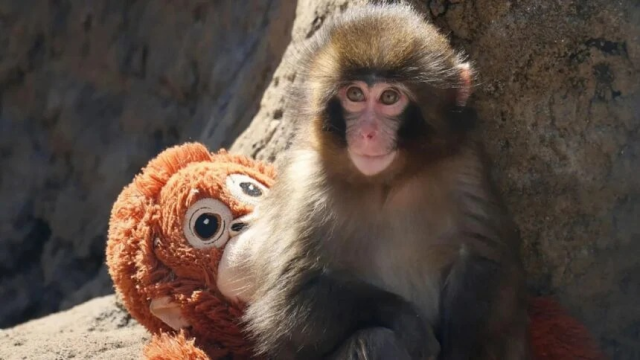
Punch-kun, the baby Japanese macaque who first captured global attention for holding onto a stuffed orangutan for comfort, continues to make steady social progress at Ichikawa City Zoo. Keepers report he is playing without his plush, grooming other monkeys, and settling more confidently into the troop. The crowds remain large, but the mood is calmer, and Punch looks more at home each day.
For anyone who has been quietly refreshing Punch updates this week, the latest news brings something welcome: stability.
On February 26, keepers at Ichikawa City Zoological and Botanical Garden shared observations that reflect steady, observable progress. Punch was seen playing energetically with other young monkeys without relying on his stuffed toy. Earlier in his reintegration, he often relied on his plush surrogate mother during moments of uncertainty. Now, during active play, he is engaging directly with his troop.
Keepers confirmed that he remains healthy and energetic, spending his time as usual. That matters because Punch’s story was never just about a viral image. It has always been about whether a hand-raised macaque could successfully reintegrate into a complex social group. This week’s updates suggest that the answer is increasingly yes.
Photo: Courtesy of Ichikawa City Zoo (@ichikawa_zoo via X)
In previous updates, Punch was being groomed by other monkeys. Now, he has begun grooming them in return.
For Japanese macaques, grooming is far more than hygiene. It builds trust, reinforces social bonds, and helps young monkeys learn the structure of their group. When a juvenile both receives and initiates grooming, it signals that he is not simply tolerated on the margins. He is learning how to belong.
Photo: Courtesy of Ichikawa City Zoo (@ichikawa_zoo via X)
Observers have also noted that Punch is spending more time with the troop than with Oran Mama. He still turns to his plush for sleep and comfort, but he is no longer inseparable from it.
One recent clip showed him carefully delousing his stuffed toy with impressive seriousness, almost as if rehearsing. Now that rehearsal appears to be translating into real interaction.
The cuteness is undeniable. The social development is the real story.
Photo: Courtesy of Ichikawa City Zoo (@ichikawa_zoo via X)
Keepers have continued to be transparent about occasional scolding, which is a normal part of macaque socialization. Young monkeys must learn boundaries, hierarchy, and timing within the group.
Importantly, there have been no reports of serious aggression or injury. Some days pass without any scolding observed at all. The broader pattern suggests adjustment rather than rejection.
Integration rarely follows a straight line. What matters is trajectory. And Punch’s trajectory continues upward.
Photo: Courtesy of Ichikawa City Zoo (@ichikawa_zoo via X)
Another conversation circulating online centers on Punch’s caretaker, Kosuke Shikano. Some viewers have wondered why he does not appear to reciprocate Punch’s clinginess more openly.
The zoo has clarified that this restraint is intentional. Punch ultimately needs to bond with his troop, not with a human. Too much visible attachment could unintentionally complicate that transition.
Hand-raising a primate requires a careful balance. Provide enough stability and reassurance for healthy development. Step back enough to allow species-appropriate bonds to form.
Punch still gravitates toward Shikano at times. Increasingly, however, he chooses the monkeys around him. That shift is the goal.
Photo: Courtesy of Ichikawa City Zoo (@ichikawa_zoo via X)
As of February 27, Punch is:
Playing with young monkeys without relying on his stuffed toy
Grooming and being groomed within the troop
Eating independently
Experiencing normal social correction consistent with troop learning
Using Oran Mama primarily for rest rather than constant reassurance
The small macaque who once seemed defined by a plush orangutan is now increasingly defined by his place in the group. Integration is rarely dramatic. It unfolds gradually, in small, steady moments. So, for our weekend Punch-date, the takeaway is reassuring.
He is busy, he is social, and more and more, he looks like he belongs.
Photo: Courtesy of Ichikawa City Zoo (@ichikawa_zoo via X)
Punch is a young Japanese macaque at Ichikawa City Zoological and Botanical Garden in Chiba Prefecture, Japan. He gained global attention after videos showed him relying heavily on a stuffed orangutan for comfort during his early reintegration into the troop.
Punch required hand-rearing after birth for health and developmental reasons. Like many hand-raised primates, he needed gradual reintroduction to his troop to ensure safe and successful social integration.
Yes, but differently. He now primarily uses the plush for sleep and rest rather than carrying it constantly. During active play and social interaction, he is increasingly engaging directly with other macaques.
Recent updates show increasing grooming exchanges and sustained play with other young monkeys, both strong indicators of social acceptance. Occasional scolding remains a normal part of macaque social learning.
In Japanese macaque society, grooming builds trust, reinforces hierarchy, and strengthens long-term social bonds. When Punch both receives and initiates grooming, it signals that he is participating in group dynamics rather than remaining on the margins.
No serious aggression or injury has been reported. Zoo officials continue to state that Punch is healthy, eating normally, and maintaining appropriate weight.
Keepers intentionally limit visible human bonding to encourage species-appropriate relationships within the troop. Over-attachment to humans could interfere with long-term integration.
Punch’s viral story has drawn international attention. On peak days, more than 6,000 visitors have arrived. The zoo has implemented crowd-management measures to protect the animals from stress.
The zoo has warned of extremely heavy weekend crowds and recommends visitors read posted guidelines carefully. Officials emphasize calm viewing behavior to support animal welfare.
Integration is gradual. The key indicators to watch are continued grooming, independent play, normal feeding behavior, and reduced reliance on the plush for reassurance. Current updates suggest positive momentum.