We use cookies to enhance your browsing experience, serve personalized content, and analyze our traffic. By clicking "Accept All" you accept this and consent that we share this information with third parties and that your data may be processed in the USA. For more information, please read our .
You can adjust your preferences at any time. If you deny, we will use only the essential cookies and unfortunately, you will not receive any personalized content.

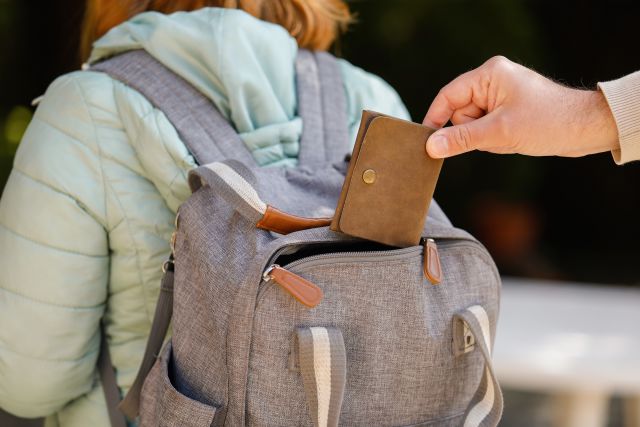
New research has ranked the world's top pickpocket destinations, and the results won't surprise anyone who's had their wallet lifted on the Paris Métro. A study by luggage storage company Radical Storage analyzed over 13,000 Google reviews for theft-related keywords like "pickpocket," "robbed," and "scam" to identify where tourists are most at risk. Here's who made the list, what makes each city a target, and how to keep your stuff safe.
Paris topped the global ranking by a significant distance, accounting for 16.5% of all theft-related tourist reviews, with nearly 30% of all reviews that specifically mentioned the word "pickpocket." That's not a typo.
The risk areas are well-established: the Eiffel Tower, Montmartre, Sacré-Cœur, and the Gare du Nord are consistent hotspots. So is the Métro, especially the central lines and the RER routes to Charles de Gaulle. Thieves typically work in coordinated groups, using distraction techniques: fake petitions pushed in your face, "friendship bracelets" tied around your wrist before payment is demanded, the classic dropped ring ploy, while an accomplice lifts your phone or wallet.
Paris is still one of the greatest cities on earth for food, culture, and architecture. But going in without a plan is asking for trouble.
Rome ranked second with 10.7% of theft-related reviews, and the local crime stats back it up. The city reported a 68% increase in pickpocketing between 2019 and 2024, alongside a broader 23% rise in overall crime.
The tourist trail and the theft map are essentially identical. The Trevi Fountain (which now draws thousands of visitors per hour), the Colosseum, Piazza di Spagna, and the area around Termini station are the most commonly cited hotspots. Metro Line A, running from the main station to the Vatican Museums, is also frequently mentioned by victims.
Thieves here often work in teams blending into monument crowds. Bags left behind chairs at outdoor cafes are a particularly easy target. Stay alert the moment you start pointing a camera at something beautiful.
Barcelona placed third globally at 5.3% of theft-related reviews, and it's a reputation the city has been trying to shake for years. La Rambla remains the most notorious stretch: it's a magnet for tourists and therefore a magnet for criminals. Busy metro platforms around Plaça de Catalunya and near Sagrada Família are equally well-documented problem zones.
The typical theft in Barcelona is non-violent, fast, and often goes unnoticed until hours later. Local businesses have increasingly flagged the issue, worried that social media complaints and word of mouth are doing lasting damage to the city's image.
Bangkok ranked fourth with 4.4% of theft-related reviews. The density of tourists in popular areas, including floating markets, the Grand Palace, and Khao San Road, creates exactly the conditions pickpockets thrive in. The city also has its share of taxi and tuk-tuk scams, where drivers steer visitors toward gem shops or tailors, though outright theft is less systemic here than in Europe's top three.
Orlando tied for fifth at 4.3%, but it stands out for a specific reason: the study identified it as the "robbery capital" of the ranking, with 12.5% of its theft reviews specifically referencing visitors being "robbed" rather than pickpocketed. Theme park crowds, rental car lots, and hotel parking areas are common settings. The takeaway here is slightly different from European cities: it's less about street crime and more about opportunistic theft in tourist zones.
Istanbul (tied 5th, 4.3%) has become a notable hotspot, particularly around the Grand Bazaar and in nightlife areas, where social scams, including friendly strangers inviting you for drinks then presenting an eye-watering bill, are as common as outright theft.
New York City (7th, 3.5%) makes the list largely on volume. The subway system is the primary venue for most reported incidents.
Milan (8th, 3.0%) punches above its weight given its visitor numbers, with the Piazza del Duomo and Galleria Vittorio Emanuele II cited most often.
Las Vegas (9th, 2.2%) sees most of its theft-related incidents in crowded casino floors and along the Strip, where distracted crowds and conspicuous spending make easy targets.
Delhi (10th, 1.9%) rounds out the list with the highest rate of fraud-specific mentions: 7.9% of its theft reviews reference scams and overcharging rather than physical pickpocketing.
The good news: most people who visit these cities return home with everything they left with. The tourists who get hit are almost always caught off guard. A few consistent habits make a significant difference.
Keep valuables out of reach. Back pockets are a pickpocket's best friend. Front pockets for phones, a money belt or hidden pouch for your passport and backup card, and a cross-body bag worn in front rather than swinging at your side will eliminate most of the easy opportunities.
Split your money and cards. Never carry everything in one place. Leave your passport in the hotel safe when you don't need it. Keep one card accessible and a backup locked away. A single theft won't strand you.
Lock your phone before you travel. Enable biometric login, set up remote wipe, and make sure your digital wallet isn't accessible without authentication. A stolen phone isn't just an inconvenience: it's a potential gateway to your bank account and boarding passes.
Stay skeptical of strangers with strong opinions about where you should go. Unsolicited "guides," overly friendly strangers who appear the moment you look at a map, free bracelet offers, and petitions for vague causes are all classic openers for distraction theft or scam escalation. A firm, polite "no thanks" and keeping walking is always the right move.
On public transport, treat your bag like a baby. Hold it in front of you on crowded metro cars. Don't put it in overhead racks on buses unless you're watching it. The doors are a particular danger zone: snatch-and-run theft is easiest right before the doors close.
In restaurants and cafes, your bag goes on your lap or around your leg. Not behind your chair, not on the empty seat next to you. Particularly in Rome and Barcelona, the bag-behind-the-chair move is well-known and well-exploited.
None of this requires paranoia. It just requires the same awareness you'd apply crossing a busy street: automatic, consistent, and no big deal once it's a habit.
Paris still has the best croissants. Rome still has the Pantheon. Barcelona's architecture is still worth every euro of the flight. These cities are on every bucket list for a reason, and a pickpocket statistic shouldn't be the thing that keeps you home. Know the risks, adjust your habits, and then go enjoy the thing you saved up for. The rest is just common sense (with a side of gelato).
According to a 2025 study by Radical Storage analyzing over 13,000 tourist reviews, Paris ranks first globally, accounting for 16.5% of all theft-related mentions.
Rome is generally safe for tourists, but petty theft is a real concern. Pickpocketing increased by 68% between 2019 and 2024, particularly around major landmarks and on the Metro. Staying alert and keeping valuables secure goes a long way.
Paris, Rome, and Barcelona top the European rankings, with Prague, Milan, and Istanbul also featuring prominently in recent safety studies.
The most commonly reported scams include the "friendship bracelet" trick, fake charity petitions used as a distraction, and the "dropped ring" ploy. Crowded Métro cars and areas around the Eiffel Tower and Montmartre are the highest-risk zones.
A money belt or hidden pouch worn under clothing is the most secure option for passports and backup cards. For day-to-day spending, a cross-body bag worn in front, or a front pants pocket, is much safer than a back pocket or open tote.
Yes. The same Radical Storage study found that cities including Zurich, Warsaw, Doha, Shanghai, and Hanoi had the lowest rates of theft-related reviews, with just 0.1% of mentions each.
In the vast majority of cases, no. Most pickpocketing is non-contact and uses distraction rather than force. The notable exception in the study was Orlando, which had the highest rate of robbery rather than pickpocketing among the top 10 cities.
Not at all. The majority of visitors to every city on this list return home without incident. Awareness and a few simple precautions, including secure bags, split finances, and skepticism toward unsolicited approaches, dramatically reduce your risk.