
We use cookies to enhance your browsing experience, serve personalized content, and analyze our traffic. By clicking "Accept All" you accept this and consent that we share this information with third parties and that your data may be processed in the USA. For more information, please read our .
You can adjust your preferences at any time. If you deny, we will use only the essential cookies and unfortunately, you will not receive any personalized content.
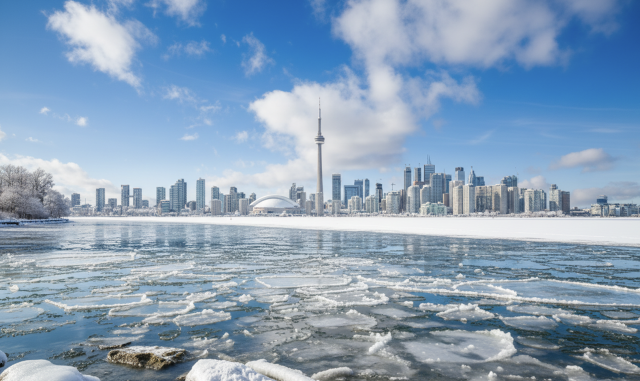
A rare polar vortex is plunging Ontario into extreme cold this weekend, briefly making it one of the coldest inhabited places on Earth. A massive Arctic air mass has shifted south, placing the coldest air on the planet directly over the province. Meteorologists say mid-level atmospheric temperatures are nearing -58°F (-50°C), with wind chills in some areas feeling just as brutal. In parts of Ontario, exposed skin can freeze in minutes. The cold is being driven by a disrupted polar vortex, a powerful weather system that usually keeps frigid air locked near the North Pole. Here’s what’s happening, why it’s so extreme, and what residents should know to stay safe.
The polar vortex is the main reason behind this historic deep freeze.
The polar vortex is a large area of extremely cold air that circulates high above the Arctic. During winter, shifts in atmospheric pressure and wind patterns can cause parts of this system to weaken or stretch, allowing Arctic air to spill south into Canada and the United States.
This week, that shift placed Ontario directly under the coldest core of the air mass, creating conditions colder than many parts of Siberia. Temperatures across the province are running 18°F to 36°F (10°C to 20°C) below seasonal averages, an unusually large departure from normal.
Some notable forecasts include:
Ottawa: Overnight lows near -18°F to -22°F (-28°C to -30°C)
Toronto: Lows near -11°F (-24°C), potentially the coldest in nearly a decade
Northern Ontario: Base temperatures dropping below -42°F (-41°C) in some locations
Weather data shows that several of the coldest inhabited places on Earth right now are in Ontario.
Meteorologists say this is one of the most intense cold outbreaks Ontario has experienced in years.
Several records are at risk:
Ottawa could see its coldest daytime high since 2014
Toronto could record its coldest daytime high since 2018
Parts of Ontario are experiencing their coldest air mass in nearly a decade
What makes this event stand out is its scale. The Arctic air is not limited to one region. It spans much of Canada, with wind chills reaching -40°F to -58°F (-40°C to -50°C) across multiple provinces.
This level of cold affects nearly every aspect of daily life. Authorities have issued widespread extreme cold warnings, urging residents to limit time outdoors. Cities have opened warming centers, and emergency services are preparing for increased calls related to cold exposure.
Potential impacts include:
High risk of frostbite and hypothermia, sometimes within minutes
Dangerous driving conditions due to snow squalls and blowing snow
Strain on power grids and heating systems
Transportation delays and school disruptions
Meteorologists also warn that another winter storm system could follow, as warmer air collides with the Arctic outbreak, potentially bringing heavy snowfall to parts of Ontario.
Scientists continue to study the connection between climate change and polar vortex disruptions. Some researchers suggest that rapid Arctic warming may weaken the temperature difference between the Arctic and lower latitudes, making the polar vortex more unstable. This could increase the chances of extreme cold outbreaks reaching southern regions.
Others caution that the relationship is complex and still under active research. What is clear is that weather extremes of all kinds, including heat waves, floods, and severe cold snaps, are becoming more noticeable across North America.
Forecasts show the extreme cold persisting through the weekend and into early next week.
While temperatures may moderate slightly afterward, meteorologists warn that additional Arctic outbreaks remain possible later in February. For now, Ontario remains firmly in the grip of a prolonged and dangerous cold event.
When temperatures drop this low, preparation matters.
Wear multiple insulating layers made from wool or synthetic fabrics
Cover all exposed skin, including ears, nose, fingers, and cheeks
Use insulated boots and gloves that are not too tight
Limit time outdoors, especially during strong winds
Stay dry and change wet clothing immediately
Drink warm fluids and eat high-energy foods
Avoid alcohol, which increases heat loss
Check on older adults, children, and neighbors
Keep pets indoors whenever possible
Carry emergency supplies if traveling
Even short exposure can be dangerous when wind chills fall below -40°F (-40°C).
Is Ontario really colder than Siberia right now?
In some cases, yes. Meteorologists say the coldest air mass on the planet is currently centered over Ontario. While parts of Siberia and Antarctica can be colder overall, Ontario is among the coldest inhabited regions on Earth this week.
How cold will it actually get?
Mid-level atmospheric temperatures are near -58°F (-50°C). Surface wind chills in parts of Ontario could feel like -49°F to -58°F (-45°C to -50°C).
What is the polar vortex?
The polar vortex is a large system of cold air and strong winds that circles the Arctic. When it shifts or weakens, Arctic air can move south and bring extreme cold to Canada and the U.S.
How dangerous is this cold?
Very. Frostbite can occur in minutes, and prolonged exposure increases the risk of hypothermia, accidents, and infrastructure failures.
How long will this cold snap last?
The current outbreak is expected to last several days, with the possibility of more Arctic air later in the month.