
We use cookies to enhance your browsing experience, serve personalized content, and analyze our traffic. By clicking "Accept All" you accept this and consent that we share this information with third parties and that your data may be processed in the USA. For more information, please read our .
You can adjust your preferences at any time. If you deny, we will use only the essential cookies and unfortunately, you will not receive any personalized content.
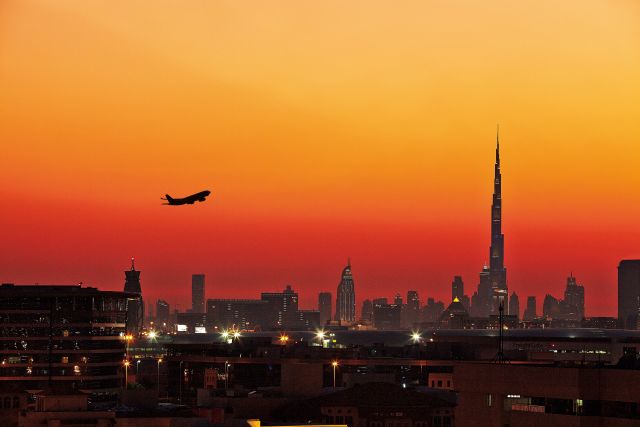
Travel advisories across parts of the Middle East have expanded following escalating regional security developments that prompted airspace restrictions and aviation safety reassessments. Several governments temporarily limited civilian air traffic while reviewing operational conditions. Embassies have issued updated guidance, and airlines are adjusting routes in response to rapidly changing circumstances.
The impact is not limited to one country or airport. Because the Gulf region serves as a major global aviation corridor, disruptions are affecting international routes far beyond the immediate area. Tourism is not universally suspended, but conditions are evolving quickly. Here is what travelers need to understand about the broader regional travel environment.
Multiple Gulf states temporarily closed or restricted their airspace following recent regional security developments. In several cases, governments cited civil aviation safety precautions.
Affected areas include:
United Arab Emirates
Qatar
Bahrain
Kuwait
Iran
Israel
Iraq
Portions of Saudi Arabia
Flight tracking data shows major commercial corridors across the Gulf temporarily emptying out or being heavily rerouted.
Dubai and Abu Dhabi are seeing flight suspensions, while Doha and Bahrain are also experiencing disruptions. Even airports not directly struck are pausing or slowing operations as authorities assess broader airspace risk.
This is not a localized airport closure. It is a regional aviation event.
In response to the escalation, the U.S. State Department reactivated its rarely used Worldwide Caution advisory, urging Americans to exercise increased vigilance globally, and especially across the Middle East.
U.S. embassies in the United Arab Emirates and Israel issued shelter-in-place instructions for government personnel and advised American citizens to monitor official channels closely. The U.S. Embassy in Cairo also issued an advisory encouraging heightened awareness, even though Egypt has not been directly targeted.
Other governments, including the UK and several European states, have issued updated travel guidance for parts of the region.
These alerts do not automatically prohibit travel, but they reflect elevated security assessments.
Dubai International Airport is one of the busiest global transit hubs, connecting Europe, North America, Africa, India, Southeast Asia, and Australia. When Gulf airspace closes, the impact extends far beyond the Middle East.
Travelers may experience:
Cancellations and grounding of aircraft
Rerouting of Europe–Asia long-haul flights
Extended flight durations
Missed connections
Aircraft and crew displacement
Even travelers not visiting the Middle East directly may see delays if their routes typically pass through Gulf corridors. For airport-specific updates in Dubai, see our dedicated Dubai flight disruption coverage.
Egypt’s airspace remains open, and Cairo International Airport continues operating. However, the U.S. Embassy in Cairo has urged American citizens to exercise heightened caution due to the broader regional environment.
Egypt has not been directly targeted in the current escalation. Still, its proximity to the conflict zone and reliance on regional aviation corridors means that:
Flight schedules may shift
Aircraft positioning may change
Insurance and risk assessments may tighten
Tourism operations in Cairo, the Nile Valley, and Red Sea resorts remain active, but travelers should anticipate uncertainty.
If you are traveling to or through the Middle East in the next several days:
Check your airline directly before departure
Monitor embassy advisories
Review refund and rebooking flexibility
Consider travel insurance coverage carefully
Build extra time into connecting itineraries
Many airlines are issuing flexibility waivers for affected routes. However, policies vary by carrier and ticket type. Because aircraft and crews may be repositioned after airspace restrictions, schedule adjustments can continue even after corridors reopen.
This remains a rapidly evolving aviation situation, and operational changes may occur with limited notice.
No. Some airspace and airports have closed temporarily, but not the entire region.
Operations have been suspended at times. Travelers should check directly with their airline.
Egypt remains open, but the U.S. Embassy has urged heightened caution due to regional instability.
Many carriers are offering flexible rebooking or refunds. Confirm directly with your airline.
Yes. Many long-haul routes pass through Gulf airspace and may be rerouted or delayed.
If your travel is several days away, monitor developments before making changes. If your flight is canceled, you will be offered options.