
We use cookies to enhance your browsing experience, serve personalized content, and analyze our traffic. By clicking "Accept All" you accept this and consent that we share this information with third parties and that your data may be processed in the USA. For more information, please read our .
You can adjust your preferences at any time. If you deny, we will use only the essential cookies and unfortunately, you will not receive any personalized content.
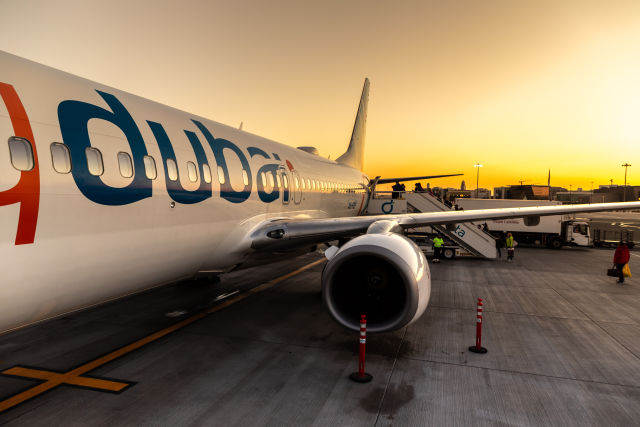
Middle East flight cancellations have now exceeded 9,500 across seven major regional hubs, according to flight tracking data. Airports in Dubai, Doha, Abu Dhabi, Sharjah, Kuwait, Bahrain, and Dubai World Central have seen widespread shutdowns or severe restrictions. Airlines across Europe, North America, and Asia have suspended routes into the region. Even where limited departures have resumed, schedules remain unstable. Millions of passenger journeys may have been affected since February 28. Here’s what travelers need to understand right now.
Air travel across the Middle East remains in deep disruption as airspace closures and airport shutdowns continue to ripple outward from the Gulf.
According to flight tracking data from Flightradar24, cancellations across seven major hubs have now exceeded 9,500 flights since February 28. That includes Dubai International, Hamad International in Doha, Zayed International in Abu Dhabi, Sharjah, Kuwait International, Bahrain International, and Dubai World Central.
This is not a localized airport issue. It is a regional aviation event.
Daily cancellation levels have remained elevated:
February 28: 1,400+ flights
March 1: 3,400+ flights
March 2: 3,400+ flights
March 3: 1,300+ flights
Some estimates suggests well over 1.5 million passenger journeys may have been disrupted so far.
Several of the affected airports rank among the busiest international transfer hubs in the world. Dubai, Doha, and Abu Dhabi function as connective arteries between Europe, Asia, Africa, and North America. When those hubs pause, long-haul networks fracture quickly.
Heavily impacted hubs include:
Dubai International (DXB)
Hamad International, Doha (DOH)
Zayed International, Abu Dhabi (AUH)
Sharjah (SHJ)
Kuwait International (KWI)
Bahrain International (BAH)
Dubai World Central (DWC)
Some airports have announced limited flight resumption phases. Others remain closed or severely restricted depending on airspace approvals.
Major carriers that have paused or reduced operations into parts of the region include:
Emirates
Qatar Airways
Etihad Airways
Lufthansa Group carriers
British Airways
Air France
Turkish Airlines
Delta Air Lines
American Airlines
Air Canada
Singapore Airlines
Japan Airlines
Cathay Pacific
Many suspensions extend several days beyond initial announcements as airlines wait for corridor approvals and reassess operational risk.
For airport-specific updates in Dubai, see our dedicated Dubai flight disruption coverage.
Even when airspace reopens, aviation systems do not instantly reset.
Aircraft are out of position. Crews are displaced. Hub connections have been broken. Long-haul rotations rely on tight sequencing across continents, and once disrupted, that sequencing must be rebuilt manually.
That means even after airports reopen, travelers may still see:
Delayed departures
Aircraft swaps
Rolling cancellations
Limited seat availability
Rebooking congestion
This is often the quiet second phase of disruption that lasts longer than the headlines.
If your itinerary connects through any of the affected hubs:
Monitor your airline directly, not only third-party booking platforms
Check flight status multiple times per day
Screenshot rebooking waivers when they appear
Avoid tight same-day international connections
Expect changes even after initial confirmation
If you are already in the region, remain in contact with your airline and monitor official airport and airline social channels for real-time guidance.
More than 9,500 flights across seven major hubs since February 28, according to flight tracking data.
Dubai International, Doha, Abu Dhabi, Sharjah, Kuwait, Bahrain, and Dubai World Central have experienced widespread shutdowns or severe restrictions.
Some limited operations have resumed in certain locations, but schedules remain unstable.
Yes. Even after airspace reopens, aircraft repositioning and crew logistics may extend disruption for several days.
That depends on your timing and routing. Monitor airline advisories and flexible rebooking policies before making changes.
Yes. Many international carriers have suspended or rerouted Middle East services.
Using average load estimates, more than 1.5 million passenger journeys may have been disrupted so far.