We use cookies to enhance your browsing experience, serve personalized content, and analyze our traffic. By clicking "Accept All" you accept this and consent that we share this information with third parties and that your data may be processed in the USA. For more information, please read our .
You can adjust your preferences at any time. If you deny, we will use only the essential cookies and unfortunately, you will not receive any personalized content.

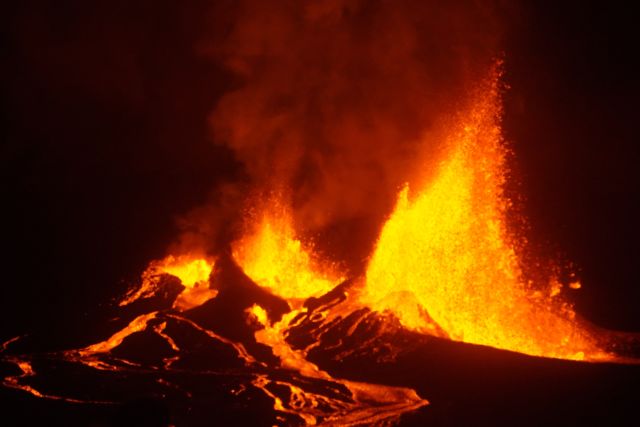
Kīlauea made history before sunrise on Monday, when Episode 48 of its ongoing summit eruption began and sent lava fountains more than 650 feet into the air. An ash plume rose to 24,000 feet above sea level, and an Ashfall Advisory is in effect for parts of East Hawaiʻi, including Volcano, Mountain View, and Pahoa. The good news for travelers is that all lava activity remains inside Halemaʻumaʻu crater within Hawaiʻi Volcanoes National Park. Still, if you're visiting or nearby, this is one of those moments where it’s worth knowing exactly what’s happening before you head out.
EES is live across the Schengen Area and applies to most American travelers
The biometric border step (fingerprints, facial scan, passport check) happens at your first Schengen airport
Tight connections are now a real risk, especially on a first EES crossing
Build in at least two to three hours for connections at major Schengen hubs this summer
No pre-registration, no fee, no app, but no skipping it either
ETIAS is separate and not yet required; that launches later in 2026
Image Credit: Screenshot of USGS Livestream
Kīlauea made history before dawn on Hawaiʻi’s Big Island. Episode 48 of the ongoing Halemaʻumaʻu eruption began at 4:40 a.m. HST on June 1, following more than 90 overflow events from the south vent that had started two days earlier, on May 30.
Scientists had already seen signs that something was building. Around 3:45 a.m., fountaining began and instruments recorded a drop in ground tilt. By just after 5 a.m., fountains from the north vent had climbed to about 350 feet, while volcanic tremor continued to rise. In other words, the eruption was still gaining strength. By 6 a.m., confirmed fountain heights had reached 500 to 650 feet, with officials projecting they could climb as high as 600 to 800 feet.
That’s not just a dramatic morning. It’s a record. Episode 48 broke the all-time mark for the most lava fountaining episodes ever recorded at Kīlauea, passing the 47-episode record previously shared with the famous Puʻuʻōʻō eruption from 1983 to 1986. Seismic and deformation signals suggest the fountain has likely reached its peak height and effusion rate for Episode 48, although fountaining is expected to continue for many more hours.
The ash plume from Episode 48 is reaching 24,000 feet above sea level, which sounds intense because, well, it is. But there’s some important context here. The USGS Hawaiian Volcano Observatory confirmed that sulfur dioxide gas has not been reported with this ashfall event. Satellite data show most of the gas is being carried away high in the plume, rather than settling near the ground.
What’s falling is tephra, which includes fine ash, Pele’s hair, and small pieces of pumice. Pele’s hair is made of delicate strands of volcanic glass that form when lava is stretched by the wind during fountaining. It sounds almost poetic, but it can irritate your eyes, skin, and lungs.
Ash and tephra up to several inches in diameter, along with strands of Pele’s hair, were reported at the Uēkahuna overlook in Hawaiʻi Volcanoes National Park. Tephra is also falling on Highway 11 near and west of the Nāmakanipaio campground between mile markers 32 and 34.
Image Credit: Screenshot of USGS Webpage
The National Weather Service issued an Ashfall Advisory for East Hawaiʻi until noon HST, covering the park and nearby communities including Volcano, Mountain View, and Pahoa. For most people, the impacts are expected to be limited, but this is still volcanic ash and glass fiber. It’s not something you want in your eyes, lungs, or water supply.
Hawaiʻi County Civil Defense is advising people in affected areas to close windows and doors, wear masks and eye protection, and cover or disconnect water catchment systems. That’s especially important for children, older adults, and anyone with asthma, allergies, or other respiratory conditions. Even light ashfall can make breathing uncomfortable, and Pele’s hair can be irritating if it lands on skin or gets kicked up by wind.
There are also additional hazards around Kīlauea caldera, including crater wall instability, ground cracking, and rockfalls that can be worsened by earthquakes. Close to the vents, tephra on the crater rim can crack, slump, or slide, sometimes exposing hot or molten material below.
Hawaiʻi Volcanoes National Park is still the place to witness this eruption, but expect crowds, traffic, and changing conditions. Emergency officials are already asking drivers to use caution in and around the park because of pedestrians and vehicles along the roadway.
The USGS Volcano Alert Level is currently WATCH, and the Aviation Color Code is ORANGE. All lava activity is inside the crater, so there’s no active lava threat outside park boundaries. Lava flows during this eruption have been confined to Halemaʻumaʻu crater and the southwest side of Kaluapele, Kīlauea’s summit caldera.
That said, this is still an active volcano. Check park conditions before you go, follow all closure signs, and don’t wander into restricted areas for a better view. The USGS Hawaiian Volcano Observatory also publishes live updates and webcam footage from multiple vantage points around the summit caldera, which is a great option if conditions are crowded or visibility is poor.

You need to agree with the cookies and privacy policy of this external service to view the content
Episode 47, which happened just over two weeks ago, tied the record set during the initial phase of the Puʻuʻōʻō eruption from 1983 to 1986. Both reached 47 total lava fountaining episodes. Episode 48 now stands alone.
Kīlauea has a long history of spectacular fountaining events. The 1959 Kīlauea Iki eruption had 17 episodes, while the 1969 to 1970 Maunaulu eruption had 12. But this current summit eruption has now passed them all in episode count. Since December 23, 2024, each episode of Halemaʻumaʻu lava fountaining has lasted anywhere from 8 hours to 8 days, though most have lasted one day or less. Pauses between episodes have ranged from less than 24 hours to 21 days. Episode 47 lasted 9 hours, from 3:27 p.m. HST on May 14 to 12:27 a.m. on May 15.
The Puʻuʻōʻō eruption eventually transitioned into a continuous lava flow phase that lasted until 2018. This current eruption is different, but Episode 48 now gives it a very real place in Kīlauea history.
And for visitors, that history isn’t tucked away in a textbook. It’s part of the landscape at Hawaiʻi Volcanoes National Park, where the entrance sign feels less like a photo stop and more like a gateway into one of the most active volcanic places on Earth.
Watching a volcano break its own record in real time is the kind of thing you don’t forget. If you’ve been on the fence about visiting Hawaiʻi Volcanoes National Park, the current eruption cycle has been putting on a show that’s both accessible and genuinely historic. Just check conditions before you head out, give yourself extra time, and go prepared. This is nature at its most spectacular, but it’s still nature very much in charge.
All lava activity is confined to Halemaʻumaʻu crater inside the park. The Volcano Alert Level is WATCH, and conditions are being actively monitored. Check the USGS Hawaiian Volcano Observatory and the park’s official website for current closures before you visit.
An Ashfall Advisory means fine ash, Pele’s hair, and light pumice are expected to fall in designated areas. It’s not the same as a major volcanic emergency, but ash and glass fibers can irritate your eyes and lungs, so basic precautions are smart.
Pele’s hair refers to thin strands of volcanic glass formed when lava is stretched by wind during fountaining. It’s named for the Hawaiian goddess of volcanoes. It can look delicate, but it can also irritate skin, eyes, and breathing passages.
As of the morning of June 1, ashfall has been reported in Volcano village, Mauna Loa Estates, Ohia Estates, and along Highway 11 near mile markers 32 to 34. The Ashfall Advisory covers areas including Volcano, Mountain View, and Pahoa.
Confirmed fountain heights reached 500 to 650 feet above the vent, with officials projecting they could reach 600 to 800 feet as the eruption intensified. The ash plume rose to 24,000 feet above sea level.
Episode 48 surpasses the previous record of 47 lava fountaining episodes, which was set during the initial phase of the Puʻuʻōʻō eruption from 1983 to 1986. The current summit eruption began in December 2024.
Most episodes in the current cycle have lasted less than a day, though durations have ranged from 8 hours to 8 days. Episode 47 lasted 9 hours. USGS expects Episode 48 to continue for many more hours.
The USGS Hawaiian Volcano Observatory maintains webcams around the summit caldera, including the KWcam wide panorama from the west rim and the V1cam. Big Island Video News also streams live footage and updates. In-person viewing inside the park depends on current conditions and closures.
No. All lava activity is contained within Halemaʻumaʻu crater and the southwest side of Kīlauea’s summit caldera. There is no active lava threat to communities outside park boundaries.