We use cookies to enhance your browsing experience, serve personalized content, and analyze our traffic. By clicking "Accept All" you accept this and consent that we share this information with third parties and that your data may be processed in the USA. For more information, please read our .
You can adjust your preferences at any time. If you deny, we will use only the essential cookies and unfortunately, you will not receive any personalized content.
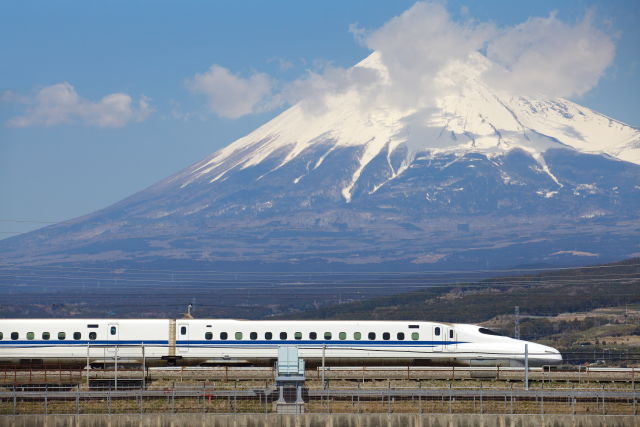
If you are planning a trip to Japan, chances are your itinerary includes Tokyo, Kyoto, and maybe Osaka. Those cities sit along the country’s busiest rail corridor and draw the majority of first-time visitors to Japan.
But Japan is much larger and more geographically diverse than many travelers realize. Now, one southern region is trying to gently redirect tourist traffic by offering something unusually generous: a free ride on Japan’s bullet train.
In February 2026, the governor of Kagoshima Prefecture announced a program that will cover the cost of a one-way Shinkansen ticket for select foreign tourists traveling from Fukuoka to Kagoshima. It is part of a broader effort to encourage visitors to explore beyond Japan’s most crowded destinations.
Japan is an island nation made up of four main islands. Most international travelers spend their time on Honshu, the largest island, where you will find:
Kyoto
Osaka
Hiroshima
These cities are connected by the country’s most famous high-speed rail lines and form what is often called the “Golden Route” for first-time visitors.
The new initiative, however, takes place on a different island: Kyushu, which lies southwest of Honshu. Kyushu is known for hot springs, volcanic landscapes, and a slower, more regional atmosphere compared to Tokyo or Kyoto.
The free ticket applies to the Shinkansen route between:
Hakata Station in Fukuoka City
Kagoshima-Chuo Station in Kagoshima City
The journey takes about 90 minutes and normally costs around 11,500 yen, roughly 75 USD.
While Japan as a whole has experienced record tourism numbers in recent years, the benefits have not been evenly distributed. Kagoshima, located at the southern tip of Kyushu, has seen fewer international overnight visitors than before the pandemic. At the same time, like many rural regions in Japan, it is facing population decline.
Governor Koichi Shiota described tourism as increasingly important to the region’s economic future. With fewer direct international flights into Kagoshima Airport, officials are looking for creative ways to bring travelers south.
The logic is straightforward: if tourists are already in Fukuoka, remove the cost barrier and make it easy to continue the journey.
Kagoshima offers a version of Japan that feels geographically and culturally distinct from the country’s main urban centers.
It is best known for Sakurajima, one of Japan’s most active volcanoes, which sits across the water from the city and frequently emits light ash plumes. The landscape is shaped by volcanic soil, geothermal activity, and coastal views.
Visitors come for:
Natural hot springs and sand baths heated by geothermal energy
Views of Sakurajima rising over Kagoshima Bay
Local seafood and regional dishes influenced by Kyushu’s subtropical climate
A pace that feels quieter than Tokyo or Kyoto
For travelers who have already seen Japan’s major highlights, Kyushu can feel like a second chapter rather than a repeat.
At launch, the program is limited to travelers from:
These regions either currently have or previously had direct flights to Kagoshima. Officials have said the program may expand in the future to include countries such as the United States and Thailand.
Key points to note:
The ticket is one-way, from Fukuoka to Kagoshima.
Application details have not yet been released.
The cost will be fully subsidized by the prefectural government.
Travelers would need to cover their return trip.
For many visitors unfamiliar with Japan’s geography, the country can appear compact on a map. In reality, it stretches over 1,800 miles from north to south and contains significant regional variation in climate, food, dialect, and landscape.
This initiative signals something important about Japan’s tourism strategy in 2026. While cities like Kyoto are discussing higher visitor taxes to manage crowds, southern regions are experimenting with incentives to redistribute travel.
For travelers, that means:
Potential cost savings
Access to less crowded destinations
An opportunity to see a more varied side of Japan travel
A reminder that the rail network in Japan extends far beyond the typical Tokyo-to-Kyoto corridor
If you are building an itinerary that already includes Fukuoka, this could make adding Kagoshima a relatively low-risk decision.
The application process and timeline have not yet been announced. Travelers interested in the program should monitor official Kagoshima tourism updates in the coming months.
If the pilot proves successful, expansion to additional countries like the United States is likely.
For visitors who want to move beyond the standard highlights and understand Japan as a collection of very different regions rather than a single experience, this free Shinkansen ride could become one of the more interesting travel incentives of the year.
If you are new to Japan and mapping out your first itinerary, this is a reminder that the country extends far beyond its most photographed cities. Sometimes the most memorable stops are just one train ride farther than everyone else goes.
No. It is a one-way ticket from Hakata Station in Fukuoka to Kagoshima-Chuo Station.
About 90 minutes.
Approximately 11,500 yen, or about 75 USD.
Kyushu is southwest of Tokyo and located on a different main island of Japan.
Not at launch, though expansion has been discussed.
Full eligibility requirements have not yet been released.