We use cookies to enhance your browsing experience, serve personalized content, and analyze our traffic. By clicking "Accept All" you accept this and consent that we share this information with third parties and that your data may be processed in the USA. For more information, please read our .
You can adjust your preferences at any time. If you deny, we will use only the essential cookies and unfortunately, you will not receive any personalized content.

Along Ireland's wild western coast, some cows don't just graze. They commute by sea. From the white-sand Inishkea Islands off County Mayo to the Connemara offshore islands, local farmers still guide cattle through open water to reach lush summer grazing land. It's practical, beautiful, deeply local, and one of the most delightfully unexpected things you can learn about Ireland.
Most people don't think of cows as aquatic creatures. Fair enough. They don't exactly give mermaid energy.
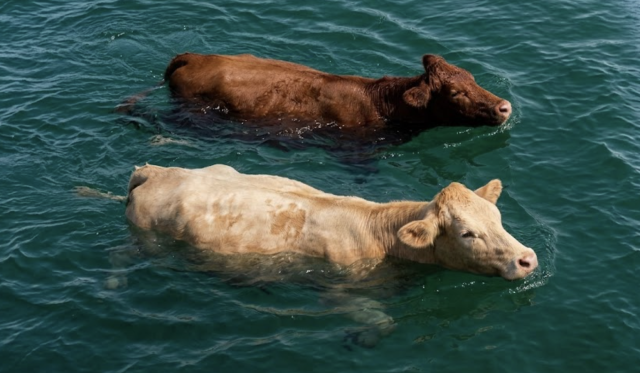
But cattle are naturally strong swimmers. Their large bodies, big lungs, and digestive systems give them a surprising amount of buoyancy, which helps them float as they move through the water. Once they're in deep enough, they lift their noses, keep their heads above the surface, and settle into a steady, four-legged paddle.
For farmers, this can be a practical way to move animals between seasonal grazing areas without loading them onto trailers or barges. For the cows, the water crossing is usually brief, calm, and low-impact, especially when they're guided by farmers who know the tides, weather, and route.
It may look like a comedy sketch from a distance. On the ground, it's a smart, low-stress way to get cattle to the good grass.
The real secret to the whole operation is not just the farmers. It's the herd.
Farmers don't simply send a group of inexperienced young cattle into the waves and hope for the best. The crossings are usually led by older, seasoned cows that have made the journey before. Once those matriarchs step into the water, the younger animals follow.
That social memory matters. Cows are herd animals, and younger calves learn by staying close to the adults. The experienced cows set the pace, the calves and younger animals stay protected in the group, and farmers in small boats help keep everyone moving in the right direction.
It's practical. It's calm. And it's a lovely reminder that sometimes the oldest member of the group really does know the way.
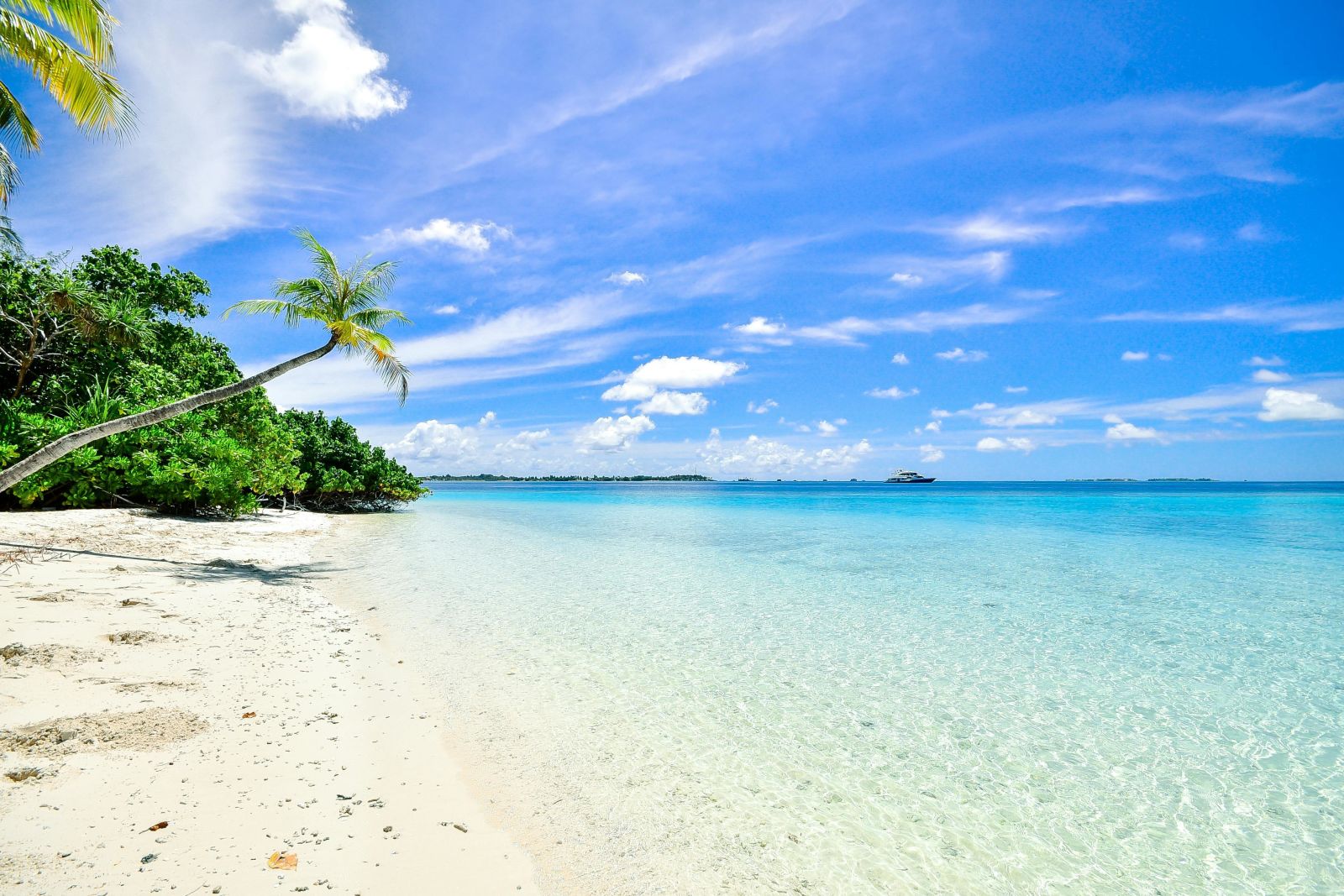
The Inishkea Islands, just off the coast of Belmullet in County Mayo, are one of the most beautiful places associated with this tradition. These remote, uninhabited islands have white beaches, clear Atlantic water, grassy pastures, and the haunting remains of old island settlements.
Each spring, local farming families bring cattle out to graze for the summer. In some crossings, the cattle are transported part of the way by boat before making the final stretch themselves, jumping into the water and swimming toward shore. It’s a scene that feels almost impossible until you remember the cows know exactly where they’re going: straight toward months of lush island grass.
The cows spend the warmer months roaming freely across the islands, feeding on rich grass shaped by salt air, ocean wind, and the absence of modern development. For travelers, the islands are already worth seeing for their wild beauty and history. Add a herd of cows grazing beside stone ruins and Caribbean-looking water, and it becomes one of those only-in-Ireland travel moments.
The return trip usually happens in early autumn, before the harsher winter weather settles in.

You need to agree with the cookies and privacy policy of this external service to view the content
The swimming cows are also getting a bigger spotlight thanks to RTÉ’s new natural history documentary series Wild Conamara. RTÉ is Ireland’s national public broadcaster, basically the Irish equivalent of PBS or the BBC, and the series follows presenter Eoin Warner through one of the country’s most dramatic western landscapes.
In the series, Warner explores Connemara’s coastal offshore islands, including the places where cattle swim between islands in search of grazing. It’s exactly the kind of footage that makes this tradition feel even more magical: rugged coastline, green island pastures, Atlantic water, and then, suddenly, cows paddling across the channel like this is the most normal commute in the world.
The context matters because the swimming cows aren’t just a quirky viral clip. They’re part of a broader coastal landscape where farming, tides, weather, and island life are all closely connected.
If you can't casually plan your Ireland trip around tides, weather, and local farming schedules, clips from Wild Conamara on RTÉ Player may be one of the easiest ways to understand what the “islands of the swimming cows” actually look like.
This isn't only an Atlantic coast thing. At the historic Crom Estate in County Fermanagh, Northern Ireland, cattle have also been known to swim across the calm waters of Lough Erne to reach Inishfendra, a grassy island pasture managed by the National Trust. There, the distance is shorter, around 100 meters, but the purpose is similar: traditional grazing helps manage the land naturally.
The cows keep scrub and invasive growth under control, which supports the broader ecosystem and helps maintain habitat for birds, insects, and other wildlife. In other words, the cows aren't just getting a scenic summer holiday. They're doing conservation work, one mouthful of grass at a time.
Visitors to Crom Estate can explore the shoreline trails between spring and early autumn, when the cattle may be grazing or moving between pastures.

You need to agree with the cookies and privacy policy of this external service to view the content
Most traditional crossings are relatively short. At places like Lough Erne, cattle may swim around 100 meters, or about 328 feet. Coastal crossings vary depending on the island, tide, and route. Cattle are strong swimmers, though, and there are documented cases of cows surviving much longer distances in extreme conditions.
The islands offer rich summer grazing, while the mainland pastures get time to rest and recover. On remote islands, cattle can feed freely on grass shaped by salt air and ocean weather. It's a traditional, practical way to manage livestock and land.
The cattle are usually moved to island pastures in late spring, often around May or June, depending on weather and tides. They typically return to the mainland in early autumn before winter storms arrive.
The crossings are usually brief, and cattle are hardy animals with thick hides and body fat that help protect them. Farmers also time the swims carefully around safe conditions, tides, and weather.
There usually aren't fixed tourist tours dedicated only to the cattle swims because the timing depends on weather, tides, and farming schedules. Travelers interested in seeing the tradition can ask local boat operators or heritage tour guides in areas like Belmullet, County Mayo, for current local information.
Yes, calves may swim with the herd, but they're usually kept close to their mothers and protected within the group. Experienced older cows help lead the way, while farmers in small boats monitor the crossing.
Ireland’s swimming cows are most often associated with offshore island grazing areas along the west coast, including places near County Mayo and Connemara. The tradition is also connected to inland island pastures, such as the Crom Estate in County Fermanagh, where cattle swim across part of Lough Erne.
Not really. That’s part of what makes the tradition so charming. The cows aren’t swimming for visitors or as part of a staged show. They’re being moved to seasonal grazing land by farmers who are following a practical local tradition shaped by weather, tides, and pasture.
The tradition has gained attention through viral videos and recent documentary footage, including RTÉ’s Wild Conamara. But the practice itself is much older than the internet moment around it. The cameras are new. The cows have been doing this for generations.
Yes. Cows are surprisingly capable swimmers. Their large bodies are buoyant, and once they’re in the water, they can keep their heads above the surface and paddle steadily. It may look unusual, but for the cows, it’s a natural movement when the crossing is calm and properly managed.