We use cookies to enhance your browsing experience, serve personalized content, and analyze our traffic. By clicking "Accept All" you accept this and consent that we share this information with third parties and that your data may be processed in the USA. For more information, please read our .
You can adjust your preferences at any time. If you deny, we will use only the essential cookies and unfortunately, you will not receive any personalized content.

If you've ever wondered whether your zip code is affecting your mood, science suggests it just might be. Researchers have long established that happiness is shaped by far more than income: mental health, sleep, social ties, job stability, and even how much leisure time you have all factor in. A sweeping new analysis by WalletHub ranked 182 of the largest U.S. cities on 29 happiness indicators to find out exactly where Americans are living their best lives in 2026.
WalletHub evaluated cities across three dimensions: Emotional & Physical Well-Being, Income & Employment, and Community & Environment. Here are the cities that came out on top:
San Jose rounds out the list with a strong mix of high incomes and overall well-being. It ranks seventh nationally for well-being, which keeps it competitive despite more average scores in employment. It's a city where opportunity is high, even if balance takes a bit more effort.
Gilbert stands out for its sense of connection. Ranking sixth in Community and Environment, it's the kind of place where people feel rooted, and that sense of belonging plays a bigger role in happiness than most metrics capture. Residents here report strong social ties and a neighborhood feel that larger cities tend to trade away for opportunity.
Irvine is built for livability, and it shows. With top-tier scores in emotional and physical well-being, residents report a high quality of life across the board. It also ranks among the safest cities in the country, which turns out to be one of the quieter drivers of day-to-day happiness.
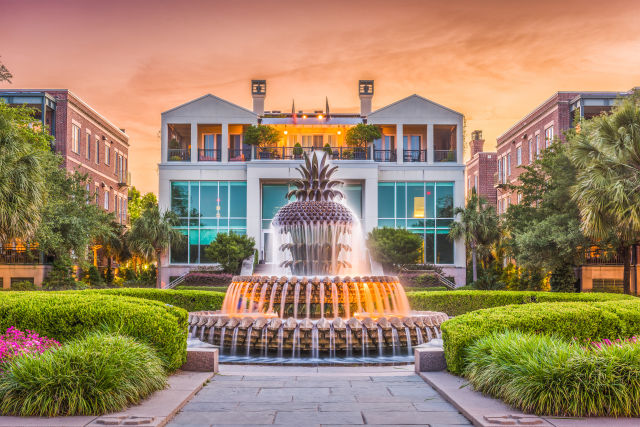
Charleston blends historic charm with real substance. It ranks third in Community and Environment and tenth in Income and Employment, making it one of the few cities that delivers both lifestyle and economic stability.
Overland Park shines when it comes to health and happiness. It ranks second nationally in Emotional and Physical Well-Being, with consistently strong marks in mental health and life satisfaction.
Fargo's strength is its community. Ranking fifth in Community and Environment, it offers a sense of cohesion and support that shows up clearly in overall happiness scores. Winters are brutal, but residents consistently report high life satisfaction, which says something real about what tight-knit communities can do for well-being.
South Burlington proves that smaller cities can outperform. It ranks first in the country for adequate sleep, a heavily weighted factor in overall well-being, and combines that with strong employment and lifestyle metrics.
Scottsdale stands out for health. More than 88% of adults report good or better health, one of the highest rates in the country, supported by strong physical activity and mental health outcomes.
Bismarck earns its spot with a balance of health, time, and community. It scores seventh on the Community Well-Being Index and offers more daily leisure time than any other city on the list, a factor that turns out to matter more than most expect.
Fremont takes the top spot, and the data is hard to argue with. Nearly 80% of households earn above $75,000, the income level where happiness tends to plateau, and residents report the highest life satisfaction in the country. It also has one of the lowest depression rates, one of the highest life expectancies, and the lowest separation and divorce rate nationwide. Add in strong community ties and low levels of mental distress, and it's a city where both stability and day-to-day well-being are working in sync.
The next tier of happy cities is a mix of college towns, Sun Belt metros, and mid-sized Midwestern gems that consistently outperform their size.
11. Burlington, VT: Ranks second nationally for Income & Employment, a remarkable stat for a small New England city.
12. Madison, WI: A perennial quality-of-life contender, strong across all three dimensions.
13. Columbia, MD: Ranks third nationally for Emotional & Physical Well-Being, held back slightly by income metrics.
14. Chandler, AZ: Another Arizona entry, ranked tenth for Community & Environment.
15. Seattle, WA: Sixth nationally for Income & Employment; the Pacific Northwest work culture pays off.
16. Plano, TX: Solid well-being and community scores make it one of Texas's happiest cities.
17. San Francisco, CA: High income opportunity (seventh nationally for Income & Employment) balanced against one of the weaker community rankings in the top 20.
18. Lincoln, NE: Eighth in Community & Environment, Lincoln is quietly one of the most livable cities in America.
19. Portland, ME: Third nationally for Income & Employment and fourth for adequate sleep. Yes, Maine.
20. Tempe, AZ: Arizona's fifth city in the top 20. The state is clearly doing something right.
21. San Diego, CA: A familiar name on best-of lists, and the data confirms it.
22. Raleigh, NC: Strong well-being scores anchor North Carolina's top representative.
23. Peoria, AZ: Ranked seventh nationally for Community & Environment.
24. Durham, NC: The Research Triangle delivers for residents in the happiness metrics too.
25. Huntington Beach, CA: California's coast keeps showing up. Twentieth nationally for Emotional & Physical Well-Being.

One of the more striking findings from WalletHub’s research is how clearly happiness clusters by geography. Arizona places five cities in the top 25 on its own. Vermont, despite its small population, lands two cities in the top 11. And California leads on sheer volume with seven cities in the top 25, though their strengths vary widely.
The other takeaway is that size doesn’t determine happiness. Major cities like Los Angeles (87th), Chicago (83rd), Houston (128th), and Las Vegas (138th) fall well down the list despite their cultural pull and economic weight. Meanwhile, places like Bismarck, South Burlington, and Fargo quietly rise to the top. The happiest cities in America tend to be well-rested, tightly connected, and, perhaps most tellingly, not in a rush.
For context, the least happy city in America in WalletHub’s 2026 ranking is Detroit, which lands at or near the bottom across all three dimensions. Memphis (181st) and Cleveland (179th) follow close behind. These cities are dealing with overlapping challenges across income, employment, mental health, and community cohesion, the kind that don’t shift quickly or with a single policy change.
What stands out at the other end of the list is something harder to quantify. The mountain towns, coastal cities, and Great Plains communities near the top tend to share a quieter advantage: residents who feel genuinely okay. Not just comfortable, but settled. That’s harder to engineer than a strong job market or a good housing stock. But according to the data, it exists. You just might have to go somewhere like Fremont to find it.
According to WalletHub's 2026 study, Fremont, California is the happiest city in America, ranking first in overall score driven by top marks in life satisfaction, low depression rates, and strong household incomes.
WalletHub evaluated 182 of the largest U.S. cities across 29 metrics in three categories: Emotional & Physical Well-Being, Income & Employment, and Community & Environment. Each metric was scored on a 100-point scale and weighted based on research-backed correlations to happiness.
Research has shown that happiness increases with income up to approximately $75,000 per year, beyond which additional earnings have diminishing impact on day-to-day emotional well-being. WalletHub used the share of households earning above that threshold as one of its happiness indicators.
Arizona places five cities in the top 25: Scottsdale (3rd), Gilbert (9th), Chandler (14th), Tempe (20th), and Peoria (23rd), making it the most represented state in the upper rankings.
Several major metros ranked well outside the top 50, including Los Angeles (87th), Chicago (83rd), Houston (128th), Las Vegas (138th), and Nashville (133rd), despite their size and economic activity.
High depression rates, poor sleep, food insecurity, long work hours, high bankruptcy rates, and weak community well-being scores all drag a city's ranking down. Detroit ranked last across nearly every dimension.
Yes: South Burlington, Vermont (4th), Burlington, Vermont (11th), and Portland, Maine (19th) all crack the top 20, with Vermont standing out for its exceptional adequate-sleep rates and income stability.
The complete 182-city ranking, including scores by category and individual metric data, is available at WalletHub.com.