We use cookies to enhance your browsing experience, serve personalized content, and analyze our traffic. By clicking "Accept All" you accept this and consent that we share this information with third parties and that your data may be processed in the USA. For more information, please read our .
You can adjust your preferences at any time. If you deny, we will use only the essential cookies and unfortunately, you will not receive any personalized content.

On Friday the 13th, some people avoid flying. Others refuse to book hotel room 13. And in many parts of the world, you may never even find a 13th floor at all. The fear of the number 13, known as triskaidekaphobia, quietly shapes travel in ways most of us never notice. From high-rise hotels that skip entire floors to airlines that eliminate row 13, superstition has left its mark on architecture, aviation, and global hospitality.
And it’s far more common than you might think. Here’s where the number disappears and why it matters.
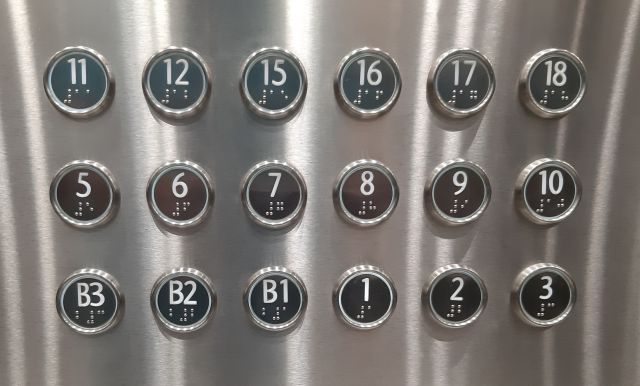
Walk into a high-rise hotel in the United States, Canada, or parts of Europe and check the elevator panel. You might see 12… then 14.
The 13th floor often simply does not exist.
In cities like New York City and Chicago, many commercial buildings omit the 13th floor entirely. The elevator buttons jump from 12 to 14, or sometimes 12 to 12A. The floor is physically there — it’s just renamed.
This is not a rare practice. A Gallup poll once found that 13% of Americans said they would feel uneasy staying on a 13th floor (and yes, we appreciate the number being 13% here). That may sound small, but in hospitality, 13% is significant.
In New York specifically, an analysis of hundreds of condo buildings found that only about 9% actually label a 13th floor as “13.” The overwhelming majority rename it to 12A, 14, or something similarly neutral.
Developers learned long ago that tenants are less likely to lease offices or book hotel rooms on a 13th floor. Rather than fight human psychology, hotels simply redesign the numbering system.
This isn’t just American. You’ll find similar patterns in parts of London and Toronto, where high-rise buildings quietly avoid the number altogether. It’s a small architectural adjustment that reflects a very old belief, and a very modern business decision.
This was slow travel by design. Small groups. Simple routines. A setting that encouraged people to exhale.

It’s not just buildings. Several international airlines skip row 13 entirely. Check the seat map and you may see row 12 followed by row 14. Carriers including Lufthansa, Ryanair, Air France, Singapore Airlines, Emirates, Qatar Airways, and others have been known to omit row 13 on certain aircraft.
The reason is simple: if even a small number of passengers are uncomfortable, skipping a row prevents awkward seat swaps and boarding delays. No one wants a superstition to slow down departure.
Superstition doesn’t stop at hotels and planes. Some cruise ships don't have a deck with the number 13. Others rename it. In an industry where perception shapes comfort, renumbering is easier than reassuring every passenger individually.
And the pattern shifts globally. In Italy, 17, not 13, is considered unlucky. So on flights connected to Rome or Milan, you may find row 17 missing instead.
In parts of East Asia, the number 4 (and sometimes 14) carries unlucky associations because of how it sounds in local languages. Some airlines adapt their numbering accordingly. Superstition changes by country, and travel quietly adapts with it.
Why does this still matter in 2026? Because travel heightens emotion.
Flying, crossing oceans, sleeping in unfamiliar buildings — these experiences already create vulnerability. Even people who would never call themselves superstitious might feel a flicker of hesitation when handed a key card labeled “1313.”
So the industry smooths the edges. Remove the number. Rename the floor. Skip the row.
It’s not about belief. It’s about comfort.
Let us reassure you, though: Statistically, there is no reliable evidence that travel accidents increase on Friday the 13th. In fact, some travel platforms have observed that ticket prices can even dip slightly when fewer superstitious travelers book flights that day.
So if anything, Friday the 13th might be a surprisingly peaceful day to fly. And if you’re worried about your hotel room? Just check the elevator numbers. Chances are, a button for floor 13 isn't even there.
Why Do Hotels Skip The 13th Floor?
Because a noticeable percentage of guests feel uneasy about it. Renumbering protects bookings and reduces discomfort.
How Common Is It to Skip Floor 13?
In some cities, more than 90% of high-rise buildings avoid labeling a 13th floor as “13.”
Do Airlines Really Skip Row 13?
Yes. Many international airlines omit row 13. Some also skip row 17 or 14 depending on cultural context.
Is Friday The 13th Actually Dangerous For Travel?
There is no strong statistical evidence that it is more dangerous than any other day.
What Is Triskaidekaphobia?
It is the fear of the number 13.