We use cookies to enhance your browsing experience, serve personalized content, and analyze our traffic. By clicking "Accept All" you accept this and consent that we share this information with third parties and that your data may be processed in the USA. For more information, please read our .
You can adjust your preferences at any time. If you deny, we will use only the essential cookies and unfortunately, you will not receive any personalized content.

Each year, Fodor's does something most travel publications won't: it tells you where not to go. The No List isn't a shame campaign or a travel ban. It's a reality check on what unchecked tourism actually costs for local communities, fragile ecosystems, and the places themselves. The 2026 edition covers eight destinations where the pressure is showing, and the message is the same across all of them: slow down, think harder, and consider whether your visit helps or hurts.
Some of these places have been on every dream itinerary for decades. Others are quieter spots facing a different kind of threat. What they share is a growing gap between what tourism promises and what it's actually delivering to the people who live there.
Antarctica doesn't need your tourism dollars. It doesn't have an economy. It doesn't need visitors at all, yet around 120,000 people traveled there between 2023 and 2024, a number projected to double by 2033. There are no caps on visits, and the environment is as fragile as it is extraordinary. Researchers are nearly unanimous on this one: Antarctica was never meant to be a bucket list destination.
In May 2025, thousands of residents took to the streets of Tenerife, Gran Canaria, and Lanzarote under one banner: "The Canaries have a limit." Record visitor numbers, 7.8 million in just the first half of 2025, have driven housing costs through the roof, strained water supplies, and pushed locals out of their own neighborhoods. The islands are beautiful. They're also exhausted.
Of the roughly 150 glaciers that defined this park in the early 20th century, only 27 remain. Those are expected to be gone by 2030. The surge in last-chance tourism is making things worse: more traffic, more carbon emissions, more trail damage, and more strain on a park whose federal funding and staffing have both been cut. The glaciers are disappearing whether you go or not. The question is whether your visit helps or hurts.
This quiet coastal district near Rome is about to become the site of a massive new cruise port, a joint venture between Royal Caribbean and a British investment fund, capable of docking ships carrying 6,000 passengers at a time. Local residents and environmental groups have been fighting the project since 2010, and the environmental impact assessment was only just concluded in November 2025. Go now if you want to see it before it changes, or hold off and see what survives.
More than a million visitors reached the Jungfraujoch in 2024, up 5% from the year before. The result is predictable: crowded trails, housing shortages, and a local economy so dependent on tourism that it now accounts for 90% of income in some mountain communities. One local hotel manager summed it up plainly: there's barely an off-season anymore, and day-trippers are consuming the infrastructure without contributing to the community.
In July 2025, protests erupted across Mexico City's most popular neighborhoods. Windows were smashed. Tourists were harassed. Signs read "Gringos Out." The anger has been building for years, driven by Airbnb listings displacing locals, rents listed in dollars instead of pesos, and entire apartment buildings converted into short-term rentals. Mexico City remains a genuinely extraordinary destination, but it's worth understanding what your visit costs the people who actually live there.
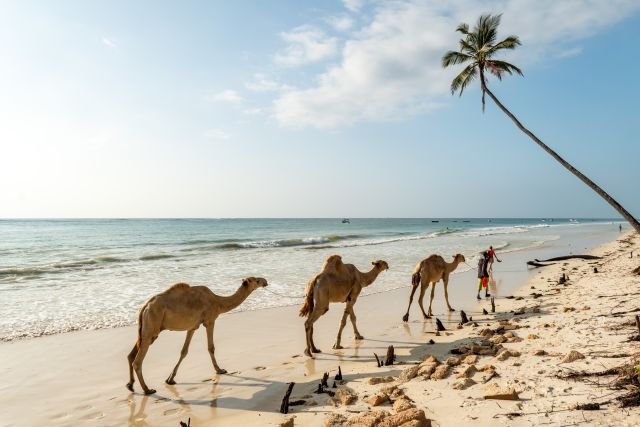
Kenya hit a record 2.4 million international arrivals in 2024, and Mombasa is absorbing 70% of coastal tourism with no clear plan for how many visitors is too many. Beaches are littered, sewage flows untreated into the ocean, and youth unemployment sits at 44%. In April 2025, an armed gang attacked cruise ship tourists in the streets. The city is working on solutions, but it's not there yet.
Eleven million visitors a year now crowd the steps of Sacré-Coeur, more than visit the Eiffel Tower. Real estate prices in the neighborhood rose 35% in just the past year. A local pétanque club that had held its space since 1971 was evicted in 2024 to make room for a luxury hotel expansion. Residents describe the situation as unlivable. Paris has plenty of neighborhoods worth your time, and Montmartre will still be there when the crowds thin out.
None of these destinations are being written off permanently. Fodor's isn't saying never. It's saying not yet, or not like this. The ask is for more intentional travel: choosing shoulder seasons, staying in locally owned accommodations, skipping the day-trip crowds, and understanding that some places genuinely need breathing room. Whether that means scratching a destination off your list entirely or just rethinking how you show up there, the point is the same. Tourism that leaves a place worse than you found it isn't really travel. It's just consumption.
The No List is uncomfortable reading, and that's the point. Travel is one of the best things you can do with your time and money, but the version of it that leaves a place worse than you found it isn't the good kind. Whether you cross any of these off your list is up to you. Knowing why they're on it is worth your five minutes.
It's an annual list from travel publisher Fodor's highlighting destinations where overtourism is causing measurable harm to local communities, infrastructure, or natural environments. The goal is to encourage more thoughtful travel decisions, not to ban anyone from going anywhere.
The 2026 list includes Antarctica, the Canary Islands, Glacier National Park, Isola Sacra, the Jungfrau Region, Mexico City, Mombasa, and Montmartre in Paris.
Not necessarily. Fodor's frames it as a prompt for reflection rather than a hard no. Some destinations are flagged for how people visit, not just how many. Choosing responsible travel practices like local accommodations, off-peak timing, and slower itineraries can make a real difference.
Antarctica has no tourism infrastructure, no local economy that benefits from visitors, and an extremely fragile ecosystem. Around 120,000 people visited between 2023 and 2024, with that number projected to double by 2033. There are no visitor caps in place.
Rapid growth in short-term rentals has displaced long-term residents, driven rents up, and converted entire apartment buildings into tourist accommodations. In July 2025, protests broke out in several popular neighborhoods, with some turning destructive.
Fodor's pushes back on last-chance tourism as a justification. The glaciers are disappearing regardless of whether you visit, and increased traffic adds to trail damage, carbon emissions, and strain on an already underfunded park.
Eleven million visitors a year have pushed housing costs up 35% in a single year and are squeezing out longtime residents and local institutions. Paris has dozens of neighborhoods worth exploring, and Montmartre will benefit more from lighter footfall than another record year.
There's no definitive data, but the list consistently sparks conversation in the travel industry about sustainable tourism practices and destination management. Its influence is more cultural than regulatory, and it shifts how people think about where and how they go.